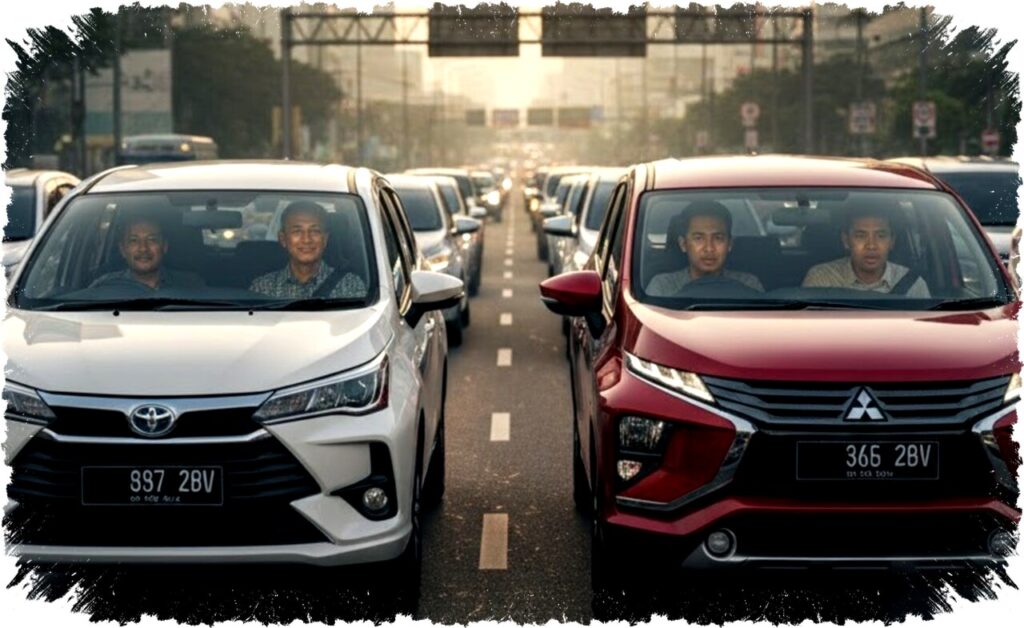
In urban traffic congestion, fuel efficiency becomes a critical factor for family MPVs. Toyota Veloz Hybrid and Mitsubishi Xpander HEV compete in this segment, targeting daily commuters facing stop-and-go traffic conditions. The real question is which hybrid system delivers better fuel savings in these demanding scenarios.
Toyota’s Veloz Hybrid uses a system optimized for low-speed efficiency. According to Toyota Motor Corporation’s regional launch materials, the electric motor drives the vehicle primarily at low speeds and during stop-start cycles. The gasoline engine kicks in mainly for added power or steady cruising, making it well-suited for heavy traffic.
Mitsubishi’s Xpander HEV, on the other hand, balances performance with efficiency. Mitsubishi Motors explains that its hybrid system assists initial acceleration with the electric motor, but keeps the gasoline engine active more often to maintain a stable driving response. This setup aims to provide a natural feel similar to conventional MPVs.
Fuel Consumption in Traffic Jams
Internal tests referenced by Southeast Asian automotive authorities reveal Toyota Veloz Hybrid achieves around 27 to 30 km per liter during heavy traffic simulations. The dominance of electric propulsion during crawling and stops helps reduce reliance on the gasoline engine.
Mitsubishi Xpander HEV records about 22 to 25 km per liter in similar conditions. While still economical for an MPV, this figure trails Toyota’s efficiency due to more frequent gasoline engine usage.
The differing fuel figures reflect the design priorities of each system — Toyota focuses on minimizing fuel use in stop-start driving, while Mitsubishi targets a blend of efficiency and smoother power delivery.
Energy Management and Regenerative Braking
Both vehicles incorporate regenerative braking to convert kinetic energy into electrical energy during deceleration. Toyota’s system is aggressive, capturing more energy to recharge the battery frequently in dense traffic. Toyota Research Institute states this approach is highly effective in urban congestion with repeated braking.
Xpander’s regenerative braking is gentler to prioritize passenger comfort, as confirmed by Mitsubishi’s technical notes. This reduces energy recovery efficiency slightly but ensures smoother brake transitions.
Driving Comfort and Experience
The quietness of the Toyota Veloz Hybrid stands out since it frequently runs on pure electric mode at slow speeds. National automotive media measured minimal engine noise during crawling, enhancing rider relaxation during traffic jams.
Meanwhile, Mitsubishi Xpander HEV keeps the gasoline engine active more, which results in steadier throttle response. Indonesian automotive journalist associations note this provides a more consistent driving feel, preferred by drivers frequently switching between congested and open roads.
Operational Costs and Maintenance
Daily driving estimates for 50 km in Jabodetabek’s traffic show the Veloz Hybrid consumes roughly 1.7 to 1.9 liters of fuel, whereas the Xpander HEV uses about 2 to 2.3 liters. Over a month, this creates a noticeable difference in fuel expenses, translating into substantial savings for the Toyota owner.
Both brands offer comparable servicing costs. However, Toyota’s hybrid system benefits from longer market presence, implying potentially more mature and established maintenance networks.
Summary of Key Comparisons
| Aspect | Toyota Veloz Hybrid | Mitsubishi Xpander HEV |
|---|---|---|
| Fuel Efficiency (km/l) | 27 – 30 (traffic simulation) | 22 – 25 (traffic simulation) |
| Hybrid Strategy | Electric motor dominant at low speed | Balance electric and gasoline use |
| Regenerative Braking | Aggressive energy recapture | Gentle for passenger comfort |
| Cabin Noise | Very quiet at low speeds | Slightly louder due to engine use |
| Driving Feel | Focus on efficiency and quietness | Focus on smooth, consistent response |
| Daily Fuel Use (liters) | 1.7 – 1.9 | 2.0 – 2.3 |
| Maintenance | Mature hybrid technology, wider support | Similar cost, newer hybrid system |
In conclusion, Toyota Veloz Hybrid offers superior fuel savings in heavy traffic, thanks to its low-speed electric motor dominance and aggressive regenerative braking. Mitsubishi Xpander HEV prioritizes a more conventional driving experience with stable acceleration and comfort during braking, though at slightly higher fuel consumption. Buyers should weigh their preferences between maximum efficiency and driving feel for urban family travel.