Motorcycle riders gearing up for Lebaran 2026 face long journeys that demand durable comfort. Standard motorcycle seats often fail to support continuous hours of riding, causing fatigue and discomfort. This is where comfort seat modifications using medical-grade gel come in as a practical solution to prevent pain and enhance touring experience.
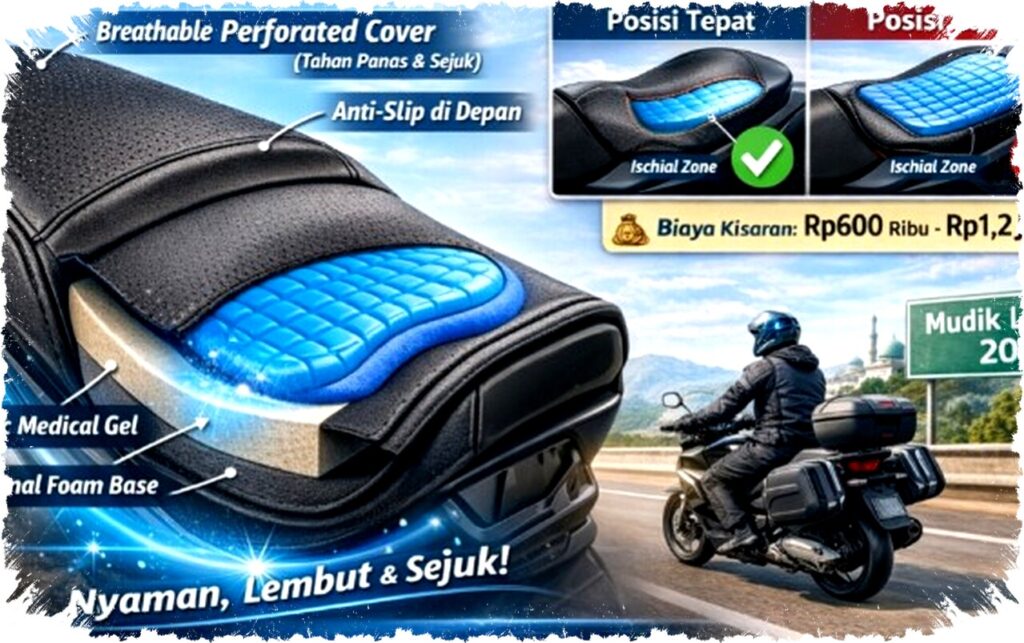
Medical gel, originally developed for healthcare to alleviate pressure during prolonged sitting, is increasingly adapted for motorcycle seats. According to multiple sources, including a February 2026 report by SUMEKS.CO, the gel disperses body weight evenly, reducing stress on the ischial bones. This effect minimizes numbness, backaches, and heat build-up during extensive rides.
Why Medical Gel Is Ideal for Touring Seats
Not all gels deliver the same benefits. Experts recommend silicone medical gel due to its health compliance and physical properties. Silicone gel remains flexible in cold and heat-resistant under the sun. Cheap, non-medical gels tend to break down quickly and may increase heat, worsening discomfort.
The optimal gel thickness varies by motorcycle type:
- For scooters and sport bikes: 1 to 1.5 cm
- For touring and adventure motorcycles: 1.5 to 2 cm
Using too thick a gel layer can compromise seat stability and rider control. The gel should be applied specifically to the seating area corresponding to the ischial bones, slightly rearward from the seat center. Oval or honeycomb gel pads are ideal because they spread pressure evenly without feeling stiff.
Layering for Maximum Comfort and Control
A well-engineered comfort seat blends multiple layers:
- Base: original foam cushioning
- Middle: medical silicone gel pad
- Top: thin memory foam or supplementary foam layer
This sandwich structure balances softness and support, allowing riders to maintain good posture and motorcycle handling over long distances.
Additional Modifications to Consider
Seat covers should be made of perforated synthetic leather to promote airflow and reduce heat accumulation. Anti-slip texture on the seat front helps stabilize the rider during braking or downhill rides. Double stitching improves durability against added weight during travel.
Modification might increase seat height by 1 to 2 cm. Professionals often trim or re-shape the underlying foam to maintain ergonomic accessibility, especially for shorter riders.
Test rides ranging from 30 to 60 minutes before the trip are advisable to ensure no excessive heat or pressure zones cause discomfort. If problems arise, adjustments can be made early.
Cost Versus Benefits
Modifying a comfort seat with medical gel generally costs between 40 and 80 USD, depending on gel quality and craftsmanship. This investment offers substantial returns in terms of reduced fatigue, improved safety, and enhanced enjoyment during mudik — Indonesia’s annual mass exodus.
Riders equipped with this upgrade gain not only physical relief but also a more confident and controlled riding experience. For motorcycle enthusiasts planning their 2026 Lebaran journey, integrating medical gel into their seats may prove essential for long-lasting comfort and health.
This innovation reflects a broader trend of applying medical technology beyond the clinical setting, showcasing how thoughtful material choices can solve enduring challenges faced by travelers.