


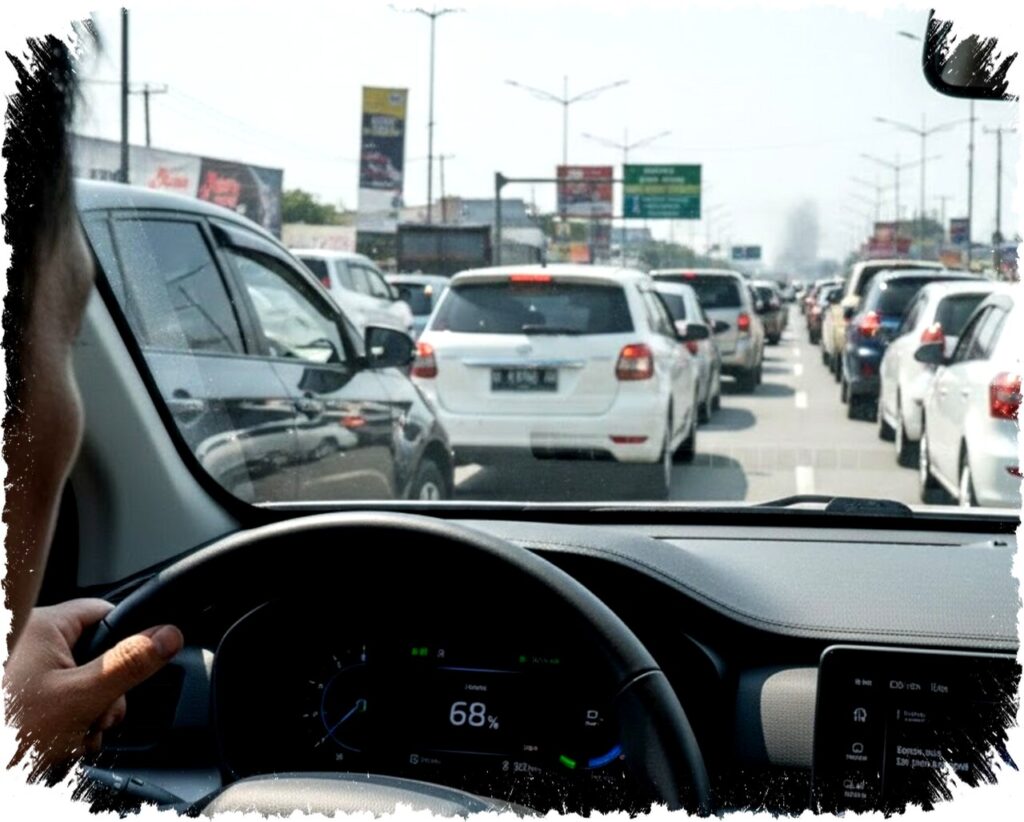
Driving an electric vehicle on a congested highway during peak travel seasons raises key concerns about battery consumption. The BYD Atto 3 2026 model, equipped with a Blade battery pack of approximately 60.48 kWh, claims a range close to 480 km under standard testing conditions. How this translates into real-world performance, especially when stuck in stop-and-go traffic, is crucial for users relying on electric cars for long-distance trips.
The electric motor delivers around 201 horsepower and an instant torque of 310 Nm, making power output more than sufficient. However, in a severe traffic jam scenario on the Pantura route, the critical factor shifts to the battery endurance while idling or crawling at 0 to 10 km/h for extended hours. This test assesses how well the BYD Atto 3 manages energy when operating primarily electronics and climate control rather than propulsion.
Battery Consumption During Traffic Jams
In heavy congestion, the car often moves very slowly or remains completely stopped for 4 to 6 hours. During this time, the air conditioning runs continuously due to Indonesia’s hot climate. Additionally, the infotainment system stays active, cabin lights remain on, and passengers charge their devices. Unlike traditional gasoline cars which burn fuel continuously at idle, electric vehicles like the BYD Atto 3 consume power mainly to run accessories and battery thermal management systems.
Data suggests an average energy usage of 1 to 2 kWh per hour during idling with AC activated, depending on cabin temperature. Using a midpoint estimate of 1.5 kWh per hour during a five-hour standstill results in an energy draw of approximately 7.5 kWh just for maintaining cabin comfort and electronics. Meanwhile, the driver still manages to cover about 40 km at low speeds. Given an expected efficiency of roughly 6 to 7 km per kWh, this driving consumes an additional 6 kWh.
Combining both stationary and low-speed movement, total battery energy usage during the extended traffic jam is about 13 to 14 kWh. This means only about 20 to 25 percent of the full battery capacity is depleted due to the unfavorable conditions, assuming the battery started at 100 percent charge.
Thermal Management and Battery Health
BYD’s Blade battery technology incorporates an active thermal management system to keep battery temperature stable. During prolonged traffic jams, this system prevents battery overheating despite continuous air conditioning and minimal motor load. The electric motor experiences low strain due to slow or halted speeds, reducing heat generation from propulsion components.
Maintaining optimal battery temperature is critical in maximizing longevity and efficiency. The cooling system design in BYD Atto 3 proves effective in managing heat buildup in such challenging environments, contributing to safer battery operation and steady performance after hours of stop-and-go traffic.
Practical Tips for Electric Vehicle Travel in Congestion
Proper trip planning strengthens confidence in using electric vehicles for long-distance journeys involving unpredictable traffic delays. Drivers should:
- Ensure starting the trip with a full or near-full battery to buffer against unexpected idling.
- Activate Eco or energy-saving modes that regulate power consumption for climate control and entertainment.
- Continuously monitor real-time estimates of remaining range to adjust driving habits.
- Schedule charging stops strategically to avoid running low during heavy traffic zones.
Following these guidelines helps maintain sufficient driving range and lessens stress related to battery depletion in urban or highway jams.
Implications for Electric Vehicle Adoption in Indonesia
The test experience with BYD Atto 3 during mudik season on Pantura offers encouraging insights for potential electric vehicle users. Even with hours of near-standstill traffic, the vehicle retains over 75 percent battery capacity afterward. This translates into several hundred kilometers of additional travel range without requiring immediate recharging.
Such resilience confirms the practicality of owning electric vehicles in Indonesia’s demanding traffic conditions when supported by good battery management and infrastructure. As charging networks grow more widespread and vehicle efficiency improves, adoption barriers related to range anxiety during peak travel periods can diminish significantly.
Overall, BYD Atto 3 2026 demonstrates promising reliability in managing battery energy under extreme stop-and-go traffic. This enhances confidence for electric vehicle drivers aiming to navigate heavy congestion smoothly without compromising their journey.