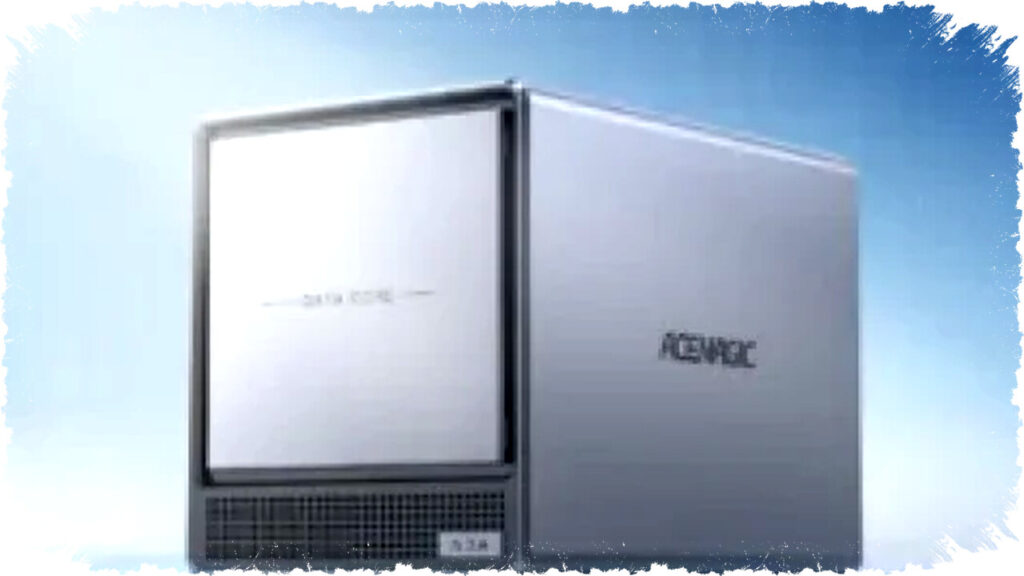
Acemagic recently introduced the Acemagic N3A NAS, a hybrid Mini PC that combines high-performance computing with expansive storage options. This device targets users seeking a compact yet powerful personal data center to handle both server tasks and multimedia needs in a single system.
At the heart of the N3A NAS lies the AMD Ryzen 7 3750H processor, built on the Zen+ architecture. It features 4 cores and 8 threads, capable of reaching a boost clock speed up to 4.0GHz. With a thermal design power (TDP) of just 35W, this CPU strikes a solid balance between strong processing capabilities and energy efficiency, a crucial factor for devices intended to operate continuously as home servers.
The integrated Radeon RX Vega graphics complements the processor by supporting 4K resolution output at 60Hz. This enables the N3A NAS to function as a competent media hub, allowing smooth playback of high-quality videos directly connected to monitors or televisions.
Extensive Storage Capacity with Six Drive Slots
One of the N3A NAS’s standout features is its substantial storage capability. It offers four 3.5-inch SATA drive bays designed for high-capacity hard drives. This setup allows users to archive massive amounts of data, including thousands of photos, raw videos, and extensive work documents without concern over space constraints.
In addition to the SATA bays, the device includes two M.2 NVMe slots. These slots are intended for ultra-fast solid-state drives, suitable for installation of the operating system or caching data to accelerate performance. Such a dual-storage system ensures that file transfers are fast and the device maintains high responsiveness, even under heavy workloads.
Memory Expansion and Visual Output
The Acemagic N3A NAS supports up to 64GB of DDR4 RAM, providing ample memory for multitasking or running multiple server applications simultaneously. This flexibility enhances the machine’s utility for professional users requiring reliability and speed.
In terms of connectivity, it offers advanced video output capabilities which makes it versatile for various professional and entertainment uses. Users can enjoy fine image quality on 4K displays without additional graphic hardware investment.
Physical Design and Market Positioning
Measuring 270 x 150 x 185 mm, the N3A NAS is compact enough for desktop placement while housing robust hardware. Its design follows a minimalist and functional approach suitable for home offices and small business environments.
The device also facilitates private cloud deployment and supports containerized workloads via Docker. This allows users to manage data centrally and share files securely across different platforms, appealing to tech-savvy individuals and professionals looking for integrated storage and computing solutions.
Although the N3A NAS shares visual similarities with models like the Beelink ME Pro NAS, Acemagic differentiates itself through customized software optimizations and hardware tuning. This attention to detail enhances overall usability and system stability.
As of now, official pricing and global availability details remain undisclosed. However, market analysts expect that the Acemagic N3A NAS will intensify competition in the hybrid Mini PC sector, which is rapidly gaining traction among technology enthusiasts and small enterprises.
Key Specifications of Acemagic N3A NAS:
- AMD Ryzen 7 3750H processor (4 cores / 8 threads, up to 4.0GHz, 35W TDP)
- Integrated Radeon RX Vega GPU with 4K 60Hz output support
- Storage: 4 SATA 3.5-inch bays + 2 M.2 NVMe slots
- RAM: Up to 64GB DDR4
- Dimensions: 270 x 150 x 185 mm
- Supports private cloud and Docker container workloads
The Acemagic N3A NAS represents a meaningful advancement in compact computing devices with scalable storage. Its hybrid design serves the dual purpose of a high-performance Mini PC and a reliable NAS, suiting various IT demands from media streaming to intensive data management.
The continuous innovation in this class of devices reflects the growing need for versatile and powerful personal data centers, especially for remote work, digital content creation, and small business infrastructure. This trend is expected to drive further enhancements in processor efficiency, storage expandability, and connectivity options within the industry.