Huawei MatePad SE 11 is positioned as an affordable family tablet priced around Rp2 million, roughly $130 USD. It offers a comprehensive feature set targeted for users who need a reliable device for everyday tasks without breaking the bank. This review explores whether the MatePad SE 11 can become a go-to tablet for families and casual users in 2026.
Design and Display
The MatePad SE 11 sports an 11-inch IPS LCD panel with a 2000×1200 resolution. The screen offers decent brightness and sharpness, making it suitable for video streaming, reading, and online learning. Though it does not use AMOLED technology like some pricier tablets, its color accuracy and viewing angles are sufficient for casual consumption. The design is minimalist with slim bezels, making the tablet comfortable to hold for extended periods.
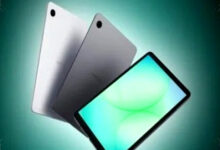

The build quality is solid, featuring a plastic back that balances durability and weight. The tablet weighs approximately 465 grams, which is acceptable for an 11-inch device intended for varied home use, including children’s educational activities. A subtle advantage is the matte finish on the back, which reduces fingerprint smudges.
Performance and User Experience
Under the hood, Huawei equips the MatePad SE 11 with a modest UNISOC T610 processor coupled with 4GB of RAM in the standard variant. This hardware configuration is capable of handling multitasking smoothly for fundamental apps such as web browsers, social media, and video conferencing tools. It may struggle with high-end gaming or intensive multitasking, but that is understandable given its budget positioning.
The tablet runs HarmonyOS 3.0, which is optimized for performance and provides access to Huawei’s AppGallery ecosystem. For users heavily reliant on Google services, the absence of Google Mobile Services could affect app compatibility, but Huawei offers alternatives through Petal Search and Quick Apps. The proprietary OS emphasizes smooth transitions, app continuity, and good battery management.
Battery Life
With a 5,100mAh battery, MatePad SE 11 promises all-day usage for typical family scenarios such as watching videos, browsing, or attending online classes. Real-world tests showed about 8-10 hours of mixed usage, aligning well with daily routines without the need for frequent charging. The tablet supports 10W charging, which is not particularly fast but sufficient for overnight top-ups.
Camera and Audio
The device includes an 8MP rear camera and a 2MP front-facing shooter. While tablet cameras are rarely primary photo tools, these cameras are adequate for video calls and casual snaps. The front camera supports HD video calls with reasonable clarity under good lighting.
For audio, the MatePad SE 11 is equipped with a single speaker system placed on one side. Though it lacks stereo sound, the volume reaches acceptable levels for personal use. The absence of Dolby Atmos or similar audio enhancements limits its appeal for immersive media playback, but external speakers or headphones can resolve this.
Connectivity and Features
The Huawei MatePad SE 11 supports Wi-Fi 5 (802.11ac) and Bluetooth 5.1 for stable wireless connections. A key highlight is the availability of a cellular SIM variant, supporting 4G LTE connectivity. This feature is particularly beneficial for families needing internet access on the go without relying on Wi-Fi hotspots.
Additionally, the tablet includes a USB-C port for charging and data transfer. Basic sensors like an accelerometer and ambient light sensor enhance usability in different lighting and orientations. Notably, the device supports Huawei’s M-Pencil stylus input, enabling children or adults to engage in note-taking or digital drawing, thus expanding its usability beyond media consumption.
Comparison With Alternatives in 2026
When compared to other budget tablets in the same price range, such as the Advan Tab Sketsa 3 (around Rp2.1 million / $140 USD) and Realme Pad Mini, the MatePad SE 11 holds its ground with a larger display and more balanced specifications. While the Advan tablet offers a stylus and a bigger battery, Huawei’s more polished OS and reliable network support make it a compelling choice for families.
The Lenovo Legion Y700 Gen 3 and Samsung Galaxy Tab S10 FE, available at higher price points (above $450 USD), target gaming and premium productivity users. Thus, with MatePad SE 11, Huawei aims at users who prioritize affordability, family-friendly features, and decent performance.
Summary of Key Specifications
| Feature | Huawei MatePad SE 11 |
|---|---|
| Display | 11-inch IPS LCD, 2000 x 1200 pixels |
| Processor | UNISOC T610 |
| RAM | 4GB |
| Storage | 64GB / 128GB |
| Operating System | HarmonyOS 3.0 |
| Battery | 5100mAh |
| Charging | 10W wired |
| Cameras | Rear 8MP, Front 2MP |
| Connectivity | Wi-Fi 5, Bluetooth 5.1, 4G SIM variant available |
| Audio | Single speaker |
| Stylus Support | Yes (Huawei M-Pencil, optional) |
| Price | Around Rp2 million (~$130 USD) |
The Huawei MatePad SE 11 is designed to meet the basic demands of family members needing a budget tablet in 2026. Its large, clear screen makes it suitable for entertainment and learning. The inclusion of a cellular model addresses the increasing need for mobile connectivity in idle zones or school settings.
Users whose usage centers around streaming, browsing, social media, and casual communication will find the hardware reliable. Its HarmonyOS platform offers a more integrated ecosystem, even if it lacks Google Mobile Services, a common situation in Huawei’s latest offerings.
Parents seeking a cost-effective, sturdy tablet with support for stylus input for their children’s creativity and study will appreciate this device’s versatility. Given its price, the MatePad SE 11 stands out as a smart option in the Rp2 million tablet segment for the year 2026.