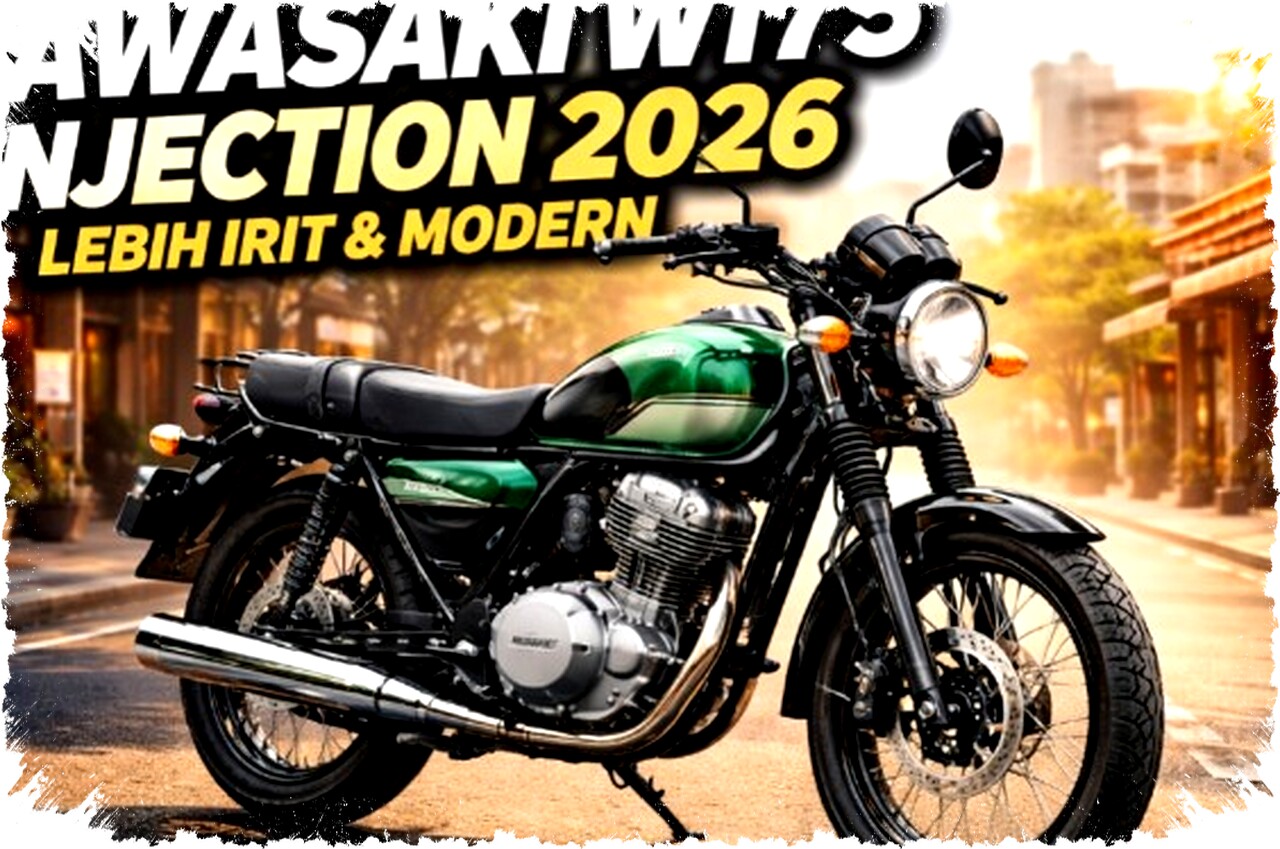
Kawasaki Motor Indonesia has officially launched the 2026 Kawasaki W175 Injection, marking a significant upgrade to its classic retro motorcycle lineup. The new model combines a vintage aesthetic with modern technology, appealing to riders who want both style and efficiency.
The most notable update is the introduction of a fuel injection system, replacing the traditional carburetor. This change allows fuel delivery to be more precise, adapting to engine demands and riding conditions.
Fuel injection improves combustion efficiency, resulting in cleaner emissions and better fuel economy. Kawasaki claims the W175 Injection achieves around 35 to 40 kilometers per liter (approximately 82–94 mpg) during combined city and highway riding.


The motorcycle still uses a 177 cc, single-cylinder, SOHC air-cooled engine. It delivers about 13 horsepower at 7,500 rpm and 13 Nm of torque at 6,000 rpm. This setup maintains a strong low-end torque characteristic, ideal for daily commuting and relaxed weekend rides.
A 5-speed manual transmission complements the engine, preserving the classic riding feel. The bike’s relatively lightweight frame, around 130 kilograms (287 lbs), helps ensure easy handling, especially for beginners or urban riders.
In addition to the engine upgrade, the 2026 W175 features enhanced safety components. The front brake now includes a single-channel ABS system, improving braking response and rider confidence during sudden stops. This is a valuable addition to a retro-style motorcycle in this segment.
Lighting is another area updated for modern standards. The bike is equipped with LED headlights and taillights, providing better visibility and using electricity more efficiently. This upgrade also adds a subtle contemporary touch to the bike’s overall design.
The instrument cluster combines analog and digital elements. While the speedometer retains its classic needle dial, a small digital screen displays useful information such as the odometer and fuel gauge, blending retro charm with practicality.
Design-wise, the Kawasaki W175 Injection maintains its timeless appeal. The round fuel tank, flat seat, and simple body lines stay true to the model’s classic roots. This continuity in design ensures loyal fans will recognize the bike while appreciating the internal improvements.
With a fuel tank capacity of about 12 liters (3.17 gallons), the W175 can travel over 400 kilometers (~249 miles) on a full tank, depending on the riding style. This range underscores its practicality for daily commuting or longer casual trips.
The switch to fuel injection not only enhances fuel efficiency but also improves engine reliability. Cold starts are now easier, idle speed remains stable, and routine carburetor tuning is no longer necessary. These benefits reduce maintenance requirements and ownership costs.
Overall, the 2026 Kawasaki W175 Injection represents a forward step for the retro motorcycle segment by integrating updated technology while preserving the nostalgic design that riders love. Combining heritage looks with modern fuel economy and safety features should broaden its appeal.
Key Features of Kawasaki W175 Injection 2026
- Fuel Injection System replacing carburetor
- 177 cc single-cylinder SOHC air-cooled engine
- Power output: ~13 PS (13 hp) at 7,500 rpm
- Torque: ~13 Nm at 6,000 rpm
- 5-speed manual transmission
- Fuel efficiency: 35–40 km/l (82–94 mpg)
- Fuel tank capacity: 12 liters (3.17 gallons)
- Front disc brake with single-channel ABS
- LED headlight and taillight
- Combined analog-digital instrument panel
- Dry weight around 130 kg (287 lbs)
Kawasaki has successfully addressed the modern rider’s demands for efficiency and convenience without compromising the classic character of the W175. This makes the 2026 Injection variant a compelling choice for enthusiasts seeking a reliable and stylish retro motorcycle equipped for today’s roads.
For those looking to enjoy a vintage motorcycling experience with reduced emissions and improved fuel economy, the Kawasaki W175 Injection 2026 provides an ideal balance of old-school charm and contemporary technology.