Apple is preparing to revolutionize wearable technology with three innovative AI-powered devices, each equipped with cameras to enhance Siri’s capabilities. These gadgets—a pair of smart glasses without an AR screen, an AI pendant the size of an AirTag, and new AirPods featuring a low-resolution camera—aim to bridge the physical world with digital intelligence.
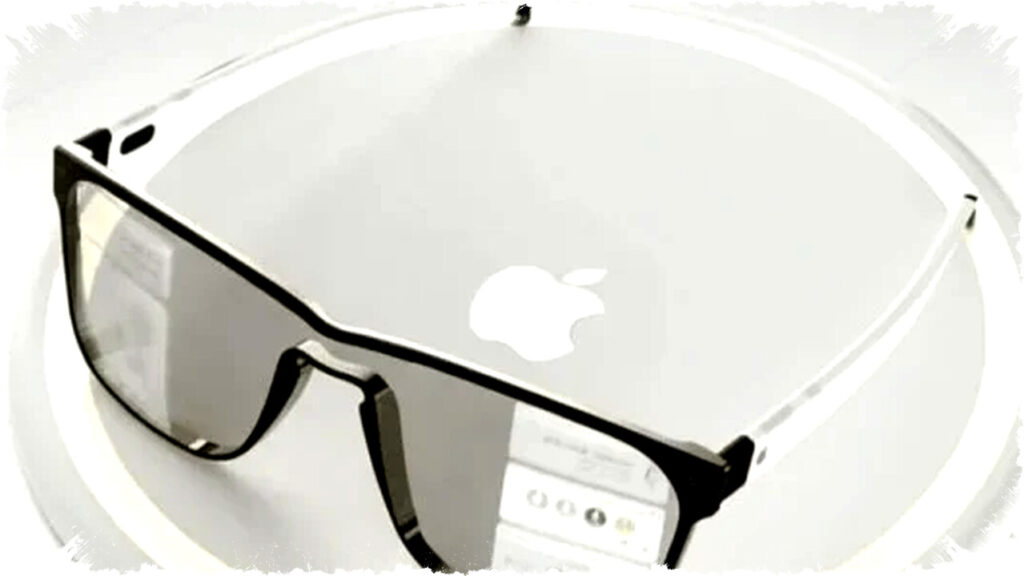
Unlike the traditional augmented reality concept of floating graphics or holograms, Apple’s first-gen smart glasses focus on minimalism. They won’t have any display screens or visible notifications. Instead, the glasses rely on high-resolution cameras, sensitive microphones, integrated speakers, and possibly compact depth or LiDAR sensors. Visual data captured is transmitted to the iPhone, where AI processes context-specific responses.
Users may ask Siri about the history of a building they’re looking at, identify ingredients in a meal, or set location-based reminders at a train station. This approach introduces contextual computing, allowing Siri to act proactively based on the user’s surroundings rather than just reactive commands. Production is expected to start in late 2026, with a launch planned for 2027. Unlike Meta’s collaboration with Ray-Ban, Apple is designing its own frames independently.
AI Pendant: A Discreet Visual Assistant
For those wary of wearing glasses, Apple offers an alternative: an AI pendant comparable in size to an AirTag. This small device can be worn as a necklace or clipped to clothing and functions as a continuous or on-demand visual feed to Siri. It acts as a “second eye,” capturing images and audio to enhance contextual assistance.
With the pendant, users could ask questions while shopping, such as whether a brand is eco-friendly, or identify acquaintances they meet by name. Bloomberg’s report indicates this device might debut as early as 2026, ahead of the glasses.
AirPods with Cameras: Enhancing Accessibility and Interaction
Apple plans to integrate a low-resolution camera into the next-generation AirPods, but not for selfies or video calls. Instead, these cameras serve a purely analytical role by detecting objects around the wearer. This feature holds significant value for blind or visually impaired individuals by providing real-time auditory feedback about their environment.
Examples include identifying obstacles like stairs or locating misplaced items by prompting Siri, “Where are my keys?” This new concept reflects Apple’s ongoing experiments in embedding sensors into earbuds, pushing wearable technology beyond conventional boundaries.
Apple’s Strategy: Embedding AI on the Body
Apple’s philosophy emphasizes that AI should not be confined to smartphones but integrated seamlessly onto the user’s body. Their staged approach includes:
- Lightweight wearables like the AI pendant and AirPods for rapid adoption.
- Smart glasses without AR displays, serving as a transitional device.
- Fully functional AR eyewear with visible displays, projected to arrive years later.
All processing relies on the iPhone, maintaining Apple’s closed ecosystem. Notably, Apple is also reportedly incorporating Google’s Gemini AI model to enhance natural language processing, highlighting the role of software and data alongside hardware in the AI battle.
Privacy and Social Acceptance Concerns
Continuous camera use raises significant privacy issues. Wearers might face social discomfort, and there is a risk of surveillance scrutiny. Dependency on an iPhone for operation could limit user freedom.
Apple is expected to address these challenges with features such as visible LED indicators when cameras are active, “total privacy” modes that disable sensors, and end-to-end encryption for visual data. Ultimately, the success of these devices hinges on public trust as much as technical specifications.
Competing with Meta in the Wearables Market
Apple’s smart glasses stand as a direct competitor to Meta’s Ray-Ban Meta, a product available since 2023. Meta’s glasses gained popularity due to their stylish design, affordable price point near $299, and tight integration with Instagram and Facebook.
Apple’s offerings, predicted to cost over $1,000, focus on premium security, seamless iOS integration, and more advanced AI functions. If successful, Apple could dominate the high-end segment where Meta has yet to establish a strong foothold.
Innovating Human-Computer Interaction
Apple is not merely introducing futuristic gadgets but reshaping how people interact with technology. Moving beyond touchscreen commands, these AI-powered wearables create a new paradigm of contextual computing.
By enabling Siri to "see," devices like smart glasses, AI pendants, and AirPods with cameras transform it from a reactive assistant into a proactive partner that comprehends and reacts to the user’s environment. Although launch dates are still a year or two away, this development signals a future in which AI is not only intelligent but visually aware.