


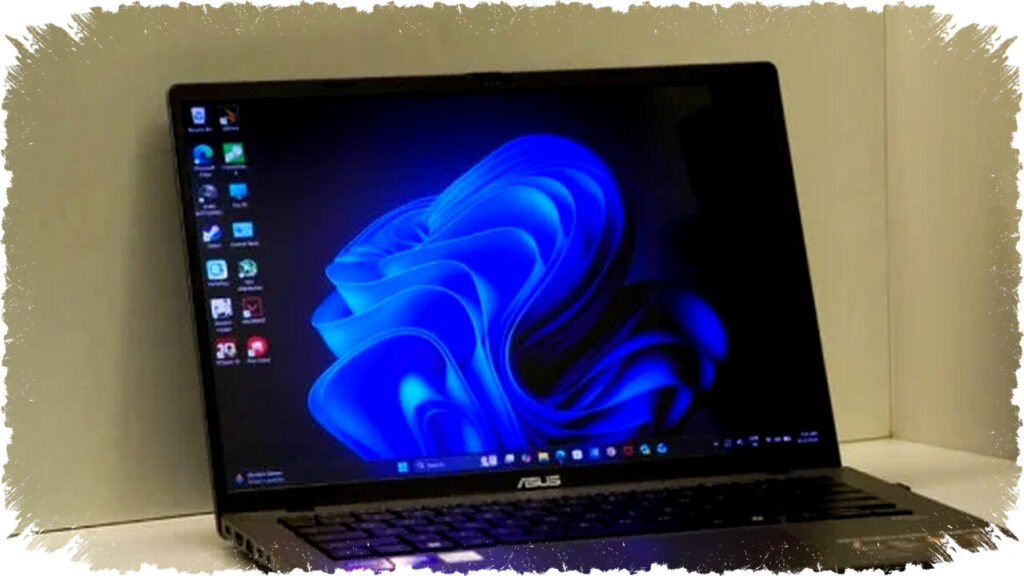
Asus Vivobook S14 (M3407KA) emerges as a compelling ultrabook for users seeking a sleek, lightweight Windows laptop with advanced AI capabilities. It combines a premium build with cutting-edge AMD Ryzen AI technology, making it well-suited for the evolving demands of intelligent computing.
The design language of the Vivobook S14 is minimalistic yet sophisticated. Featuring a matte gray finish with a CNC-engraved chrome Asus Vivobook logo, the laptop weighs approximately 1.4 kilograms and measures just 15.9 mm thin. This makes it exceptionally portable and easy to carry in daily commutes. Despite its slender profile, the chassis feels solid and durable, bolstered by the MIL-STD 810H military-grade certification for enhanced resistance against physical shocks and environmental stresses. The hinge supports up to 180 degrees of screen rotation, providing flexibility in various usage scenarios.
Stunning OLED Display with Productivity in Focus
One of the standout features is the 14-inch Lumina OLED panel with a 1920 x 1200 resolution and a 16:10 aspect ratio. This vertical screen ratio offers extra workspace, which enhances productivity when working on documents or creative projects. The OLED panel delivers vivid colors, deep blacks, and exceptional contrast, supported by 100 percent DCI-P3 color gamut coverage and 1.07 billion colors. With a typical brightness of 300 to 400 nits, it performs well indoors and remains usable outdoors with indirect sunlight. Eye comfort is prioritized through hardware-based low blue light and DC dimming to reduce flicker on lower brightness settings. For typical OLED challenges like burn-in, Asus integrates pixel shifting and automatic screensavers as preventive measures.
Comprehensive Connectivity and User Experience
Connectivity options on the Vivobook S14 are extensive for an ultraportable laptop. It includes two USB-C 3.2 Gen 1 ports that support charging and DisplayPort output, two USB-A ports for legacy devices, a full-size HDMI 2.1 connector, and a 3.5mm audio jack. Wireless connectivity is future-proofed with Wi-Fi 6E and Bluetooth 5.3 for stable and swift connections. However, the absence of an SD card slot might limit convenience for photography professionals.
Typing on the Vivobook S14 offers a solid and satisfying experience. The keyboard keys have a 1.7mm travel distance, striking a balance between quiet operation and tactile feedback. The spacious trackpad supports precise multi-finger gestures native to Windows 11. Initially, palm rejection might be sensitive, but users typically adapt quickly to avoid accidental cursor movements.
Powered by AMD Ryzen AI 7 350 for Intelligent Performance
Under the hood lies the AMD Ryzen AI 7 350 processor equipped with the XDNA Neural Processing Unit (NPU), capable of processing up to 50 TOPS (trillions of operations per second). This dedicated AI accelerator plays a critical role in running AI-enhanced Windows 11 features such as Copilot, Windows Studio Effects, real-time background blurring, and local AI summarization more efficiently than relying on the CPU or GPU alone. The laptop handles demanding multitasking scenarios smoothly, including managing numerous Chrome tabs, editing 1080p video, and running AI-driven Office apps without noticeable lag.
Though not designed for hardcore gaming, its Radeon 860M GPU based on RDNA 3.5 can handle casual esports titles like Valorant with ease at low settings. More graphically intensive games such as Genshin Impact and PUBG are playable with adjusted graphics quality, making this device suitable for occasional gaming needs.
Efficient Thermal Management and Battery Life
The dual-fan cooling system maintains stable temperatures, typically around 75 degrees Celsius under heavy load. Fan noise remains minimal even when performance mode is engaged, rendering it comfortable for use in quiet environments. The keyboard’s surface stays cool during extended sessions, reflecting effective thermal design.
Battery endurance impresses with real-world longevity of 10 to 12 hours during typical tasks like writing, web browsing, music streaming, and light editing. Asus’ 65W USB-C fast charger fills the battery up to 50 percent in under 40 minutes, allowing users to quickly recharge on the go.
Fast Storage and Expandability Options
The tested unit features a 512GB NVMe PCIe 4.0 SSD, boasting sequential read speeds exceeding 6,700 MB/s and write speeds around 3,600 MB/s. This contributes to responsive system performance and quick file transfers. The laptop comes with 16GB of DDR5 RAM soldered onboard, but crucially, it offers additional SO-DIMM slots and an M.2 PCIe 4.0 slot for storage and memory upgrades – a rare feature in slim ultrabooks.
Balanced and Future-Ready Ultrabook
Priced from about $950 USD in the Indian market, the Asus Vivobook S14 (M3407KA) stands out in the ultraportable segment for users who prioritize a combination of productivity, portability, and AI integration. It is not aimed at users requiring intense workstation power or high-end gaming but excels as a versatile laptop for students, professionals, bloggers, and remote workers adapting to AI-augmented workflows.
With official specifications from Asus, AMD’s processor details, and Microsoft’s Windows 11 AI documentation as reference, this Vivobook meets the demands of modern computing environments. Its premium OLED display, robust AI-enhanced performance, solid build, and long battery life offer a trustworthy platform for the upcoming era of smart computing.