


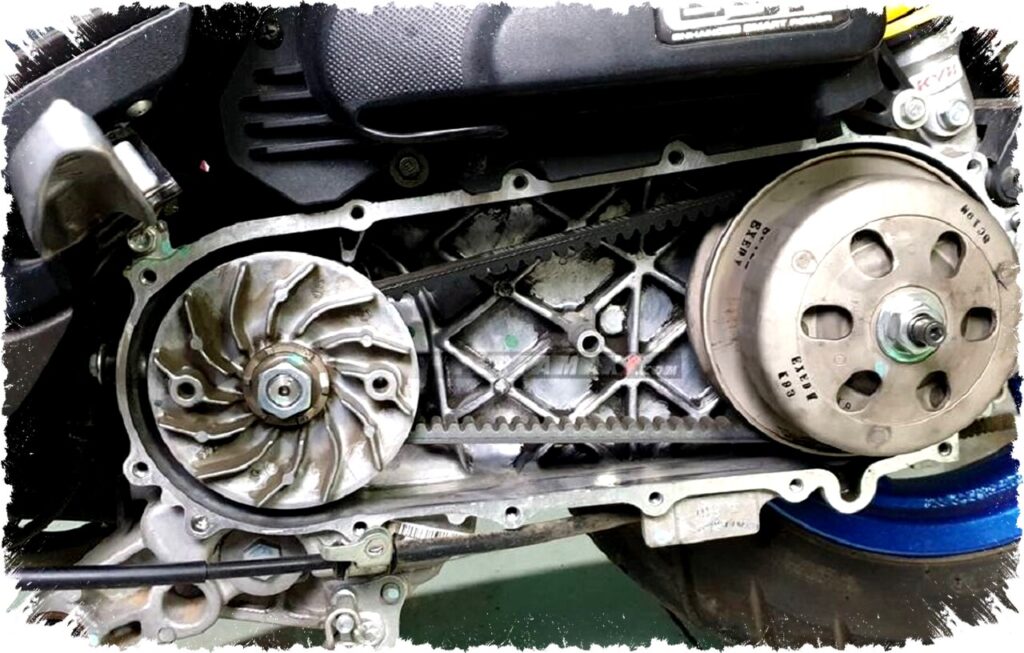
Motor matic with a CVT (Continuously Variable Transmission) system often faces issues after crossing flooded roads. Air trapped inside the CVT could cause performance problems that many riders do not immediately recognize. Understanding how to remove the air trapped in the CVT can prevent costly repairs and save trips to the workshop.
When water or air enters the CVT, it disrupts the smooth transmission of power to the wheels. Riders may feel that the clutch slips, the throttle response is sluggish, vibrations occur, or unusual noises come from the transmission area. These symptoms indicate trapped air inside the CVT, which requires prompt action to avoid permanent damage.
How to Identify Air Trapped Inside the CVT
Several signs point to air trapped in the CVT of a motor matic after exposure to water:
- Clutch Slipping: The most common symptom is clutch slip, where the engagement between the dual clutch plates weakens. This results in the engine revving higher without a corresponding increase in speed.
- Heavy Throttle Response: The motor may feel unresponsive, slow, or uneven despite applying throttle.
- Vibrations and Noise: Excessive vibrations during acceleration or squeaky, noisy sounds may occur as air disrupts the pulley movements.
- Corrosion Risk: Moisture causes metal parts inside the CVT to rust, which requires timely drying and maintenance.
- Accelerated Component Wear: The air and moisture can increase wear on essential components such as the V-belt and rollers.
- Engine Stalling: In severe cases, the motor may stall or fail to move due to compromised CVT operation.
These issues not only impair riding comfort but can also increase repair costs. According to motorplusonline.com, trapped air leads directly to CVT slipping and other performance degradations that are avoidable by proper air removal.
Simple Steps to Remove Air from the CVT Without a Workshop Visit
Motor matic owners can clean trapped air from inside the CVT by themselves at home. This simple procedure uses basic tools and involves removing the air outlet hose from the transmission cover.
- Locate the Air Outlet Hose: On most motor matic models, this hose is transparent and attached to the CVT cover. It functions as both an air vent and an indicator for trapped air or fluid in the CVT.
- Remove the Hose Cap: Carefully detach the hose or its cap to open an outlet for trapped air and water.
- Allow Air and Water to Exit: With the hose open, gravity and pressure differences will cause trapped air and residual water to flow out naturally.
- Monitor the Drainage: Wait until no more air bubbles or water escapes before closing the hose or reattaching the cap.
- Test the Motor: After the procedure, start the motor and check for smoother acceleration, absence of vibration, and proper clutch engagement.
This DIY method is effective immediately after riding through floodwaters. It prevents the common problems of slip, heavy throttle feel, and vibrations associated with air in the CVT. Acting quickly reduces the chance of corrosion and permanent damage to CVT components.
Why Immediate Action Matters
If trapped air remains inside the CVT, the motor’s reliability deteriorates rapidly. According to experts quoted on sumeks.co, failure to address this issue promptly can lead to the need for expensive replacements of clutch parts, belts, and rollers. Repair costs for a damaged CVT often exceed the preventive effort made during air removal.
Motor users who frequently ride under rainy and flooded conditions should regularly inspect for air in the CVT after each wet ride. This simple maintenance effort extends the lifespan of the transmission and ensures optimal ride quality.
Additional Tips for Motor Matic CVT Maintenance
- After cleaning the trapped air, consider changing the transmission oil to ensure the lubrication system works efficiently.
- Dry the CVT area thoroughly to prevent rust formation.
- Regularly check CVT components during service intervals, especially if riding in wet environments.
- Use quality oils and genuine parts to maintain transmission integrity.
- If symptoms persist after air removal, consult a professional mechanic immediately.
The transparency of the air outlet hose makes it easy to monitor air accumulation in the CVT. Keeping this vent in good condition and free of blockages is crucial for the system’s functionality.
In summary, riders can effectively unclog air trapped in their motor matic CVT without going to a workshop. By removing the air vent hose cap and draining the trapped air and water, they restore smooth operation and prevent damage. Prompt action saves repair costs and prolongs motor performance, especially in flood-prone areas.
Proper understanding and maintenance of the CVT system are essential for motor matic owners facing wet riding conditions. This approach aligns with expert recommendations and provides an accessible solution to a common but critical problem.