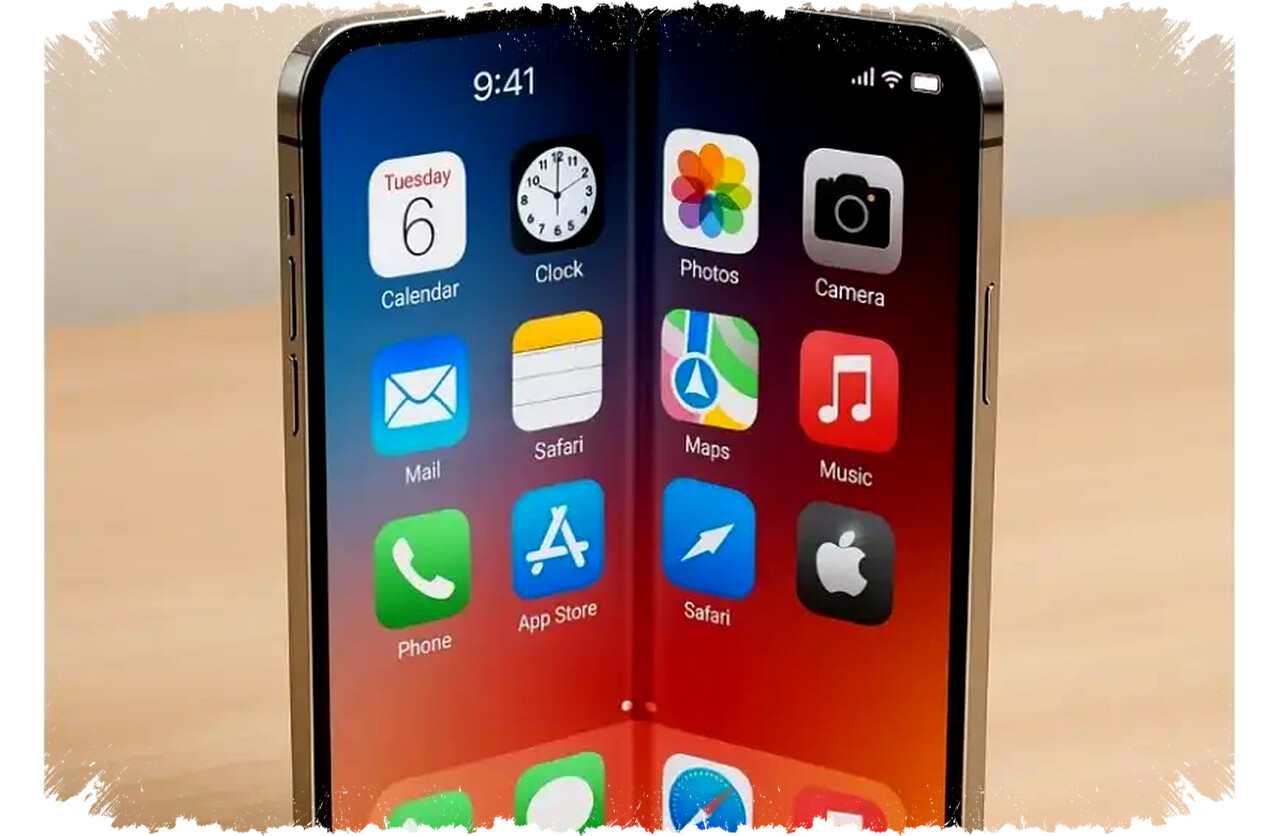
Apple is reportedly working on its first foldable smartphone, the so-called iPhone Fold, with the latest leaks revealing a significantly reduced crease on its foldable display. This key improvement addresses a long-standing challenge in foldable smartphones: the visible fold line that often hampers user experience.
According to industry reports, Apple aims to minimize the crease visibility by adopting innovative materials and a new hinge mechanism. This design reportedly differs from existing foldable smartphones by competitors like Samsung and Huawei, which still show evident fold lines on their devices. The focus on crease reduction is seen as critical to enhancing the visual appeal and long-term durability of foldable screens.
The iPhone Fold’s screen crease is said to be smoother and less noticeable during normal use. Apple is likely achieving this by integrating a flexible protective layer combined with an advanced hinge that evenly distributes pressure when folded. This engineering precision could set a new standard in the foldable phone market.

Foldable smartphones today face the dual challenge of maintaining screen integrity while providing a seamless folding experience. Samsung’s Galaxy Z Fold series and Huawei’s foldables have made progress, yet users often report visible creases and concerns over screen lifespan. Apple’s reported cautious approach signals a commitment to higher quality before commercial release.
The company has been conducting extensive research on foldable display technology for several years. Collaborations with OLED panel suppliers and hinge manufacturers are aiming to fine-tune the hardware to Apple’s stringent standards. Such partnerships are essential, given the complexity of flexible OLED screens and mechanical hinges.
Details about the iPhone Fold’s overall specifications remain scarce. However, leaks suggest the device will feature a book-style foldable display in the 7-8 inch range when fully opened. This size positions it directly against other premium foldable phones, offering a larger screen for media consumption and productivity.
No official statements from Apple have confirmed the iPhone Fold’s existence or launch timeline. Analysts expect Apple to introduce the device only once the technology reaches maturity and the ecosystem of applications fully supports foldable screen formats. This conservative strategy aligns with Apple’s typical approach to adopting new tech only after proven reliability.
Industry experts view the minimized crease as a potentially significant advancement for foldables. If Apple succeeds, it could push competitors to improve their designs and elevate the overall user experience in this emerging smartphone segment. The focus on screen durability and visual quality remains vital to drive broader consumer adoption.
Apple’s delay in launching a foldable phone contrasts with other brands racing to lead this market niche. The emphasis on perfected hardware and software integration could provide a seamless user experience that sets the iPhone Fold apart once launched. This patient innovation also fits Apple’s branding of premium, well-polished products.
While chipset, camera, and software details are not yet available, the supply chain involvement points to high-end components consistent with Apple’s flagship standards. Industry insiders speculate collaborations with top-tier suppliers to ensure manufacturing precision.
The foldable smartphone landscape has grown more competitive, but issues like screen creases and hinge durability still pose challenges. Apple’s reported engineering breakthroughs on crease minimization could become key differentiators and influence the future development of foldable devices.
Key highlights reported about the iPhone Fold so far:
- Minimized screen crease: Achieved through innovative flexible layers and a special hinge distributing fold pressure evenly.
- Foldable display size: Approximately 7 to 8 inches, adopting a book-style fold similar to Galaxy Z Fold.
- Supply chain collaboration: Partnerships with flexible OLED panel manufacturers and hinge producers optimizing quality.
- Launch timing: Expected in the next few years, allowing time for technology and application ecosystem maturity.
- Design philosophy: Prioritizing durability and visual experience over early market entry.
Apple’s entry into foldables with such rigorous standards indicates a focus on delivering a mature, reliable product. The reduced crease issue is a core improvement that may redefine consumer expectations and push the foldable smartphone market forward.
Given Apple’s history of improving and sometimes redefining device categories, its iPhone Fold could set a new benchmark. This device may combine innovative engineering with an extensive ecosystem, offering a practical and aesthetically pleasing foldable smartphone alternative.
Potential customers and tech enthusiasts will watch closely as more details emerge. The emphasis on crease minimization may become a deciding factor for consumers comparing foldable devices in the near future.
Thus, the iPhone Fold leak sheds light on Apple’s deliberate engineering strategy aimed at overcoming foldable display challenges. The rumored improvements indicate a thoughtful approach toward user experience and device longevity in this emerging category.