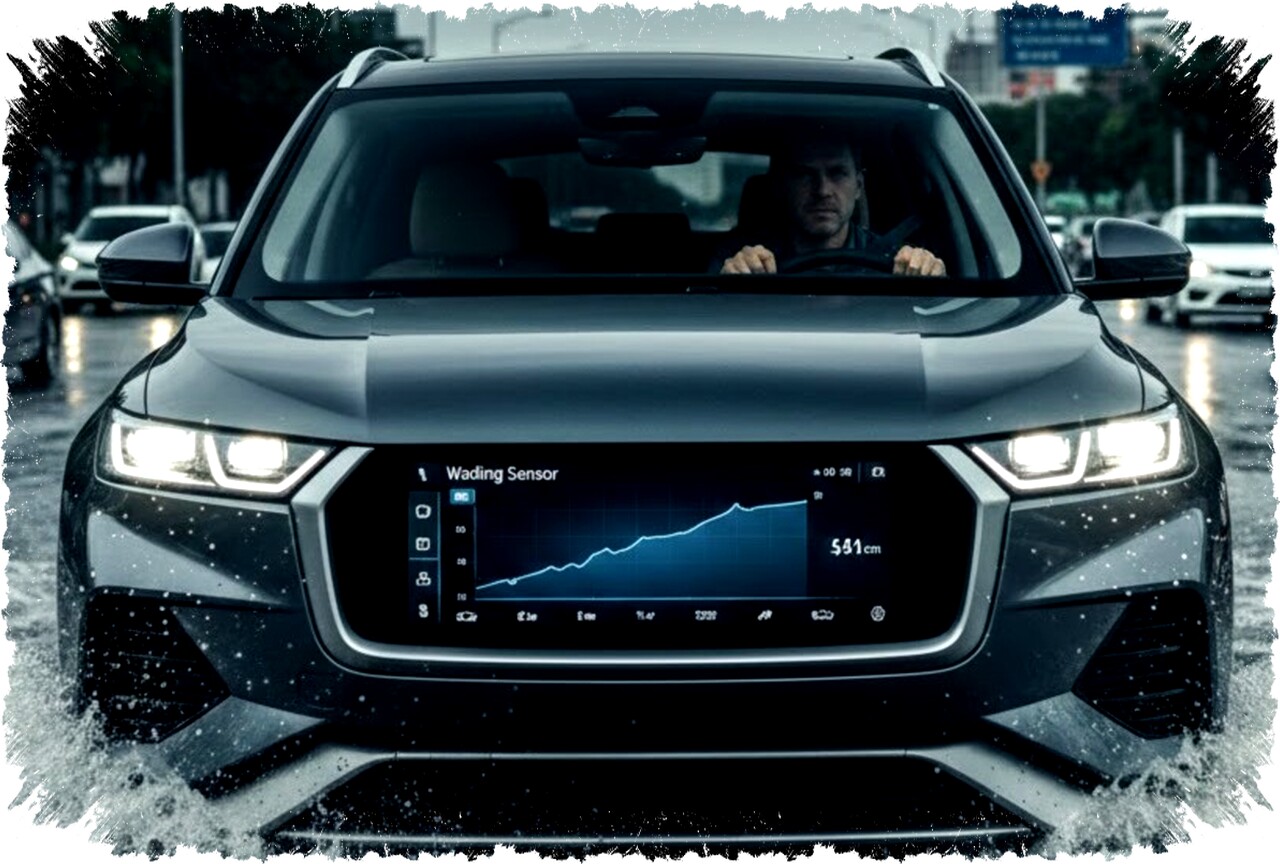
Urban flooding poses serious risks for drivers, especially when the depth of water on the road is unclear. To address this, the automotive industry has introduced the Wading Sensor technology in 2026 models. This advanced system can measure floodwater depth in real time, displaying accurate data directly on the vehicle’s screen. Such information is vital for preventing engine damage and improving safety during flood conditions.
The Wading Sensor uses ultrasonic waves to gauge the height of water on the road. Installed under side mirrors or bumpers, the sensor emits high-frequency sound waves that bounce off the water surface and return to the sensor. The vehicle’s computer then calculates the distance between the vehicle and water surface, delivering precise depth readings within seconds.
How the Wading Sensor Works


The technology behind the Wading Sensor resembles ultrasonic parking sensors, widely used to detect nearby objects. When activated in flood conditions, the sensor continuously scans the area in front of the vehicle. The data is processed to determine the water’s depth relative to the vehicle’s chassis. If the water reaches a critical height—known as the wading depth limit—alerts are sent via visual and audible signals. Drivers receive a clear warning to avoid crossing potentially dangerous floodwaters.
This real-time feedback helps circumvent the common risks of floodwaters. Even seemingly shallow puddles may conceal depths that cause water to enter the engine’s air intake. Such incidents lead to “water hammer,” a phenomenon that can severely damage the internal parts of the engine, possibly resulting in costly repairs or total engine failure.
Integration with Vehicle Systems
Leading manufacturers like Land Rover have incorporated this technology into premium SUVs such as the Land Rover Defender. On these models, sensors are integrated into both side mirrors, covering the width of the vehicle for comprehensive measurements. The information is displayed on the infotainment screen in an easy-to-understand graphic format. Moreover, some vehicles combine Wading Sensor data with terrain-specific driving modes. For example, Terrain Response systems adjust throttle, transmission, and traction controls to better handle wet or muddy surfaces, enhancing vehicle stability.
Importance of Accurate Flood Information
Indonesia’s increasing frequency of heavy rainfall and flash floods, as reported by the Meteorology, Climatology, and Geophysics Agency (BMKG), exemplifies the growing need for such technology. Sudden urban flooding often occurs with minimal warning, especially at night when visibility is low. Without a way to measure water depth, drivers often take hazardous gambles that could lead to engine stalling or loss of control.
Global authorities such as the World Health Organization (WHO) highlight the dangers of driving through floodwaters, including risks of being swept away by currents or vehicle damage. The Wading Sensor does not eliminate these hazards but provides quantitative data to reduce uncertainty. This assists drivers in making cautious and better-informed decisions when encountering waterlogged roads.
Understanding Wading Depth Limits
Every vehicle has a maximum safe limit for crossing water, referred to as the wading depth. This is usually determined by the height of the air intake, the design of the exhaust system, and electrical component protections. Premium SUVs in 2026 can often wade through water depths exceeding 800 millimeters (around 31.5 inches). However, without sensors, estimating whether water has surpassed this limit is guesswork.
Wading Sensors help identify when the water depth approaches or exceeds the vehicle’s safe threshold. This capability is invaluable for off-road enthusiasts and city drivers alike who might confront sudden flooding. By continually monitoring water conditions, the system helps prevent unintended engine flooding and reinforces vehicle longevity.
Additional Diagnostic Benefits
Beyond providing real-time measurements, Wading Sensors often log flood exposure data. When a vehicle undergoes routine maintenance, technicians can review this information to check for any potential water-related damage. This practice increases transparency and efficiency in post-flood vehicle care, helping owners avoid costly hidden repairs.
Balancing Technology and Caution
Despite the advances in sensor technology, human judgment remains paramount. Drivers must remember that swift currents and debris pose severe threats regardless of water depth. The Wading Sensor should be used in conjunction with weather forecasts from agencies like BMKG, road safety alerts, and prudent driving practices.
Technology aids decision-making but does not replace safety protocols. Drivers are encouraged to remain vigilant and avoid crossing floodwaters whenever possible, even if sensor readings appear favorable.
Future Trends and Industry Adoption
More automakers are expected to adopt Wading Sensor technology, particularly on SUVs and vehicles designed for rugged terrain. This aligns with broader trends toward active safety features that adapt to environmental changes. Real-time environmental sensing, combined with integrated vehicle systems, showcases how innovations in automotive technology actively respond to climate challenges.
As urban flooding becomes increasingly common, Wading Sensors represent a crucial step forward in enhancing vehicle safety and driver confidence. They transform the unknown risk of hidden floodwaters into manageable data, reducing panic and preventing costly damages. This feature exemplifies how the auto industry leverages innovation not just for convenience but to save lives and protect vital vehicle functions.