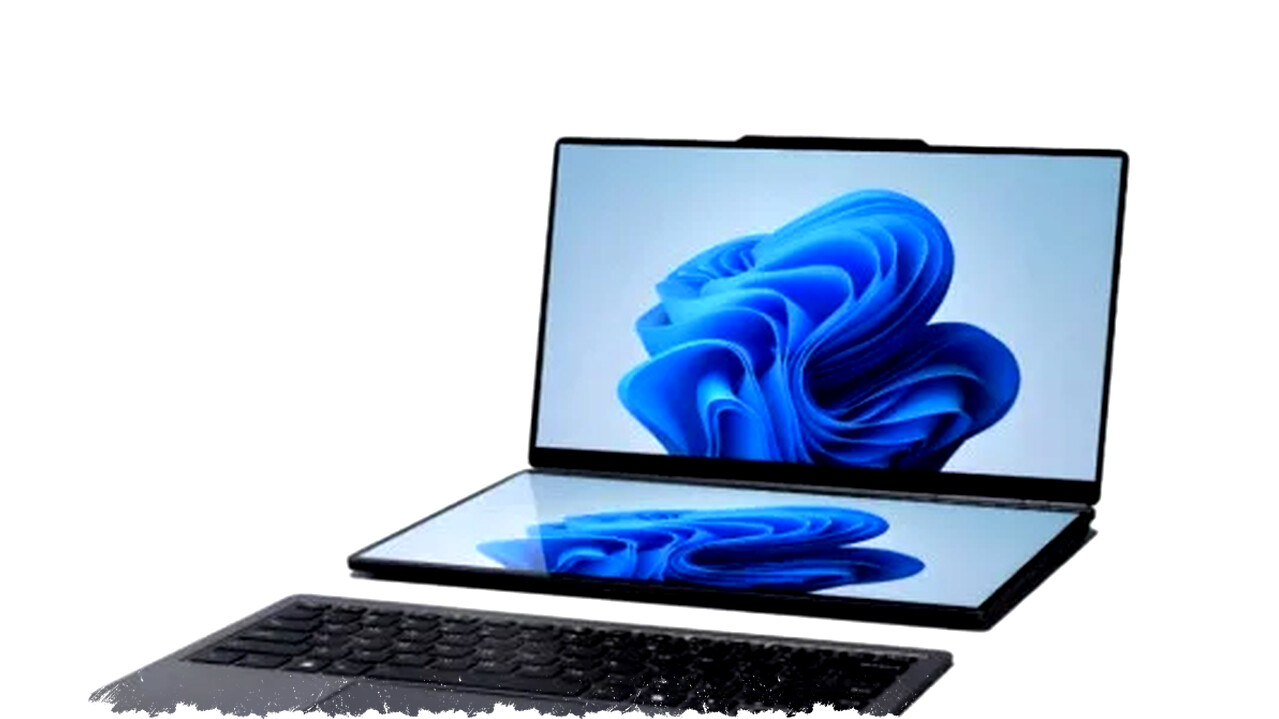
Lenovo’s upcoming ThinkBook Modular AI PC concept aims to redefine laptops with its highly flexible, modular design. Early leaks reveal that this innovative device could seamlessly transform between traditional laptop mode and versatile multi-screen setups to meet diverse user needs.
The concept first emerged through visuals shared by renowned technology leaker Evan Blass, showing a device that mimics a conventional clamshell laptop at first glance. However, closer examination indicates that Lenovo designs the base unit to support interchangeable modules, allowing significant customization.
A Dual-Purpose Workstation


The ThinkBook Modular AI PC can switch between two main configurations. One features a classic physical keyboard and trackpad, catering to users who prioritize typing and conventional laptop workflows. The other transforms the keyboard and trackpad area into a secondary touchscreen, expanding screen real estate dramatically for multitasking or creative applications.
This flexibility enables users to tailor the device for specific tasks. The secondary display may function as an extra workspace, a digital drawing pad, a control panel, or a dedicated area for AI-driven applications. This adaptability could boost productivity by aligning hardware capabilities with personalized workflows.
Lenovo’s Commitment to Future-Proof Designs
Lenovo’s experimentation with modular and flexible devices is not new. Over recent years, the company has showcased groundbreaking prototypes at events like the Mobile World Congress (MWC). These included laptops with rollable screens, magnetic expansion panels, and even transparent displays.
While many of these prototypes did not reach mass production, they influenced Lenovo’s product development and revealed the company’s growing focus on innovative form factors. The ThinkBook Modular AI PC signals a continuation of this trend, embodying Lenovo’s vision for how computing devices might evolve to meet the demands of AI-era work environments.
Unanswered Questions on Modularity and AI Integration
Key technical details about the ThinkBook Modular AI PC remain undisclosed. It is unclear what mechanism Lenovo uses to attach or detach the modules—potential options include magnets, pogo pins, or specialized internal rails. Specifics about the secondary display, such as resolution, refresh rate, and stylus support, are also unknown.
The product’s “AI PC” branding suggests embedded artificial intelligence capabilities that could enhance user experience, potentially through AI-assisted productivity tools or adaptive interfaces. However, concrete features related to AI integration have yet to be revealed by Lenovo.
Exploring Market Interest and User Response
Concept devices like this often serve as platforms for genuine market research. Lenovo typically uses MWC to showcase radical concepts and gauge reactions from industry experts, consumers, and partners before committing to production.
With MWC 2026 scheduled to begin on March 2 in Barcelona, the public can expect official demonstrations or further clarifications on the ThinkBook Modular AI PC shortly. This upcoming event will reveal whether Lenovo intends to bring this modular laptop to commercial markets or keep it as a visionary experiment.
Potential Advantages of a Modular AI Laptop
- Enhanced Productivity: Switching between a physical keyboard and a touchscreen workspace accommodates various professional tasks without multiple devices.
- Customizable Hardware: Users could upgrade or swap modules for different needs, extending device lifespan.
- AI-Powered Features: Integrating AI directly into hardware may streamline workflows, automate mundane tasks, or provide intelligent assistance.
- Portability with Flexibility: Maintaining a compact laptop form factor while offering modular expansions balances mobility and power.
Lenovo’s ThinkBook Modular AI PC prototype highlights a new chapter in personal computing where hardware adapts dynamically to evolving user demands. By pushing the boundaries of design and functionality, Lenovo demonstrates a forward-thinking approach to integrating modularity and artificial intelligence in future laptops.