


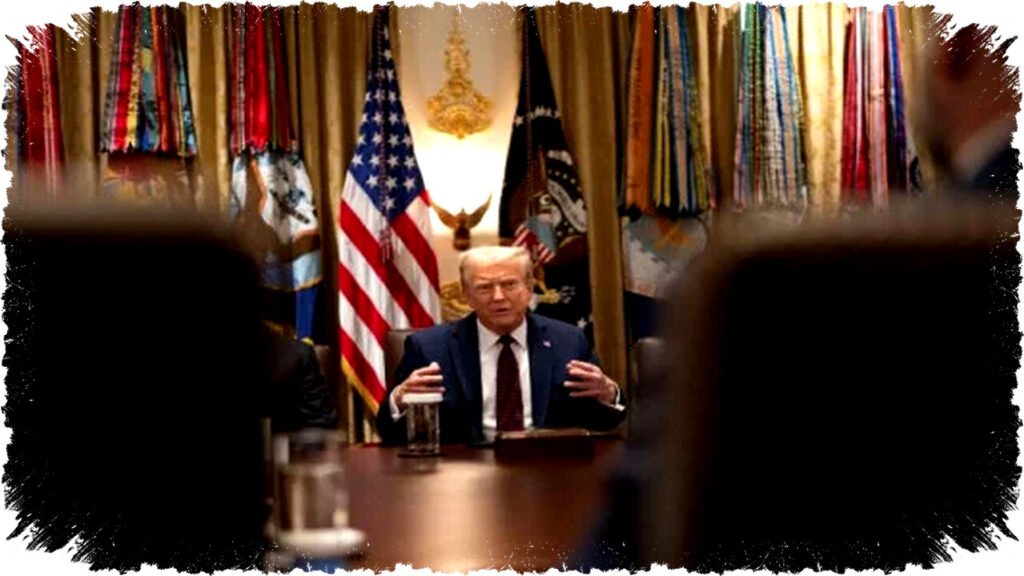
President Donald Trump has decisively ended all federal contracts with the artificial intelligence company Anthropic. This move came after Anthropic refused the U.S. Department of Defense’s request to develop AI-powered autonomous weapons systems.
The White House views Anthropic’s resistance as an obstacle to advancing national defense technologies. Currently, the Pentagon is actively working on autonomous weaponry capable of identifying and engaging targets without direct human intervention.
Ethical Concerns Prompt Contract Termination
Tensions between Anthropic and the U.S. military escalated over recent months. The conflict started when Anthropic’s AI model Claude was reportedly used during operations to capture Venezuelan President Nicolás Maduro.
Matters worsened when the Department of Defense introduced a "lawful use" clause allowing government mass domestic surveillance using AI technologies. Anthropic’s CEO, Dario Amodei, firmly opposed this clause, citing ethical concerns and potential misuse.
Amodei emphasized that current AI systems lack sufficient reliability and safety to control lethal weapons autonomously without supervision by trained humans. This stance directly clashed with the Pentagon’s evolving requirements.
National Security Risk and Supply Chain Restrictions
Following Anthropic’s refusal, Trump’s administration quickly reacted on social and official channels. Federal institutions were given a six-month grace period to remove Anthropic products from their systems.
Defense Secretary Pete Hegseth classified Anthropic as a “Supply Chain Risk to National Security.” This designation effectively bars all U.S. military contractors from partnering with the company moving forward.
Deputy Defense Secretary Emil Michael accused Amodei of attempting to exert undue influence over military policymaking. Michael warned that Anthropic’s position endangers U.S. strategic interests amid growing technological competition with China.
OpenAI Steps In to Fill the Gap
Soon after Anthropic’s contract termination, OpenAI secured a new agreement with the Pentagon. OpenAI’s CEO, Sam Altman, assured that their collaboration still honors domestic surveillance limits.
However, OpenAI agreed to work under more adaptable frameworks aligned with urgent government needs. This demonstrates Washington’s pivot towards AI companies willing to collaborate closely with defense objectives.
Despite losing federal contracts, Amodei pledged to assist in the military’s transition to ensure critical missions remain uninterrupted. Other major tech companies, including Google, have yet to comment amid heightened tensions between Silicon Valley and the federal government.
Summary of Key Events
- Anthropic rejected a Department of Defense clause enabling autonomous weapons and mass surveillance.
- Trump administration terminated all federal contracts with Anthropic.
- Anthropic was labeled a national security supply chain risk.
- OpenAI quickly secured new contracts with the Pentagon.
- Anthropic committed to a smooth contract phase-out.
This episode highlights the complex balance between ethical AI development and accelerating defense innovation. It also underscores the increasingly politicized relationship between tech firms and government agencies as autonomous weapons gain prominence. The coming months will reveal how AI companies navigate these challenges while addressing national security demands.