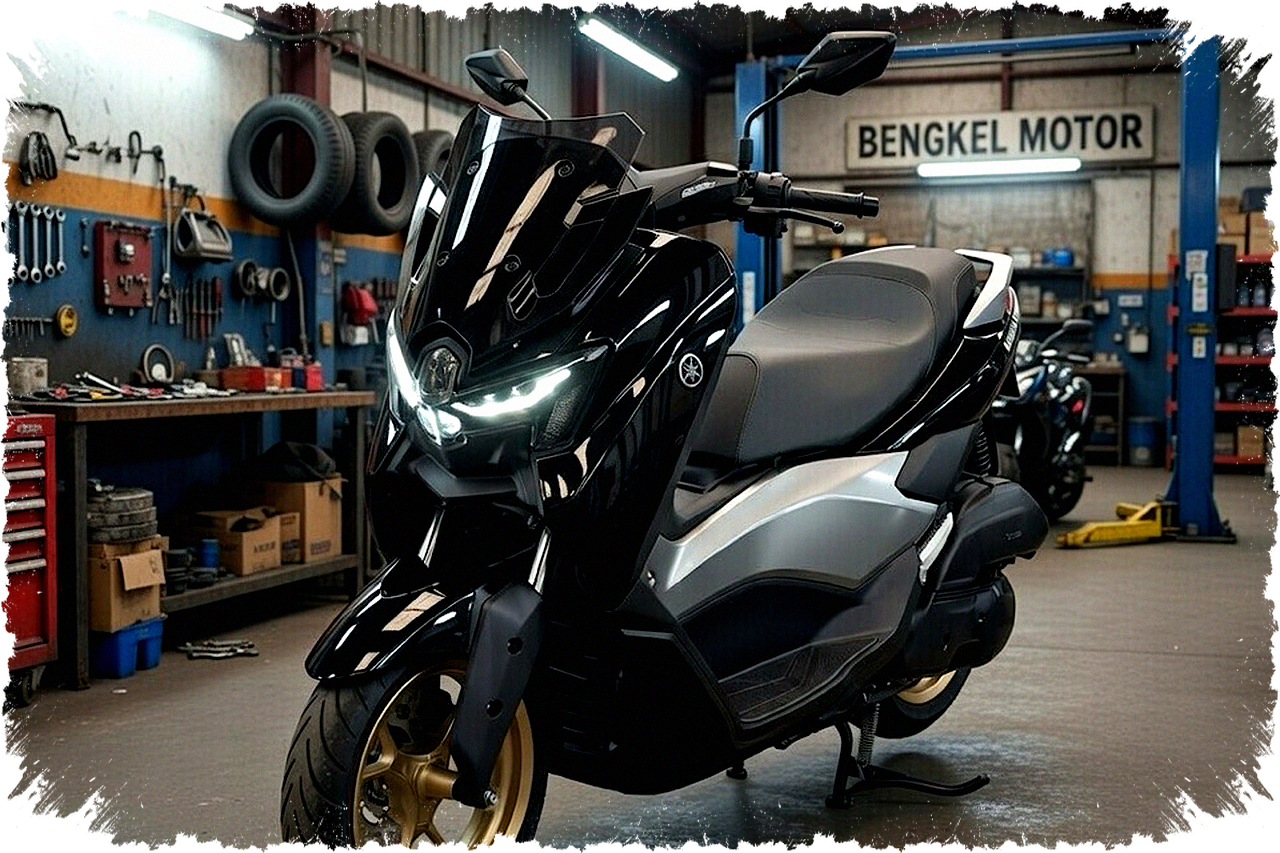
Yamaha NMAX remains one of the most popular scooters in its segment due to its practicality and style. However, older generations of the NMAX have faced several common issues that affected riders’ experiences. With the release of the latest 2024 NMAX Turbo model, Yamaha claims to have addressed these longstanding problems through significant technical upgrades.
Many long-time NMAX owners have expressed curiosity about whether upgrading to the new NMAX Turbo is truly worthwhile. The answer lies in how Yamaha tackled five major weaknesses of previous NMAX models, which have been frequently discussed in user communities and reviews. According to insights shared by the Indonesian automotive content creator @uzoneindonesia, these improvements not only enhance ride comfort but also performance and reliability.
1. Rear Suspension: Comfort Enhanced


Earlier NMAX versions often drew complaints about their stiff rear suspension. Riders reported harsh vibrations and an unpleasant “jedug” effect, especially on rough or uneven roads. This made longer journeys less comfortable and contributed to fatigue.
The 2024 NMAX Turbo features a significantly refined rear suspension system. Yamaha optimized the shock absorbers, greatly reducing the “jedug” sensation. This upgrade provides smoother absorption of road irregularities, leading to a noticeably more comfortable ride. According to testing by @uzoneindonesia, the suspension feels more compliant and better able to handle Indonesia’s typical urban conditions.
2. CVT Transmission: Quieter and More Durable
The Continuously Variable Transmission (CVT) in older NMAX models was notorious for producing a “geredeg” noise, a rattling or vibrating sound during use that annoyed many riders. This issue also hinted at less robust mechanical components.
For the NMAX Turbo, Yamaha enlarged the rear pulley size and updated the CVT design to eliminate this noise. While full durability can only be assessed after extended use, early feedback indicates a significant drop in rattling sounds. These enhancements contribute to a quieter and more refined drivetrain experience, making daily commutes less tiresome.
3. Oil Consumption: Reduced “Oil Vampire” Problem
A major complaint among previous NMAX owners involved excessive engine oil consumption, sometimes called the “oil vampire” issue. High oil consumption was a concern due to increased maintenance costs and the risk of engine damage if not monitored carefully.
The new NMAX Turbo engine shows marked improvement. Inspections reveal that oil levels after use remain within normal limits, indicating less excessive consumption. Though long-term data is pending, initial reports suggest this issue has been addressed, improving engine reliability and lowering ownership costs.
4. Trunk Capacity: Slightly Expanded But Still Limited
The storage trunk on older NMAX models had a capacity of about 24 liters. While adequate for small items, it struggled to fit larger helmets such as the TTRJ or Honda’s TRX series, which riders commonly use.
The 2024 model expands the trunk volume to approximately 25 liters, a small but meaningful increase. Despite this, some helmets still do not fit, a limitation that remains for certain users. Buyers should remain aware of this slight constraint if storage space is a deciding factor.
5. Acceleration and Engine Response: Power Boosted
Another frequent grievance was the sluggish acceleration in previous generations of NMAX. Slow throttle response and moderate torque output made overtaking or quick starts feel less confident.
Yamaha has upgraded the engine in the NMAX Turbo, increasing torque from about 13.8 Nm to 14.2 Nm at 6500 rpm. The introduction of Yamaha’s YECVT (Yamaha Enhanced Continuously Variable Transmission) system adds selectable riding modes including an “S-Mode” for sportier acceleration. These changes deliver more responsive and dynamic performance, effectively eliminating the “slow pull” problem.
Yamaha’s efforts to fix these five core problems cement the NMAX Turbo’s status as a refined scooter that better meets rider expectations in 2024. Rear suspension comfort, quieter CVT operation, reduced oil consumption, modest storage expansion, and improved power delivery all contribute to a more satisfying ownership experience.
For owners of older NMAX models, the question remains whether these upgrades justify investing in the latest Turbo variant. Riders who prioritize comfort and enhanced performance will find Yamaha’s improvements compelling. Meanwhile, some aspects like the still-limited trunk space might not fully satisfy all needs.
Yamaha’s transparency about addressing known warranty and user feedback issues also improves buyer confidence in the new model’s reliability. As more real-world reviews emerge, clearer consensus about the Turbo’s value proposition will form.
These continuous improvements illustrate Yamaha’s commitment to evolving the NMAX platform into a more durable, enjoyable, and technologically advanced scooter for urban mobility. Whether for daily commuting or weekend riding, the NMAX Turbo sets a new benchmark in its segment by resolving the “pain points” previously experienced by many users.