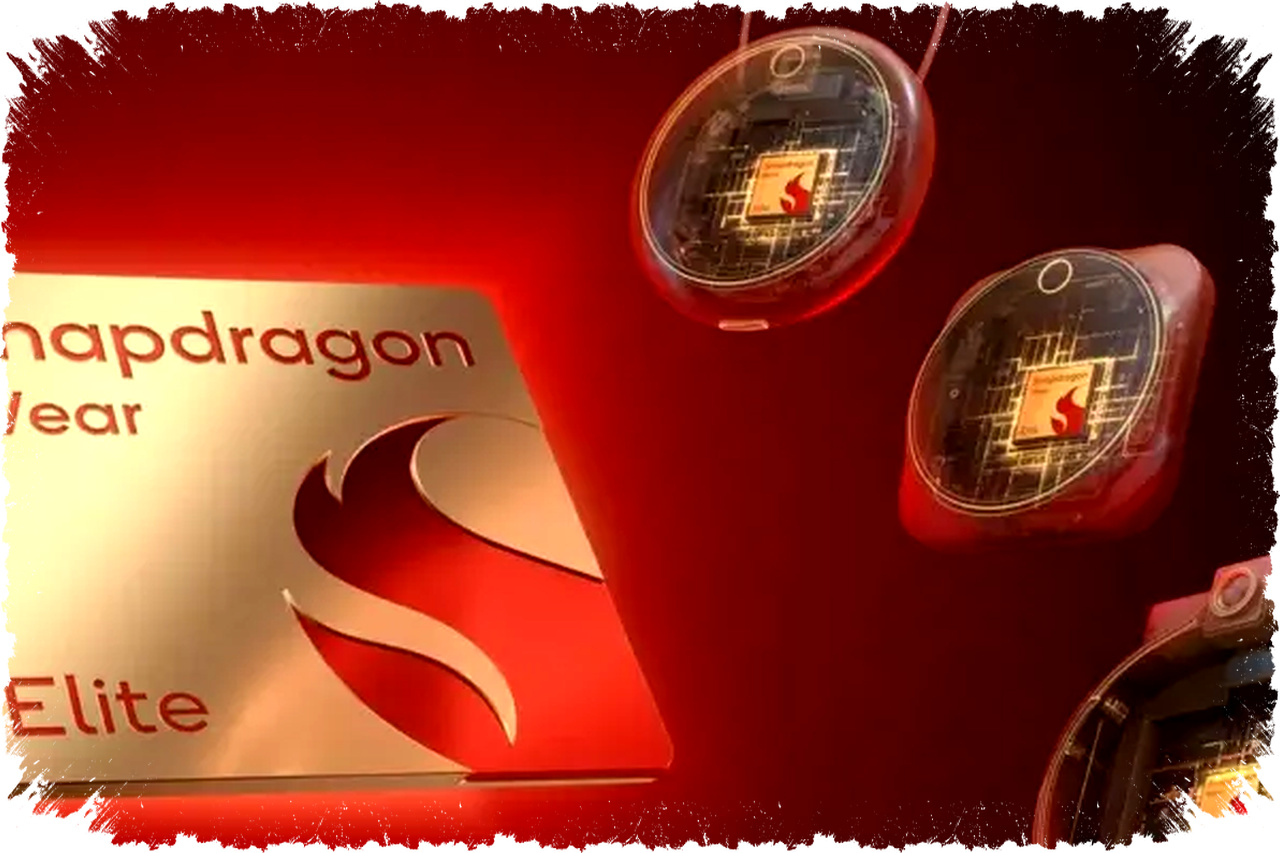
At Mobile World Congress (MWC) 2026 in Barcelona, Qualcomm unveiled its latest breakthrough in wearable technology: the Snapdragon Wear Elite chipset. This new platform marks a fundamental shift from traditional wearable chips, positioning smartwatches as independent computing devices rather than mere smartphone companions. By leveraging advanced 3-nanometer fabrication technology, Qualcomm delivers both significant power efficiency and substantial boosts in performance.
Snapdragon Wear Elite boasts a single-thread CPU performance up to five times faster than its predecessor, while its GPU achieves a sevenfold increase in smoothness. These enhancements enable use cases previously unimaginable on wrist-worn devices, such as gaming at 1080p resolution with 60 frames per second. This evolution underscores a future where smartwatches are full-fledged devices capable of intensive tasks, not just notification hubs or fitness trackers.
Revolutionary AI Integration on the Wrist

One of the most compelling features of Snapdragon Wear Elite is the integration of a primary Hexagon Neural Processing Unit (NPU) alongside a secondary energy-efficient NPU (eNPU). This dual-NPU architecture enables on-device AI processing, capable of running models with up to two billion parameters without relying on cloud connectivity. This design ensures user privacy by keeping sensitive health data and personal information local to the device.
Qualcomm highlights that AI-driven tasks on Snapdragon Wear Elite can generate first responses within 0.20 seconds, nearly eliminating perceptible delay. Such responsiveness allows the smartwatch to function as a real-time personal health assistant, an instant language translator, or even a tool to transcribe voice and summarize lengthy texts directly on the wrist. Early partnerships, including Qualcomm’s collaboration with Google to optimize Wear OS, signal a rising focus on AI-powered local processing rather than cloud dependence.
Motorola’s announced Project Maxwell aims to leverage Wear Elite’s AI capabilities to introduce a new breed of smartwatches focused on contextual intelligence and autonomous interaction. This indicates the wider ecosystem of wearable devices will soon embrace smarter, more independent forms driven by AI at the edge.
Advanced Battery Life and Connectivity Innovations
Typically, enhanced computing power on wearables comes with the tradeoff of shorter battery life. Snapdragon Wear Elite challenges this trend through its 3nm process and intelligent power management, promising approximately 30% longer battery life compared to prior generations. Fast-charging support allows the battery to reach 50% in just 10 minutes, ideal for users who need a quick recharge between activities.
Connectivity is also radically improved with the introduction of "hexa-connectivity," the industry’s first chipset to integrate six simultaneous wireless technologies:
- 5G RedCap for reduced capacity, power-efficient cellular connectivity
- Wi-Fi 6 with enhanced power-saving modes
- Bluetooth 6.0 for faster, more reliable device pairing
- Ultra-Wideband (UWB) enabling precise spatial awareness
- Global Navigation Satellite System (GNSS) for accurate positioning
- NB-NTN (Narrowband – Non-Terrestrial Networks) supporting satellite-assisted communication
This diverse connectivity suite ensures seamless and reliable links even in challenging environments or emergencies. Samsung has confirmed that its upcoming flagship smartwatch will be powered by Snapdragon Wear Elite, focusing on a comprehensive health assistant experience augmented by these networking advances.
Impact on the Wearable Industry and Competitors
Snapdragon Wear Elite’s debut sets a new benchmark for the wearable chipset market. By combining powerful AI processing, extended battery life, rapid charging, and robust connectivity into a compact form, Qualcomm enables manufacturers to rethink what smartwatches and other wearables can do.
Competitors will likely face pressure to accelerate their own wearable chip developments to keep pace. The ability to run complex AI workloads on-device, support vivid 1080p high-frame-rate gaming, and maintain strong connectivity across six different protocols is a considerable competitive advantage.
For consumers, this translates into more versatile, smarter, and more autonomous wearables that can serve as digital hubs on their wrist. As Snapdragon Wear Elite-powered devices become mainstream, the line between traditional smartwatches and multipurpose personal assistants will continue to blur.
Summary of Snapdragon Wear Elite’s Key Features
| Feature | Description | Impact |
|---|---|---|
| 3nm fabrication process | Advanced manufacturing technology | Higher efficiency, better battery |
| CPU & GPU improvements | Up to 5x CPU and 7x GPU performance boost | Enables gaming & smooth UI |
| Dual NPU architecture | Hexagon NPU + eNPU for on-device AI processing | Privacy & ultra-fast AI response |
| Battery life & fast charging | 30% longer battery, 0-50% charge in 10 minutes | Longer use, convenient quick tops-up |
| Hexa-connectivity | 5G RedCap, WiFi 6, Bluetooth 6, UWB, GNSS, NB-NTN | Reliable, versatile wireless access |
| Wear OS & AI collaboration | Enhanced AI features via Google & partner OEMs | Smarter, more integrated wearable |
Snapdragon Wear Elite represents a decisive leap forward for the wearable tech landscape. Its combination of AI, performance, connectivity, and battery innovation will fuel new use cases and redefine expectations for wrist-worn devices. The wearable market in 2026 and beyond appears poised for a transformation where these devices no longer play second fiddle to smartphones, but stand on their own as intelligent, high-performance companions.