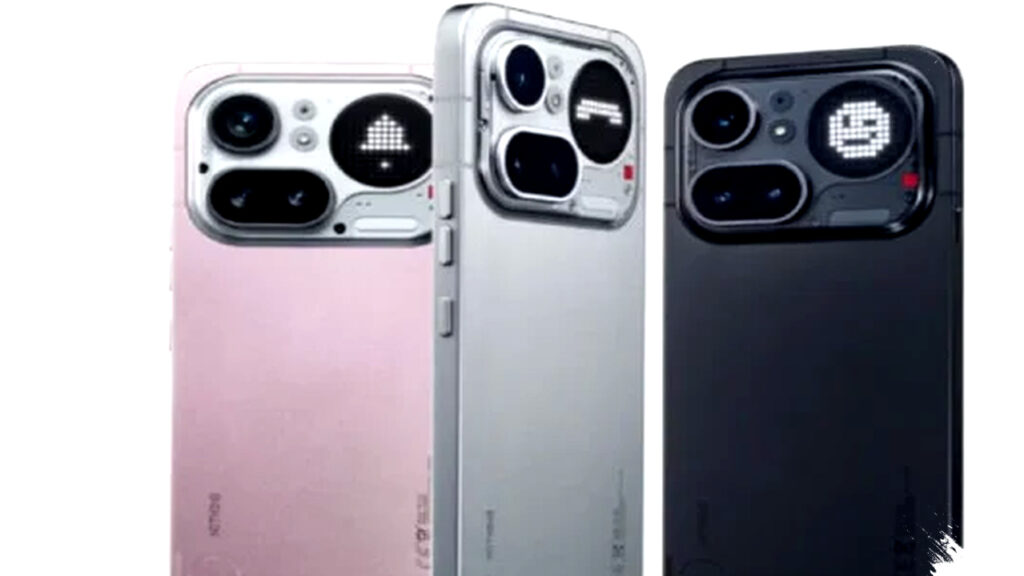
Nothing has officially launched its latest smartphones, the Nothing Phone (4a) and Nothing Phone (4a) Pro. Both models showcase a futuristic design language, continuing the brand’s signature transparent aesthetic and innovative LED lighting system. These phones are positioned to capture the interest of tech enthusiasts seeking a blend of style and advanced features.
The new devices come equipped with Nothing OS 4.1, based on Android 16. The company has committed to providing long-term support, including three major OS updates and six years of security patches, reinforcing its dedication to software longevity.
Distinct Designs with Characteristic Lighting
While both belong to the same series, the Nothing Phone (4a) and its Pro counterpart follow different design philosophies. The standard Phone (4a) sports a minimalist look with a clean pill-shaped camera module on its back. Its highlight is the new Glyph Bar, a straight LED strip featuring 63 LEDs divided into six segments. This lighting system can reach a peak brightness of 3,500 nits and offers three intensity levels, improving visibility by 40 percent compared to the previous generation.
In contrast, the Nothing Phone (4a) Pro adopts a bolder approach with its Glyph Matrix — a circular LED array consisting of 137 LEDs. Though containing fewer individual LEDs than the previous Glyph system on Nothing Phone (3), this new setup covers an area 57 percent larger. Its brightness peaks at 3,000 nits, ensuring clarity in diverse lighting conditions. Furthermore, the Pro model boasts a premium unibody metal construction. Despite this upgrade, it is slimmer and lighter than the standard 4a, with a thickness of just 7.95 mm and an IP65 rating for enhanced dust and water resistance.
Performance: Mid-Range vs. Upper Mid-Range Power
Under the hood, the Nothing Phone (4a) is powered by the Qualcomm Snapdragon 7s Gen 4 chipset. This processor delivers a modest 7 percent CPU performance boost over its predecessor. The phone pairs this with either 8GB or 12GB of LPDDR4X RAM and UFS 3.1 storage options up to 256GB.
On the other hand, the Nothing Phone (4a) Pro is equipped with the more powerful Qualcomm Snapdragon 7 Gen 4. This chipset offers significant improvements — a 27 percent increase in CPU performance, a 30 percent boost in GPU power, and a 65 percent enhancement in AI processing capabilities. The Pro also integrates LPDDR5X RAM in 8GB or 12GB configurations and UFS 3.1 storage up to 256GB. To maintain efficiency during intense usage, it includes a vapor chamber cooling system with a sizable 5,300 mm² surface area.
Display Features Tailored for Smooth Visuals
The Nothing Phone (4a) features a 6.78-inch OLED display with a resolution of 1224 x 2720 pixels. It supports a 120Hz refresh rate that ensures smooth scrolling and animations. Its peak brightness reaches 4,500 nits, and the screen is protected by Corning Gorilla Glass 7i for enhanced durability.
Meanwhile, the Pro variant upgrades to a 6.83-inch OLED screen with a 1260 x 2800 pixel resolution. It pushes refresh rates up to 144Hz, catering well to gamers and users who demand ultra-fluid visuals. Its brightness can climb to an impressive 5,000 nits, complemented by PWM dimming technology at 2,160Hz, which reduces eye strain.
Advanced Cameras as a Core Selling Point
Both devices place a strong emphasis on camera performance. The Nothing Phone (4a) uses a 50MP Samsung GN9 sensor for its main camera, paired with an f/1.88 aperture and optical image stabilization (OIS). Supporting this is a 50MP periscope telephoto lens offering 3.5x optical zoom, an 8MP ultra-wide sensor, and a 32MP front camera for selfies.
The Phone (4a) Pro also equips a 50MP main sensor, but with a Sony Lytia 700C sensor featuring OIS. It matches the standard version’s telephoto capabilities with a 50MP Samsung JN5 periscope lens that supports 3.5x optical and 7x digital zoom through in-sensor zoom technology. Additionally, the ultra-wide camera uses an 8MP Sony IMX355 sensor with a 120-degree field of view, complemented by a 32MP selfie camera.
Battery and Charging
Both models come with a 5,080 mAh battery and support 50W fast wired charging. This ensures that users can quickly power up and enjoy extended screen time without significant interruptions.
Pricing and Availability
The standard Nothing Phone (4a) starts at approximately €350 ($380) for the 8GB/128GB version. The 8GB/256GB model is priced around €390 ($420), while the top-tier 12GB/256GB variant costs about €430 ($460).
The more premium Nothing Phone (4a) Pro begins at roughly €480 ($520) for the 8GB/128GB version. The 12GB/256GB model is available for approximately €550 ($600). Notably, the Pro will also launch in the United States, with prices starting at $500.
Overview of Key Specifications
| Feature | Nothing Phone (4a) | Nothing Phone (4a) Pro |
|---|---|---|
| Design | Transparent plastic frame | Premium unibody metal frame |
| LED System | Glyph Bar (63 LEDs, 3,500 nits) | Glyph Matrix (137 LEDs, 3,000 nits) |
| Processor | Qualcomm Snapdragon 7s Gen 4 | Qualcomm Snapdragon 7 Gen 4 |
| RAM | 8GB / 12GB LPDDR4X | 8GB / 12GB LPDDR5X |
| Storage | UFS 3.1 up to 256GB | UFS 3.1 up to 256GB |
| Display | 6.78" OLED, 1224×2720, 120Hz, 4500 nits | 6.83" OLED, 1260×2800, 144Hz, 5000 nits |
| Main Camera | 50MP Samsung GN9, OIS | 50MP Sony Lytia 700C, OIS |
| Telephoto Camera | 50MP periscope, 3.5x zoom | 50MP Samsung JN5 periscope, 3.5x optical, 7x digital |
| Ultra-wide Camera | 8MP | 8MP Sony IMX355 |
| Front Camera | 32MP | 32MP |
| Battery | 5,080 mAh, 50W fast charging | 5,080 mAh, 50W fast charging |
| Water Resistance | IP64 | IP65 |
Both the Nothing Phone (4a) and (4a) Pro represent significant steps forward for the brand. Their unique lighting solutions and commitment to high-quality cameras make them stand out in a crowded mid-range market. Additionally, the promise of extended software support reflects Nothing’s intent to maintain device relevance over several years. As these smartphones arrive on global markets, their combination of distinct design and robust specifications will likely attract users who value both form and function.