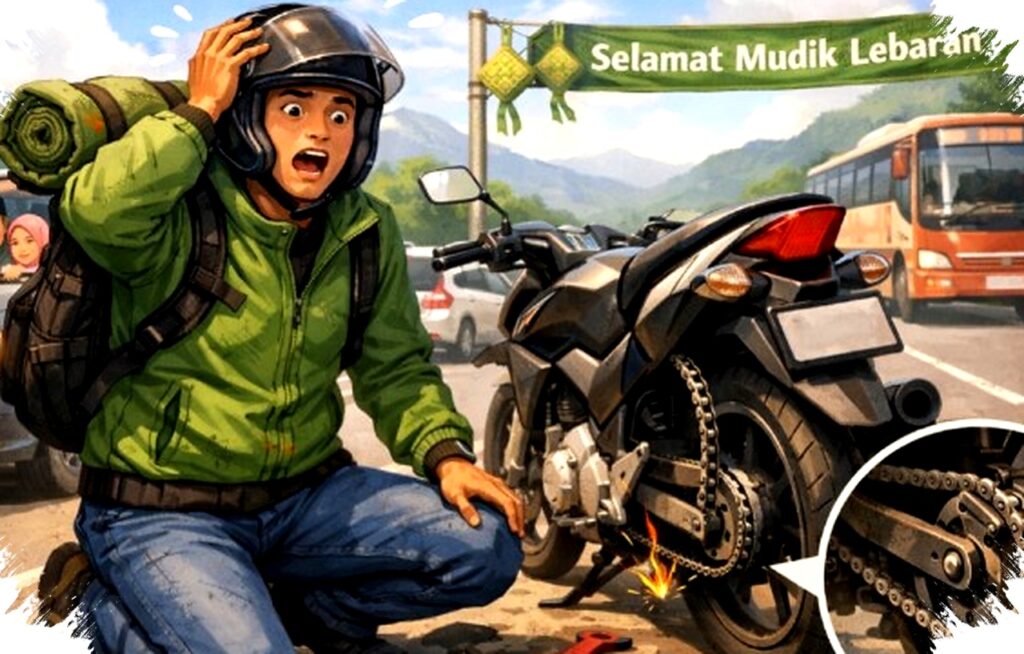
During the mudik season, long motorcycle journeys test endurance and focus. One common and urgent issue on the road is a loose or detached motorcycle chain.
This problem not only disrupts travel comfort but also poses significant safety risks. If a chain becomes loose or breaks, immediate and correct action is essential to protect the rider and others.
Recognizing Chain Problems
Motorcycle chains typically exhibit clear warning signs when malfunctioning. Harsh noises from beneath the motorcycle, increased engine resistance, or sudden power loss are frequent indicators. These symptoms suggest the chain may be loose, slipped off the sprocket, or broken.
Experts emphasize that upon noticing these signs, riders should promptly pull over to a safe shoulder or away from traffic flow. Panicking or continuing to ride can lead to dangerous accidents.
Emergency Handling: Step-by-Step
Assess the Chain Condition
Quickly check if the chain is merely loose, slipped off the gear, or completely broken. This assessment guides the next response steps.Reinstalling a Detached Chain
If the chain has slipped off but remains intact, position the bike on its center stand. Slowly rotate the rear wheel while guiding the chain back onto the sprocket. Wearing gloves or using a cloth is recommended to protect your hands from grease and injury.Adjusting a Loose Chain
For chains that feel slack yet remain connected, adjust the tension using the rear wheel’s tensioning bolts. Tighten evenly on both sides to keep the wheel aligned. Avoid over-tightening as this can accelerate chain wear and increase breakage risk.Lubricate the Chain
When proper chain lubricant is unavailable, a small amount of engine oil serves as a temporary alternative. Applying lubrication reduces friction and wear until professional maintenance is accessible.- Continue with Caution
After making adjustments, ride at a reduced, steady speed. Avoid abrupt acceleration or carrying heavy loads which could worsen the chain’s condition.
If the chain is completely broken, do not attempt to ride the motorcycle. Pushing the bike to a nearby workshop or arranging vehicle transport is safer to prevent further damage or accidents.
Prevention and Preparedness
Checking the motorcycle before long trips is critical. Ensure the chain is neither too loose nor too tight and has proper lubrication. Routine maintenance helps avoid mechanical breakdowns during travel.
Carrying essential tools such as a wrench, lubricant, and gloves is advisable. These items can make emergency fixes feasible and keep the journey on track.
Riding safely during mudik requires awareness and readiness to handle mechanical issues like chain problems. Following these emergency tips equips motorcyclists to manage sudden chain failures responsibly.
Ultimately, safety remains the highest priority. Preparedness and calm decision-making can save a rider from hazardous situations caused by a loose or detached motorcycle chain.