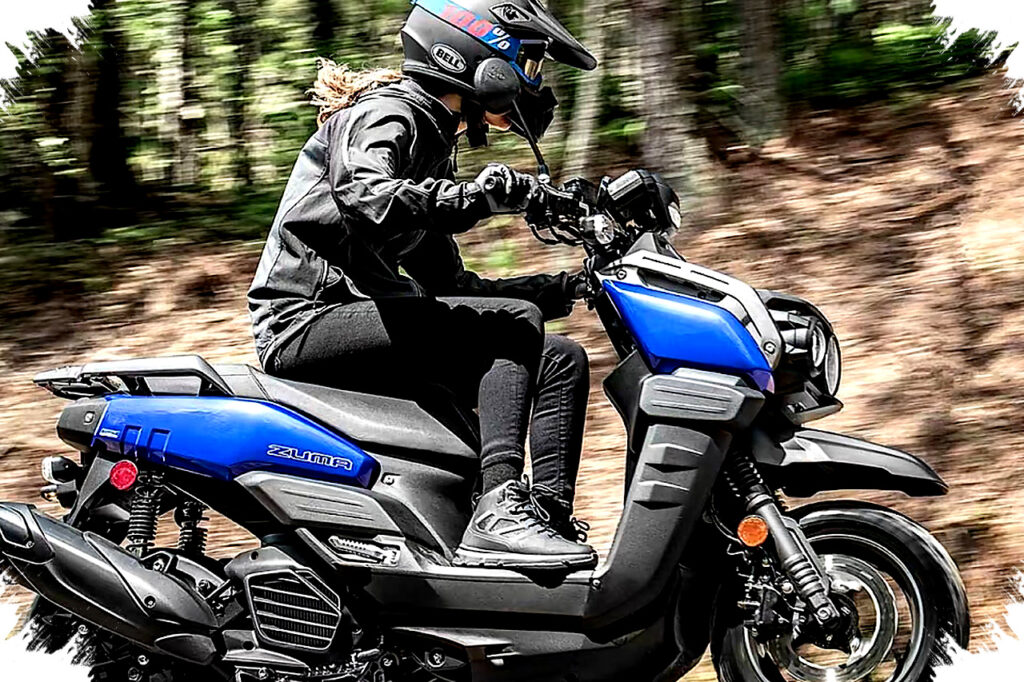
Yamaha Zuma 125 emerges as a strong candidate to succeed the Yamaha X-Ride 125 in the Indonesian market. This transition aligns with evolving urban riders’ preferences for scooters combining modern aesthetics and practical features. Three key points highlight why the Zuma deserves to replace the aging X-Ride 125 model.
1. Modern and Rugged Design
Yamaha Zuma 125 sports a muscular, boxy frame that conveys toughness and adventure readiness. Its wide, flat-ended exhaust and robust bodywork suit both city cruising and rough terrain. This styling stands in contrast to the more utilitarian look of the older X-Ride 125, appealing especially to urban riders seeking a bolder image.
The scooter’s design signals a blend of urban sophistication with off-road capability. According to reviews from multiple rider sources, including Walker Nomad’s video presentation, Zuma’s aesthetic fits the “cool scooter” category, ideal for navigating light off-road conditions while retaining city-friendly dimensions. This dual personality helps Zuma resonate with a younger, style-conscious demographic.
2. Comprehensive Features
Under the competitive scooter segment’s pressure, Zuma 125 integrates advanced features not found in the X-Ride 125. Most notably, it incorporates Yamaha’s Blue Core technology coupled with Variable Valve Actuation (VVA), enhancing power output and fuel efficiency.
The engine is a liquid-cooled, 125cc, 4-stroke SOHC single with four valves, optimized for smooth yet responsive delivery. This machine offers a compression ratio of 11.2:1 and uses electronic fuel injection, ensuring consistent performance and emission compliance.
Estimates show Zuma 125 delivers approximately 43 kilometers per liter (about 101 miles per gallon), a significant advantage for daily commuters concerned about fuel economy. Its 6-liter fuel tank supports reasonable range for urban and weekend rides. Additional mechanical features include front telescopic forks, rear dual shock absorbers, and disc brakes on both wheels, enhancing ride comfort and safety.
The scooter’s automatic V-belt transmission offers ease of use familiar to the segment, but with superior engineering that contributes to efficient power transfer. At roughly 128 kilograms (282 pounds) wet weight, Zuma 125 remains agile and maneuverable in dense traffic.
3. Strong Adventure Character
What differentiates Yamaha Zuma 125 distinctly from the X-Ride 125 is its pronounced adventure-oriented character. The Zuma is designed to perform well on various surfaces beyond perfectly paved roads. Its tire sizes—120/70-12 front and 130/70-12 rear—deliver improved grip and stability on uneven terrains.
The rugged aesthetics reflect this functional intent, making the scooter suitable for light off-road excursions and rough urban streets. Users have noted that the Zuma’s suspension setup provides a balanced mix of comfort and control, enabling riders to handle minor cuts and bumps confidently.
Walker Nomad emphasized the Zuma’s ability as a “go-anywhere” scooter, which corresponds with Yamaha’s positioning of the model in international markets, particularly in the US. It targets urban adventurers who want a versatile machine capable of city commuting and weekend explorations without sacrificing style or efficiency.
Contextual Considerations for Indonesian Market
The Yamaha X-Ride 125, while reliable, faces limitations due to its dated design and technology. As consumer expectations shift toward scooters with enhanced performance and contemporary features, the Zuma 125’s arrival becomes timely.
Though currently more prominent in the US and some Asian markets under names like BWS 125, adapting Zuma for Indonesia could revitalize Yamaha’s presence in the 125cc adventure-style scooter category. The model combines practical urban commuting with enough ruggedness for mixed riding conditions typical of Indonesian roads.
In addition, by integrating advanced fuel-saving technologies such as Blue Core and VVA, Yamaha answers increasing demands for eco-friendliness and cost-effective ownership. The estimated fuel economy of 43 km per liter (around 2.33 liters per 100 km) is highly competitive, potentially reducing operating costs for daily riders.
Summary Table: Key Features Comparison
| Feature | Yamaha Zuma 125 | Yamaha X-Ride 125 |
|---|---|---|
| Engine | 125cc, liquid-cooled, Blue Core + VVA | Air-cooled, older tech |
| Fuel Efficiency | ~43 km/later (~101 mpg) | Lower, older engine tech |
| Suspension | Telescopic front, dual rear shocks | Basic suspension setup |
| Brakes | Front & rear disc brakes | Usually drum brakes rear |
| Design Style | Muscular, adventure-focused | Simpler, utilitarian look |
| Weight | ~128 kg (282 lbs) | Typically lighter but less rugged |
| Fuel Tank Capacity | 6 liters (~1.6 gallons) | Varies, usually smaller |
Implications for Yamaha and Riders
Introducing Yamaha Zuma 125 as the X-Ride 125’s successor can modernize Yamaha’s scooter lineup substantially. Riders benefit from upgraded performance, modern styling, and the comfortable versatility to ride across various road conditions. This helps Yamaha maintain competitiveness in a crowded market while meeting evolving consumer demands.
Zuma 125’s combination of adventure styling, fuel efficiency, and practical features supports its position as a compelling alternative for urban riders who want a reliable scooter that can handle occasional rough patches without compromising on modern convenience.
Yamaha’s strategy to offer such a capable scooter aligns with global trends emphasizing versatile urban mobility solutions. As Indonesia’s urban landscape diversifies, scooters like the Zuma 125 offer a balanced approach that merges lifestyle appeal with functional versatility.
Consequently, Yamaha Zuma 125’s strong adventure character is not only about aesthetics but also about delivering performance adaptability needed in today’s mixed riding environments. This makes Zuma 125 a logical and attractive candidate to replace the established X-Ride 125 model in the near future.