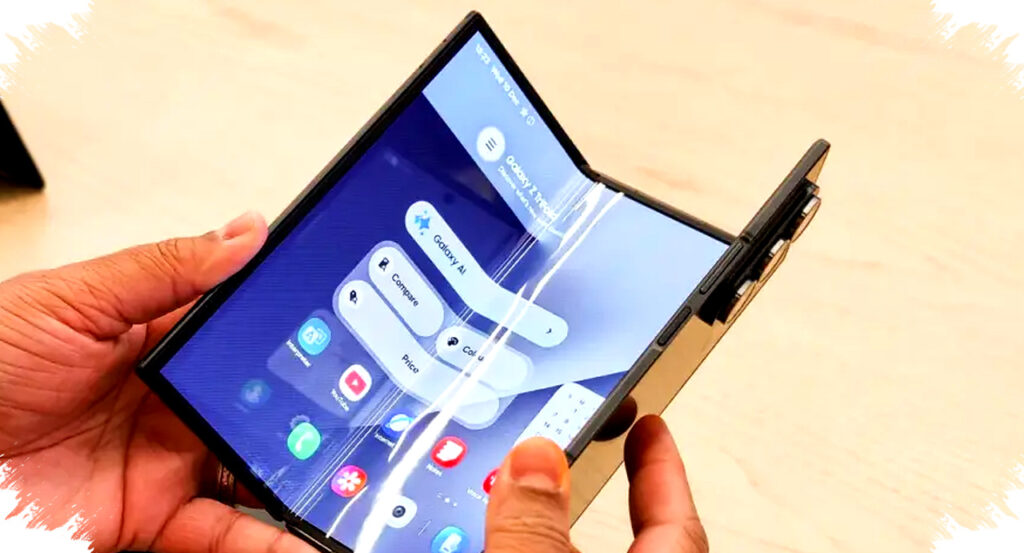
Samsung has launched its Galaxy Z TriFold as an ultra-premium foldable device, available only to a select group of wealthy buyers. This deliberate scarcity creates the effect of an exclusive club, driving hype and rapid sell-outs immediately following each release.
The Galaxy Z TriFold features a unique design with three foldable panels, delivering a large tablet-like screen of approximately 10 inches when fully unfolded. This triple-fold mechanism distinguishes it technologically from the dual-fold Galaxy Z Fold7 and Z Flip models. The device showcases Samsung’s engineering prowess in flexible display innovation.
According to the technology news outlet PhoneArena, Samsung’s initial inventory of the TriFold units was very limited. The high price, around $2,000 or more, aligns with flagship premium phones, restricting the device’s accessibility to only affluent tech enthusiasts. The global rollout started in South Korea in December 2025 and expanded to markets including the U.S. by late January 2026.
Samsung intentionally avoided mass distribution channels like major telecom operators to maintain the model’s exclusivity. Instead, TriFold units have been primarily sold through official Samsung stores and online platforms with very limited stock. This approach deliberately curtails availability to cultivate a sense of luxury and rarity.
The Verge reports that only a few thousand units were available worldwide at launch. These quickly sold out, often in a matter of minutes during each restock. The limited supply, combined with a premium asking price, positions the Galaxy Z TriFold more as a collector’s item or technology showcase rather than a mainstream foldable.
Industry analysts interpret Samsung’s strategy as a way to test market reaction to the new tri-fold form factor while managing production complexity. The device’s innovative triple hinge and screen system add manufacturing challenges and costs compared to existing foldable phones. Limiting production allows Samsung to gauge consumer interest and fine-tune future iterations.
This exclusivity has created a distinct community of early adopters who value the device’s cutting-edge features and status. Samsung thereby establishes a product tier differentiating the TriFold from the broader Galaxy Z series, which targets a wider audience with more accessible foldables.
The restricted availability and premium pricing suggest Samsung’s dual goals: to demonstrate technological leadership in ultra-foldables and to control rollout risks. The TriFold acts as both a halo device enhancing brand prestige and a practical pilot for the viable scale of tri-fold displays.
Samsung could leverage initial consumer feedback and sales patterns to inform subsequent models. Given the enthusiastic response within a narrow segment, there is potential for broader production if demand signals prove strong and cost efficiencies improve.
The Galaxy Z TriFold’s sales pattern highlights challenges in mainstreaming advanced foldables. High prices and complex designs currently limit end-user adoption. However, positioning the TriFold as an exclusive “club” phone builds hype and desirability.
The tri-fold display concept opens new possibilities for multitasking and media consumption, offering a significantly larger screen area rarely seen in smartphones. Samsung aims to capitalize on this innovation to differentiate its foldable ecosystem from competitors.
Samsung’s strategy can be outlined as follows:
- Limited Units: Producing only a few thousand units to sustain exclusivity.
- Premium Pricing: Setting prices at or above $2,000 to target affluent buyers.
- Selective Distribution: Avoiding traditional carrier channels to control supply.
- Technological Showcase: Highlighting advanced triple-fold design as a market-first.
- Market Testing: Collecting insights on tri-fold user experience and demand.
- Brand Positioning: Establishing TriFold as a high-status, innovative device.
- Exclusivity as Marketing: Creating scarcity that fuels rapid sell-outs and media buzz.
This careful balancing act reflects the complexity of bringing cutting-edge hardware concepts to market. By crafting the Galaxy Z TriFold as an exclusive collector’s device, Samsung signals both its commitment to innovation and its sensitivity toward market readiness.
Although this approach limits immediate sales volume, it allows Samsung to refine the product and strategy based on actual consumer interactions without risking brand reputation or oversupply difficulties. It also sets the stage for potential expansion into broader segments once production matures.
In conclusion, Samsung’s Galaxy Z TriFold exemplifies a new premium strategy where innovation meets exclusivity. The device is more than a phone—it is a symbol of engineering ambition serving a niche market willing to pay for unique technology experiences. How Samsung builds on this foundation will shape the future of foldable smartphone evolution.