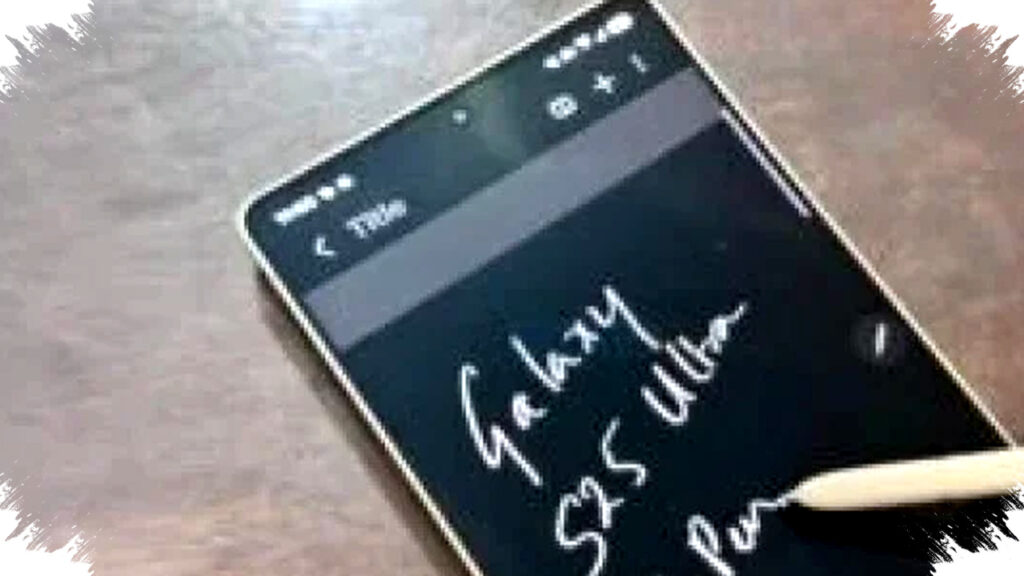
Samsung has decided to postpone the transition from Electromagnetic Resonance (EMR) to Active Electrostatic (AES) technology for the Galaxy S27 Ultra S Pen. This means the S Pen will retain the existing digitizer layer sensitive to magnetic interference. The delay stems from technical challenges and production strategies that prevent Samsung from launching the AES upgrade in the upcoming model scheduled for 2027.
The current S Pen technology relies on an EMR digitizer embedded beneath the phone’s display. This layer tracks the stylus precisely without needing a battery inside the pen itself. However, this system is vulnerable to external magnetic fields caused by accessories or phone cases, often resulting in degraded pen performance. Samsung initially tested AES, hoping to modernize the stylus experience on their flagship device.
AES technology eliminates the need for the extra digitizer layer by enabling the stylus, equipped with its own battery, to communicate directly with the phone’s touch panel. This approach resembles what Apple uses with the Apple Pencil, allowing for slimmer devices and stronger internal magnets that could improve S Pen attachment and accessory compatibility. Unfortunately, implementing AES proved more complicated than expected due to challenges with power management and ensuring smooth synchronization with the device.
Samsung is now reportedly developing a hybrid solution that aims to combine the advantages of EMR’s battery-free operation with AES’s streamlined design and stronger magnetism. This innovation would ideally remove the digitizer layer while maintaining the stylus’s ease of use without frequent charging. However, such a breakthrough will require more development time and is unlikely to be ready for the Galaxy S27 Ultra launch.
For users of Samsung’s flagship Ultra model, this means the Galaxy S27 Ultra S Pen experience will largely remain unchanged from previous versions. The stylus performance will still be subject to magnetic interference, and its physical design will retain the digitizer-dependent system. Samsung’s cautious approach ensures proven reliability but might disappoint those expecting groundbreaking changes in their note-taking tools.
Technical Comparison: EMR vs AES Stylus Technology
| Feature | EMR (Electromagnetic Resonance) | AES (Active Electrostatic) |
|---|---|---|
| Digitizer Layer | Embedded beneath the screen, required | No separate layer needed |
| Pen Power Source | No battery needed in the stylus | Stylus contains built-in battery |
| Susceptibility to Magnet | High, affected by magnetic accessories | Lower, supports stronger magnets |
| Device Thickness | Slightly thicker due to digitizer layer | Potentially thinner without digitizer |
| Stylus Communication | Electromagnetic fields between pen & digitizer | Direct communication with touch panel |
Samsung remains committed to innovation but recognizes the high risks of adopting AES technology prematurely. Their internal tests revealed integration issues that could impact user experience adversely if launched without adequate refinement.
In the meantime, the Galaxy S27 Ultra continues to offer one of the best stylus interactions available, leveraging years of fine-tuning EMR technology. Samsung fans can expect a familiar feel with reliable, battery-free stylus writing, albeit with some limitations linked to magnetic interference.
Though the upcoming Ultra model won’t showcase this expected leap in stylus technology, Samsung’s pursuit of a future hybrid solution signals ongoing ambition to enhance the S Pen. The company’s investment in research may eventually culminate in a new generation stylus that combines the best of EMR’s convenience and AES’s technological advances.
For now, users planning to upgrade to the Galaxy S27 Ultra should prepare for continuity rather than radical change in the S Pen experience. Samsung’s handling of this transition highlights the challenges in balancing innovation with stable user interaction, underscoring that some technological shifts require careful timing.
As development progresses, more detailed updates are expected regarding Samsung’s hybrid stylus concept. This next-level stylus could redefine handwriting and drawing precision in smartphones, further differentiating the Galaxy Ultra line in the competitive market. Until then, Samsung retains confidence in its trusted, proven EMR system for delivering robust and familiar stylus functionality.