


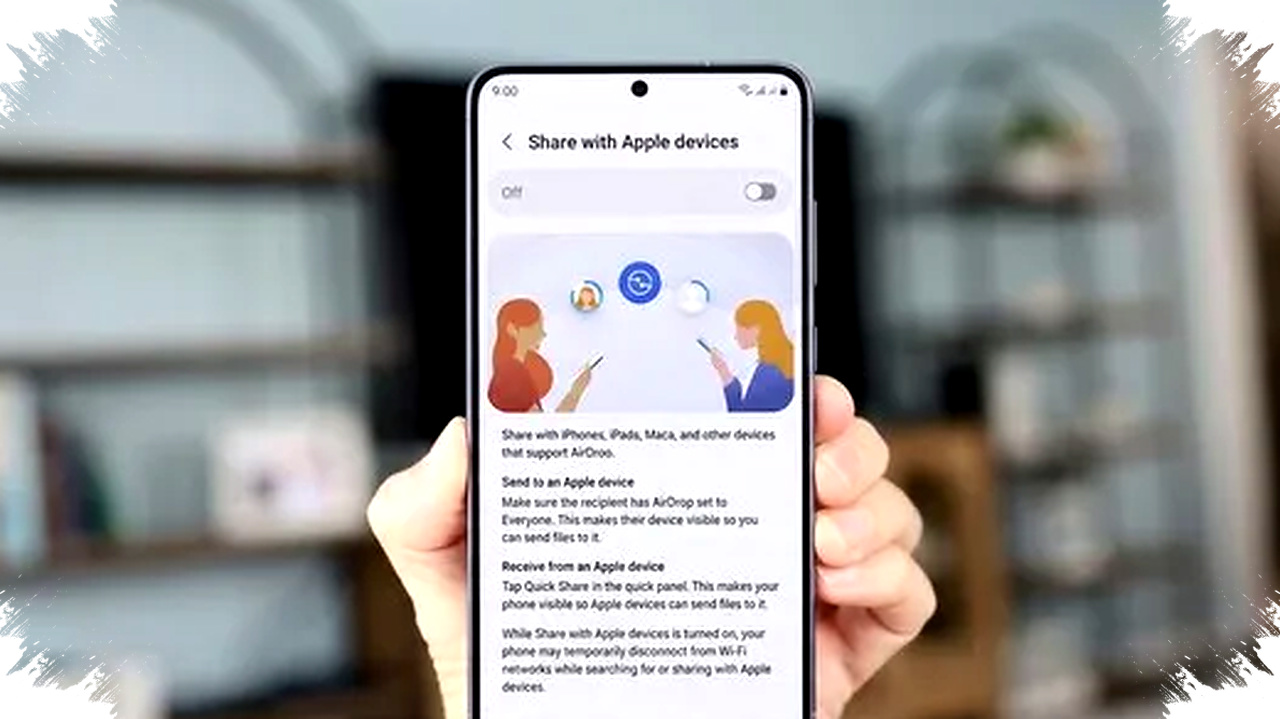
Samsung’s Galaxy S26 is drawing attention not only for its flagship hardware, but also for a practical software feature that many users have wanted for years. The phone can now send files directly to Apple devices, including iPhone, iPad, and Mac, without requiring a separate app.
This cross-platform file sharing works through Samsung’s updated Quick Share system, which has been developed to interact with Apple’s AirDrop-based ecosystem. For users who move daily between Android and iPhone, the change removes one of the most frustrating barriers in mobile file transfer.
What the new feature does
The key improvement is simple: Galaxy S26 users can share photos, videos, and documents with nearby Apple devices in a way that feels closer to native device-to-device transfer. Samsung designed the feature to make sharing faster and less dependent on third-party apps, cloud links, or messaging workarounds.
According to the reference article, Samsung has added a “Share with Apple devices” option inside Quick Share. Once it is enabled, the Galaxy S26 can detect compatible Apple products nearby and initiate a transfer in a more seamless way.
This matters because Android and iOS users often rely on temporary fixes when they need to move files quickly. Email attachments can be slow, cloud uploads take time, and chat apps can compress images or limit file quality.
How it works on the Galaxy S26
Samsung’s approach builds on the existing Quick Share feature, but adds compatibility that makes cross-ecosystem sharing more practical. The experience is meant to mirror the simplicity of AirDrop, which Apple users already know well.
In the case of the Galaxy S26, Samsung says users do not need to install extra software. They only need to turn on the feature in the phone’s settings and make sure the receiving Apple device is nearby and discoverable.
Here is the basic setup process:
- Open Settings.
- Tap Connected Devices.
- Select Quick Share.
- Turn on “Share with Apple devices.”
Once this is active, the phone can send files to an iPhone, iPad, or Mac in close range. The process is available for common file types such as photos, videos, and documents, which makes it useful for both personal and work use.
Why this is a notable shift for Android and iPhone users
For years, file sharing between Android and Apple products has been a pain point. The two ecosystems have offered strong features within their own platforms, but they have often stayed closed to each other.
Samsung’s move is important because it reduces that friction without forcing users to change devices. It also reflects a broader industry trend toward interoperability, where major tech companies allow more practical communication between platforms that once worked in isolation.
Google has already explored a similar direction with newer Pixel models, and Samsung is now extending that idea to one of the most visible smartphone lines in the market. That makes Galaxy S26 more than just a premium phone launch. It also positions the device as part of a wider effort to make mobile ecosystems less restrictive.
What users can transfer
The feature supports more than just quick photo sharing. Samsung says the Galaxy S26 can send several common file formats directly to Apple devices, which is useful in everyday workflows.
Here is a simple overview of the supported use cases:
| File type | Typical use |
|---|---|
| Photos | Sharing images from camera rolls or galleries |
| Videos | Moving clips without quality loss from chat compression |
| Documents | Sending PDFs, presentations, or work files |
| Other nearby files | General transfer between devices in close range |
This wider support makes the feature attractive to students, office workers, creators, and mixed-platform households. A user can shoot a video on the Galaxy S26 and send it to an iPhone owner nearby without opening another app first.
When the rollout started
Samsung confirmed that the feature began rolling out on March 23, with South Korea as the first market to receive it. The company then planned a gradual expansion to other regions.
The reference article lists Europe, Hong Kong, Japan, Latin America, North America, Southeast Asia, and Taiwan as part of the expansion plan. That suggests the update is intended for a broad global release, not a limited regional test.
For users in Indonesia, the rollout is especially relevant because Southeast Asia is included in the expansion list. That increases the chance that local Galaxy S26 owners will get access soon, depending on software timing and regional availability.
Will other Galaxy phones get it too
Samsung also indicated that the updated Quick Share experience is not limited strictly to the Galaxy S26. The company plans to bring it to other Galaxy devices through software updates.
However, Samsung has not publicly released the full list of supported models or the exact rollout schedule. That means users with older Galaxy phones may need to wait for further confirmation before knowing whether their devices will receive the same Apple-compatible sharing feature.
This is an important detail because many Samsung users are not on the newest flagship immediately. A wider software rollout would make the feature more impactful across the Galaxy lineup, not just on one premium model.
Why the timing matters for the Galaxy S26
The Galaxy S26 series was first introduced at Galaxy Unpacked 2026 in San Francisco on February 25, 2026. Since then, attention has focused not only on the hardware but also on the practical features that improve daily use.
Cross-platform file sharing is one of those features that may not dominate a launch presentation, but often matters most in real life. It solves a common task that users perform repeatedly, and it does so in a way that feels more direct than older methods.
Samsung also said the Galaxy S26 is already officially available in Indonesia through both offline and online channels. That makes the feature immediately relevant for buyers who want a flagship phone that can work more fluidly in mixed-device environments.
What users should keep in mind
The feature is designed for nearby transfers, so the devices still need to be in close range for the sharing process to work. Like AirDrop, the practical experience depends on device visibility, connectivity settings, and compatibility between the sender and receiver.
Users should also update their Galaxy S26 software when prompted, since new sharing features often depend on the latest firmware version. If Samsung expands the feature to more Galaxy devices, those updates will likely be the channel through which the capability reaches users.
As Samsung expands Quick Share to work more closely with Apple devices, the Galaxy S26 becomes part of a larger push to make smartphone sharing less fragmented and more user-friendly. For many users, that may be just as valuable as faster chips or brighter displays, because it changes how the phone fits into everyday work, travel, and communication.