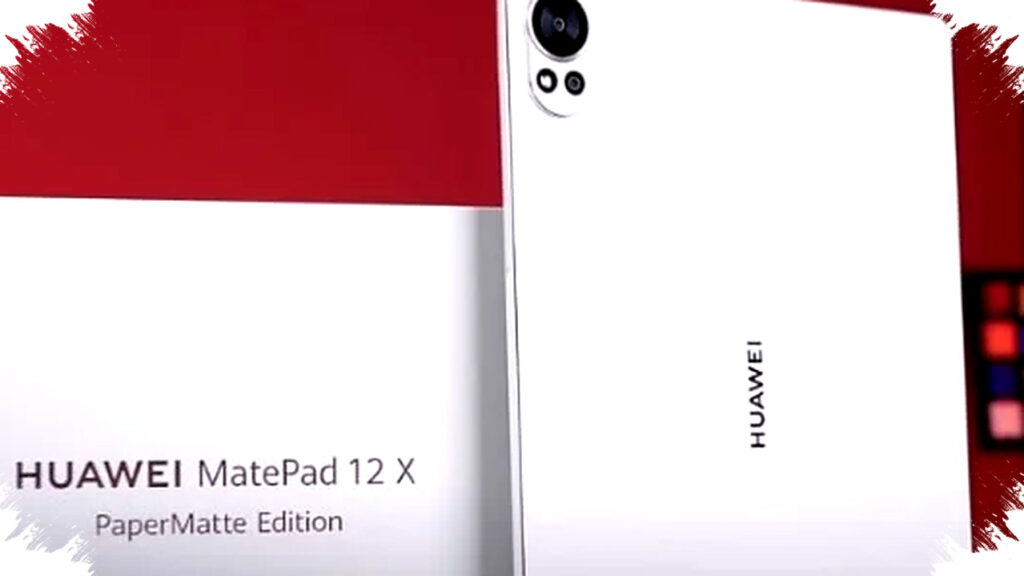
Huawei MatePad 12 X 2025 positions itself as a thin tablet that aims to do more than look premium. With a 6mm unibody all-metal chassis and a weight of about 500 grams, it targets users who move between meetings, classrooms, coffee shops, and home offices without wanting to carry a heavy device.
What makes this model stand out is not only the slim body, but also the claim that it can stay reliable for years. Huawei says the MatePad 12 X 2025 keeps its performance steady over long-term use, helped by a capable chipset, a large battery, and software features designed for productivity rather than short bursts of speed alone.
A 6mm body that still feels practical
Thin tablets often look impressive at first, but they can sacrifice thermal control, battery size, or durability. Huawei appears to be avoiding that trap by pairing the slim design with a substantial internal setup that is built for everyday work instead of just light entertainment.
The tablet’s 500-gram weight also matters in real use. For users who travel often, that difference can decide whether a tablet stays in the bag or gets left behind, especially when it is paired with a keyboard and stylus.
Performance built for sustained use
At the center of the MatePad 12 X 2025 is a Kirin T92B octa-core chipset built on a 4nm process. That matters because smaller fabrication nodes usually help improve power efficiency and reduce heat, two factors that affect how well a thin device can maintain performance over time.
Huawei pairs the chip with 12GB of RAM and 256GB of storage, which is a strong combination for multitasking. In practical use, that setup can handle office documents, heavy browsing, and video calls at the same time without obvious slowdowns.
The company also emphasizes HarmonyOS 4.3 and its PC-like experience. That means the tablet is not only built for media consumption, but also for users who want a desktop-style workflow with windows, task management, and a workstation mode that feels closer to a laptop interface.
Why long-term smoothness matters
Many tablets perform well when they are new, but users notice drops in speed after months or years of use. That slower feeling often comes from heavier software layers, limited memory, weak cooling, or batteries that age too quickly and affect sustained output.
Huawei is trying to address that concern by positioning the MatePad 12 X 2025 as a device that remains consistent over time. The promise is simple: not just fast on day one, but still dependable years later without a meaningful decline in everyday responsiveness.
That approach is important for buyers who keep devices for a long cycle. A tablet with better efficiency, enough RAM, and a software environment tuned for productivity can age better than a device that only scores well in short benchmark bursts.
Display designed to reduce eye strain
The 12-inch Ultra-clear PaperMatte Edition panel is one of the most relevant parts of the package. It refreshes at 144Hz, which helps motion feel smoother, but the bigger story is the anti-glare treatment that Huawei says cuts reflections by up to 99%.
That kind of display is especially useful for people who work under bright lighting. It also suits readers, note-takers, and professionals who spend long periods looking at documents because the matte finish can make the screen feel less tiring than glossy alternatives.
The visual experience is supported by four stereo speakers with Huawei Sound tuning. For video calls, meetings, and media playback, that gives the tablet a more laptop-like feel and reduces the need for external audio accessories in many situations.
Battery life and charging that keep pace with work
Huawei equips the MatePad 12 X 2025 with a 10,100mAh battery, which is large for a slim tablet. The company claims it can deliver up to 12 hours of local video playback, suggesting strong endurance for a full workday of mixed tasks.
When the battery runs low, 66W fast charging helps reduce downtime. For mobile professionals, that can matter as much as battery size itself because a quick top-up between meetings can keep the device usable for the rest of the day.
There is also 5W reverse charging. That feature lets the tablet act as an emergency power source for a phone, which is useful when traveling or when wall outlets are not available.
Accessories make it closer to a laptop replacement
Huawei is clearly aiming at productivity users by offering an accessory set that expands the tablet’s role. The Smart Magnetic Keyboard provides a more natural typing experience, while the third-generation M-Pencil supports sketching, note-taking, and document signing.
A Bluetooth mouse is also part of the ecosystem, which makes navigation easier for users who want a fuller desktop-style setup. Together, these accessories help the MatePad 12 X 2025 move from a media tablet into a more serious work device.
- Smart Magnetic Keyboard for faster typing
- M-Pencil Gen 3 for drawing and handwritten input
- Bluetooth mouse for more precise control
This bundle matters because many buyers do not judge a tablet only by its hardware. They also want to know whether it can replace a lightweight laptop for standard tasks like writing, editing, and meeting management.
Durability and ecosystem support
Huawei gives the MatePad 12 X 2025 an IP52 rating, which protects it from light splashes and some dust exposure. It is not meant for harsh outdoor abuse, but it does add a layer of reassurance for everyday accidents on a desk or in a bag.
The company also says HarmonyOS support will continue until 2029. That kind of long update window is relevant for buyers who want a device that stays current and secure for several years instead of becoming outdated quickly.
The SuperHub feature strengthens Huawei’s ecosystem story as well. It allows faster file sharing across Huawei devices, which can simplify workflows for users who already own a phone, laptop, or wearable from the same brand.
The tablet’s place in the market
At around $540 based on the cited package price of roughly Rp9 million, the MatePad 12 X 2025 sits in a competitive but interesting segment. It is not a budget tablet, and it is not trying to be a full laptop replacement in every scenario, but it does target users who want premium portability with long-term value.
That positioning makes sense in a market where many buyers now expect more than raw speed. They want a device that lasts, stays responsive, handles office work, and still feels comfortable after hours of use.
For that reason, Huawei’s message is clear: a tablet can be thin, light, and stylish without becoming fragile in performance terms. The MatePad 12 X 2025 tries to prove that a 6mm tablet can still feel solid not only when it is first unboxed, but also after years of daily use, multitasking, and travel.