Oppo has officially brought the A38 to Indonesia, positioning the device as an affordable smartphone for buyers who want a large battery, a 50 MP main camera, and a modern design without paying a premium. The phone launched on September 8, 2023, with a starting price of about $130, based on the listed IDR 2,099,000 retail price.
The A38 enters a crowded budget segment, but Oppo is aiming it at users who care about everyday reliability, decent photography, and long battery life. With a 5,000 mAh battery, 33W fast charging, and a 90 Hz display, the phone tries to balance practical features with a price that stays competitive.
A budget phone with a clear target


Oppo designed the A38 for the entry-level and lower mid-range market, where buyers often compare battery capacity, screen smoothness, and camera quality first. The company’s approach is simple: offer enough performance for daily tasks while keeping the experience easy and familiar.
This strategy matters in Indonesia, where affordable phones still drive a large share of sales. A device in the $130 range has to stand out through visible advantages, and Oppo leans heavily on camera quality, battery endurance, and brand trust.
Display and design focus on everyday use
The Oppo A38 uses a 6.56-inch IPS LCD panel with HD+ resolution, or 1,612 x 720 pixels. The screen also supports a 90 Hz refresh rate, which helps scrolling and animations feel smoother than standard 60 Hz panels.
Oppo says the display covers 100 percent of the DCI-P3 color gamut and can reach up to 720 nits of brightness. In practical use, that should help the screen remain readable outdoors and make videos and photos look more vivid for casual viewing.
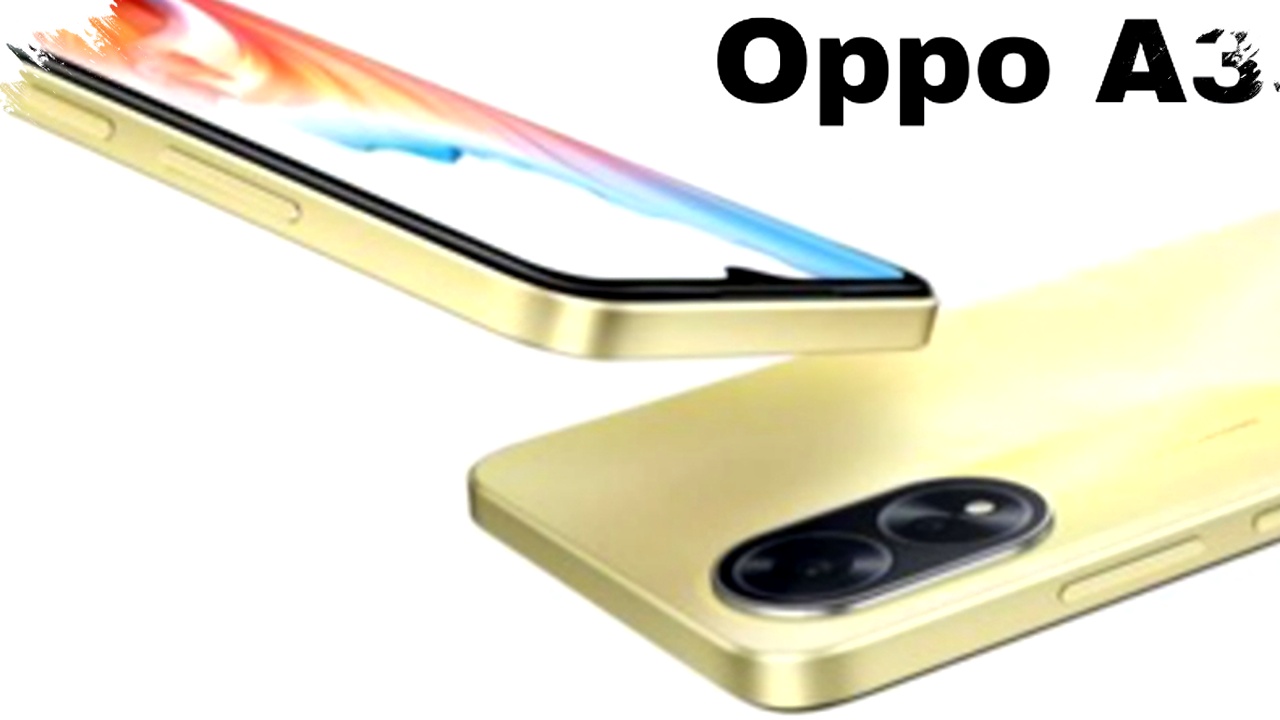
The handset measures 163.74 mm x 75.03 mm x 8.16 mm and weighs 190 grams. It comes in Glowing Gold and Glowing Black, both with a gradient finish that gives the phone a more stylish look than many basic-budget models.
Key specifications at a glance
- Display: 6.56-inch IPS LCD, HD+, 90 Hz
- Chipset: MediaTek Helio G85
- RAM: 4 GB, with up to 4 GB extended RAM
- Storage: 128 GB, expandable up to 1 TB via microSD
- Rear cameras: 50 MP main camera + 2 MP portrait camera
- Front camera: 5 MP
- Battery: 5,000 mAh
- Charging: 33W fast charging
- Software: Android 13 with ColorOS 13.1
Performance built for daily tasks
Under the hood, the Oppo A38 runs on the MediaTek Helio G85, a chipset commonly used in affordable phones for routine performance. The chip can handle messaging, social media, streaming, and light gaming, although it is not meant for heavy multitasking or demanding graphics workloads.
The phone ships with 4 GB of RAM and 128 GB of internal storage. Oppo also adds extended RAM support of up to 4 GB, which can borrow memory from storage to help with smoother multitasking in certain scenarios.
For users who need more space, the microSD slot supports expansion up to 1 TB. That makes the A38 more flexible for people who store many photos, offline videos, or app files on their device.
The 50 MP camera is the main selling point
The most prominent feature of the Oppo A38 is its 50 MP rear camera with an f/1.8 aperture. Oppo pairs it with a 2 MP portrait sensor, which helps create background blur effects for portrait shots.
The company also highlights AI-based processing to improve image sharpness and detail. For a phone in this price class, the 50 MP sensor is one of the most important parts of the package because many buyers now use their phone as their primary camera.
The front camera uses a 5 MP sensor with an f/2.2 aperture. That is modest by current standards, but it remains suitable for video calls, casual selfies, and basic social media use.
Battery life and charging add real value
Oppo equips the A38 with a 5,000 mAh battery, which remains one of the most useful features for budget smartphone buyers. In daily use, that capacity should help the phone last through a full day of browsing, messaging, streaming, and photography.
The phone also supports 33W fast charging, and Oppo claims the battery can reach 50 percent in about 30 minutes. A full charge takes around 75 minutes, which is relatively quick for a device in this category.
That charging speed matters because many low-cost phones still ship with much slower adapters. For users who travel often or rely heavily on their phone throughout the day, faster top-ups can be a major convenience.
Software and extra features make the phone feel complete
The Oppo A38 runs Android 13 with ColorOS 13.1. This gives users a current software base along with Oppo’s interface features, which are designed to simplify navigation and improve daily usability.
The device also includes several practical additions, such as Ultra Volume 300%, which boosts speaker output for louder audio. It carries an IP54/IPX4 rating, giving it resistance to dust and splashes, although it is not built for full water immersion.
Other notable features include dual nano-SIM support, WiFi 5, Bluetooth 5.3, USB-C, a fingerprint sensor, face unlock, and a 3.5 mm headphone jack. These details may seem basic, but they remain important for budget buyers who still value convenience and compatibility.
How the Oppo A38 compares in its segment
In the sub-$150 smartphone market, buyers often choose between better cameras, bigger batteries, or stronger performance. The Oppo A38 tries to offer a balanced mix rather than leading in just one category.
Its 50 MP main camera and 33W charging are the strongest hooks, while the 90 Hz display and 5,000 mAh battery help round out the experience. The Helio G85 is not class-leading, but it is adequate for the type of use most users expect in this price range.
For shoppers who prioritize practical daily use over gaming or advanced photography, the A38 fits a familiar formula. It is the kind of phone that aims to feel dependable rather than flashy.
Why this launch matters for Indonesian buyers
Indonesia remains one of Southeast Asia’s most competitive smartphone markets, especially in the affordable segment. Brands that succeed here usually combine recognizable design, dependable battery life, and strong after-sales appeal.
Oppo has long performed well in this space, and the A38 continues that approach with a clear emphasis on value. At around $130, the phone enters a price bracket where even small upgrades, such as faster charging or a higher-resolution camera sensor, can influence buying decisions.
For many consumers, the A38 offers the kind of specification sheet that feels complete enough for everyday life without stretching the budget. The phone is now available through popular e-commerce platforms and local mobile phone stores, giving buyers multiple ways to compare offers before purchase.
As the budget smartphone race continues, the Oppo A38 stands out by combining a 50 MP camera, a large battery, and a smoother 90 Hz screen in a package that still keeps its price at roughly $130. That combination gives Oppo a clear message in Indonesia: affordable does not have to mean bare-bones.