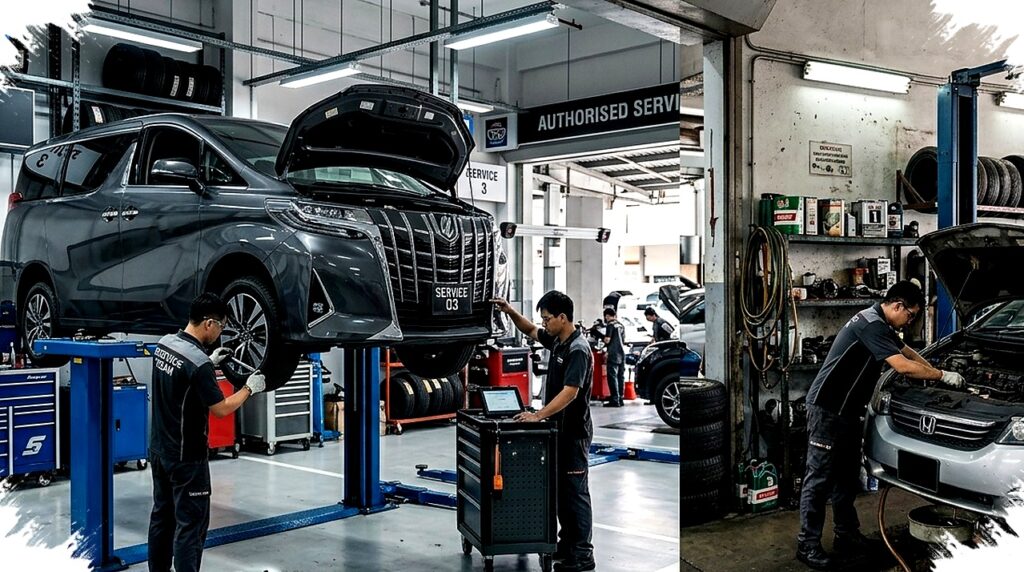
After the 2026 Eid homecoming period, many MPV owners are expected to face higher maintenance needs because long-distance travel usually accelerates wear on key components. The most common items that need attention are engine oil, oil filters, air filters, braking systems, cooling systems, and suspension parts.
This is why post-trip servicing matters not only for comfort but also for safety. The Ministry of Transportation of the Republic of Indonesia has stressed that routine vehicle maintenance is important to keep cars roadworthy and to detect early damage after long journeys.
Why MPV servicing often feels more expensive after mudik
A full holiday trip can push an MPV through hundreds or even thousands of kilometers in a short period of time. That kind of use can make minor issues turn into costly repairs if owners delay inspection.
In practical terms, post-mudik service is not just a refill-and-go job. Mechanics usually need to check wear on consumables, inspect the braking system, examine the underbody, and test whether the cooling system still works properly under load.
What usually gets checked first
For MPVs returning from long holiday travel, the first inspection usually focuses on parts that absorb the most stress. These items often decide whether the final bill stays manageable or grows quickly.
- Engine oil and oil filter
- Air filter and cabin filter
- Brake pads, disc condition, and brake fluid
- Coolant and radiator hoses
- Suspension, steering, and wheel alignment
- Tires, including pressure, wear, and possible damage
- Battery and charging system
If one of these components shows severe wear, the total cost can rise sharply. That is why the first inspection matters as much as the repair itself.
Official workshop vs specialist workshop
The biggest choice many MPV owners face after mudik is whether to go to an official dealership workshop or an independent specialist shop. Each option has strengths, and the best choice depends on the car’s condition, age, and budget.
Official workshops generally follow the manufacturer’s service standards more closely. They usually use genuine parts and trained technicians, which helps reduce the risk of incorrect repairs.
Specialist workshops often offer more competitive pricing and more flexible part choices. For owners who want to control costs without skipping maintenance, this can be a practical option.
Simple comparison of the two options
| Aspect | Official Workshop | Specialist Workshop |
|---|---|---|
| Parts | Usually original parts | Original or alternative parts |
| Technician training | Manufacturer-trained | Depends on workshop experience |
| Price | Generally higher | Usually more affordable |
| Service standard | Tight and structured | Can vary by shop |
| Queue and scheduling | More formal and often more crowded | Often more flexible |
| Transparency | Usually itemized clearly | Depends on communication with the mechanic |
This comparison shows why many drivers switch between the two based on the job type. A routine oil change may suit a specialist workshop, while a warranty-related or complex repair may be safer at an official outlet.
How post-mudik costs can differ in practice
Official workshops usually cost more because they bundle labor, diagnostics, and genuine parts under a standardized system. That higher price often comes with stronger service consistency and clearer records for vehicle history.
Specialist workshops can reduce costs by using compatible parts or offering more flexible labor charges. But the price advantage only helps if the workshop is trustworthy and the installed parts meet proper quality standards.
The Society of Automotive Engineers has noted that maintenance quality and component quality strongly affect vehicle durability. Poor-quality parts or improper repairs can accelerate wear and reduce performance over time.
Why cheap service can become expensive later
Many owners focus only on the immediate bill after mudik. That can be risky because low-cost repairs sometimes solve one problem while creating another.
For example, a low-grade brake component may wear out faster and force another replacement sooner. An incompatible filter or fluid can also reduce engine efficiency and increase repair frequency.
That is why a service package should be judged by total value, not just the lowest initial price. For an MPV that carries family members and luggage regularly, reliability often matters more than a small short-term saving.
What affects the final bill the most
The cost of post-mudik servicing depends on several factors, not only on where the car is serviced. Vehicle age, mileage, driving conditions, and the severity of wear all play a major role.
| Cost driver | Effect on bill |
|---|---|
| High mileage during mudik | More parts may need replacement |
| Old vehicle age | Higher chance of worn suspension and rubber parts |
| Heavy loads | Extra stress on tires and brakes |
| Delayed service | Minor issues can become major repairs |
| Genuine parts | Higher cost but usually better consistency |
An MPV used for long family trips often carries heavier loads and longer travel hours than normal daily use. That makes the post-holiday inspection even more important.
When an official workshop makes more sense
An official workshop is often the better option if the car is still under warranty or if the owner wants strictly standardized maintenance. It also fits cases where the vehicle has complex electronic systems or needs factory-level diagnostics.
This can be especially useful after mudik if warning lights appear, the engine feels unusual, or the braking system changes noticeably. In those cases, precise diagnosis can prevent repeated visits and wasted money.
When a specialist workshop can be a smart choice
A specialist workshop becomes attractive when the car is out of warranty and the service needed is straightforward. Routine oil changes, brake pad replacement, wheel balancing, and alignment are often handled efficiently by reputable independent shops.
The key is to choose a workshop with a strong reputation, clear pricing, and transparent communication. The mechanic should explain what needs to be replaced, why it needs replacement, and whether an alternative part is safe to use.
Questions owners should ask before approving repairs
- What parts need immediate replacement?
- Which items can still be monitored?
- Are the quoted prices for labor and parts separated?
- Are the parts original or aftermarket?
- How long will the service take?
- Is there a warranty for the repair work?
These questions help prevent unnecessary spending and keep the service process transparent. They also make it easier to compare an official workshop with a specialist shop on equal terms.
After mudik, the smartest MPV owners do not only look for the cheapest service package. They focus on the workshop that can match the car’s condition, deliver clear inspection results, and restore the vehicle’s safety before it returns to daily use.