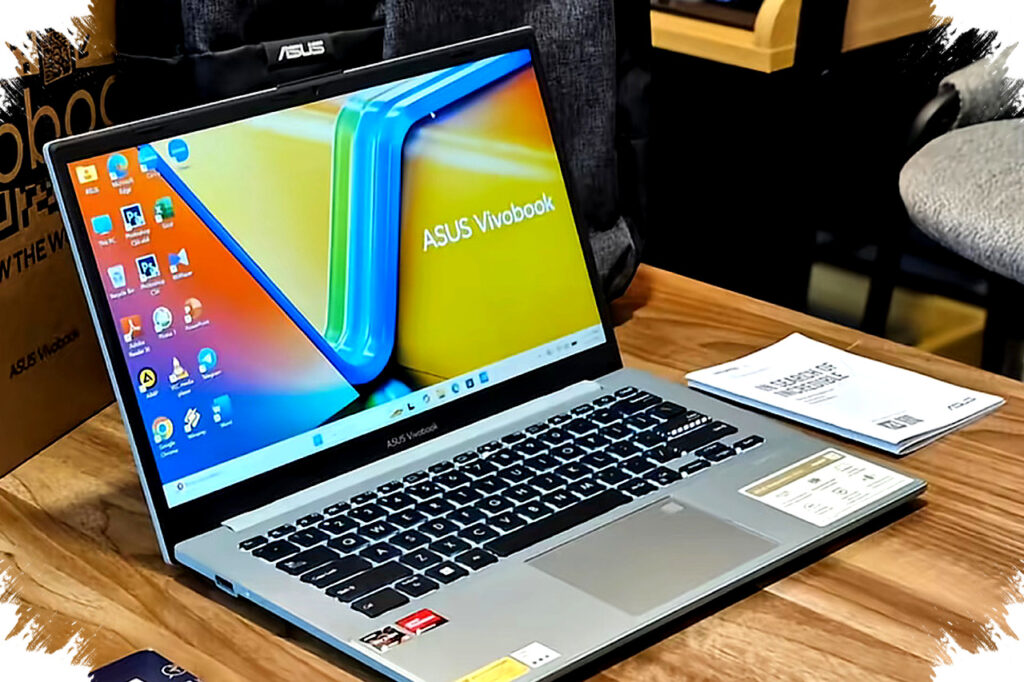
ASUS Vivobook 14 stands out in the crowded 14-inch laptop segment because it combines a minimal design with a lighter build than many competitors in its class. For users who move between campus, office, coffee shops, or client meetings, that difference can matter as much as raw specs.
The model discussed in the reference, the ASUS Vivobook 14 A1404VA/A1404VAP, weighs about 1.4 kg and has a thickness of 1.79 cm. Another highlighted version, the Vivobook 14 with Intel Core Ultra 5, is listed at 1.46 kg and 17.9 mm thick, with ASUS claiming it is 13% lighter than comparable laptops in its segment.
Minimalist Design That Fits Daily Mobility
A lightweight laptop is not only about carrying less weight in a bag. It also changes how people use the device throughout the day, because a thinner and cleaner chassis is easier to place on small desks, hold while standing, or open quickly during short work sessions.
ASUS leans into that idea with a design that looks simple and modern rather than overly aggressive. The Vivobook 14 comes in three clean color options: Platinum Gold, White Blue, and Cool Silver, giving it a more understated appearance that suits both professional and casual use.
The chassis also feels purpose-built for portability. Some models in the lineup use a metal body, which helps the laptop stay firm while keeping the weight low, and that balance is often what buyers want in a slim everyday machine.
Why Weight Still Matters in 2026
Laptop buyers often focus on processor names, memory size, or AI features, but weight remains one of the most practical specs in real life. A difference of only a few hundred grams can be noticeable when a laptop is carried for hours every day.
Here is a simple comparison of the key portability points mentioned in the reference:
| Feature | ASUS Vivobook 14 |
|---|---|
| Weight | Around 1.4 kg to 1.46 kg |
| Thickness | 1.79 cm to 1.89 cm |
| Design | Minimalist, slim, portable |
| Color options | Platinum Gold, White Blue, Cool Silver |
| Hinge | Lay-flat up to 180 degrees |
In this segment, many 14-inch laptops may look similar on paper, but the ergonomic experience can be different. A lighter body often makes a stronger first impression for users who prioritize mobility over a bulkier construction.
A Slim Body With Practical Everyday Features
The Vivobook 14 does not rely on weight reduction alone. ASUS pairs the slim design with features intended to support daily productivity, including a 14-inch 2K display with a 16:10 aspect ratio, fast USB-C ports, and AI-assisted camera and audio tools.
That makes the laptop more relevant for hybrid work and online meetings. Features such as AI Noise Cancellation can help reduce background sound during calls, while ASUS AI Sense Camera with Windows Studio Effects can support auto framing, eye contact, and background blur.
These additions matter because a lightweight laptop should still feel complete. Buyers generally want portability without giving up the basics needed for office apps, video calls, and cloud-based work.
Performance Built for Modern Workflows
The minimalist exterior also hides a more current internal setup. One of the featured versions uses an Intel Core Ultra 5 processor with Intel AI Boost NPU performance of up to 13 TOPS, which places it in the group of laptops prepared for AI-assisted tasks.
That level of performance is useful for common workflows such as document editing, browser multitasking, meetings, and light content creation. ASUS also includes a dedicated Copilot key, which gives users faster access to Windows Copilot and AI-related features in supported environments.
For many buyers, this combination is the main advantage of the Vivobook 14. It is light enough to carry easily, but it also offers the kind of hardware and software support people now expect from a modern productivity laptop.
Key Selling Points That Support the Design
The Vivobook 14’s appeal becomes clearer when the main features are grouped by practical use. The laptop is not marketed as a gaming machine or a heavy workstation, but as a balanced tool for everyday work.
- Portable weight: around 1.4 kg to 1.46 kg, making it easy to move around.
- Slim profile: thickness starts at 17.9 mm, which helps the laptop slip into bags more easily.
- Minimalist aesthetics: clean styling and subtle color choices support a professional look.
- Flexible hinge: the 180-degree lay-flat design makes screen sharing more convenient.
- AI-ready tools: Intel AI Boost, Copilot key, AI camera, and noise cancellation improve daily usability.
This combination shows that ASUS is targeting users who want a laptop that looks polished and travels well, while still feeling current in terms of hardware.
How It Compares With Competitors in the Same Class
In the 14-inch category, many competing laptops try to win buyers with either low prices or higher specs. ASUS takes a different route by making portability part of the identity of the Vivobook 14.
The claim that the laptop is 13% lighter than competitors in the same category matters because it suggests a real design priority, not just a marketing slogan. For buyers who regularly carry a laptop in a backpack, that gap can be felt every day, especially when commuting or moving through crowded spaces.
The 14-inch size also helps the machine stay versatile. It remains large enough for multitasking and comfortable viewing, but compact enough for users who do not want the footprint of a 15-inch model.
Who Benefits Most From This Design Approach
The Vivobook 14 is aimed at users who value mobility, a neat appearance, and a practical feature set over raw power. Students, office workers, and professionals who travel frequently are likely to appreciate the lighter chassis and slim form factor.
The laptop also suits people who work in mixed environments. It can move from a desk to a meeting room, from a home office to a café, or from a classroom to a train without feeling cumbersome, which is exactly where a minimal design becomes more useful than a flashy one.
ASUS has made the Vivobook 14’s identity clear through its weight, thickness, and visual simplicity. The result is a laptop that tries to stay unobtrusive in daily use while still offering a modern display, AI-based features, and a build that feels carefully tuned for people who want convenience as much as performance.