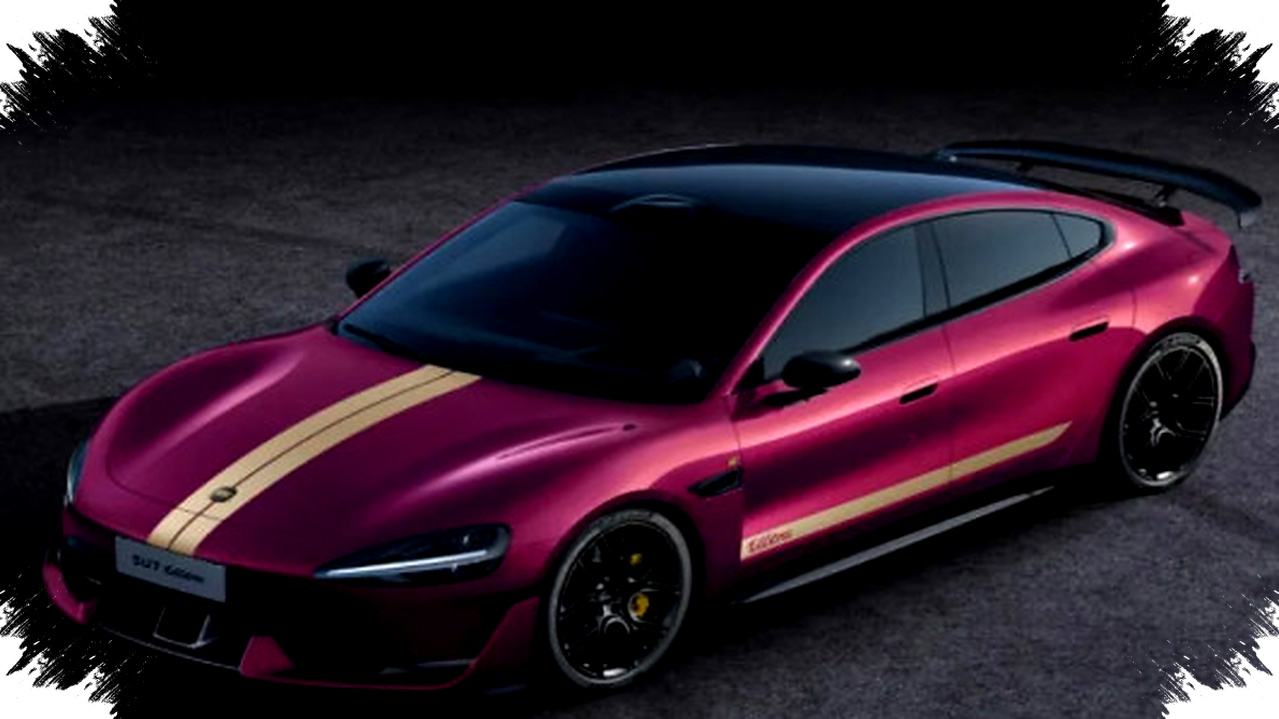
Xiaomi has expanded the customization catalog for the SU7 Ultra with two new premium options that sharpen both its visual identity and its track-ready engineering. The company now offers a Twilight Rose exterior finish and a three-stage carbon-fiber rear wing, adding more personality and aerodynamic flexibility to its flagship electric performance sedan.
The update is aimed at buyers in China through the official Xiaomi Auto app, and it reinforces Xiaomi’s “track-to-road” position for the SU7 Ultra. It also shows how the company is trying to compete not only on speed and software, but also on design, exclusivity, and owner-specific configuration.
What Xiaomi just added to the SU7 Ultra

The new upgrades focus on two different buyer priorities. Twilight Rose targets customers who want a distinctive appearance, while the carbon rear wing is built for drivers who care about aerodynamics and stability at higher speeds.
Xiaomi’s move is notable because it blends style and function in a market where EV personalization is becoming more important. The SU7 Ultra already sits at the premium end of Xiaomi’s automotive lineup, and these additions make it even more tailored to enthusiasts.
Twilight Rose brings a chameleon-like finish
Twilight Rose is not a flat, conventional paint color. Xiaomi says the finish takes inspiration from the Damask rose and uses a layered coating process that mixes color paste, metallic powder, and pearlescent material.
That combination gives the body an iridescent effect that changes with light. Under strong illumination, the car shows a warm red tone, while in dim light or backlit conditions it shifts toward a darker purple shade.
This type of finish is designed to stand out in photos, in showrooms, and on the street. It also reflects a broader trend in the premium EV segment, where color and surface treatment are becoming part of the product’s identity rather than just a cosmetic choice.
The carbon rear wing is built for three driving modes
The second update is a professional-grade carbon-fiber rear wing with three adjustable angles. Xiaomi designed the system to balance efficiency and downforce depending on how the driver uses the car.
According to the technical details shared by Xiaomi, the wing can be set in three modes: Efficient, Balanced, and Performance. Each position changes the way air moves over the car and affects both range and high-speed stability.
- Efficient Mode at 10 degrees adds 24.5 km of CLTC range and produces 75.9 kg of downforce.
- Balanced Mode at 5 degrees adds 20 km of CLTC range while increasing downforce to 127.1 kg.
- Performance Mode at 0 degrees delivers a maximum 176 kg of downforce for stronger track stability.
The figures show that Xiaomi is trying to give owners a practical choice between everyday range and circuit-focused handling. That approach fits the SU7 Ultra’s positioning as a high-performance EV that can move between road use and track use without losing its identity.
A closer look at the aerodynamic logic
Rear wings matter because they help keep a performance car planted at speed. More downforce usually improves cornering stability, while a lower-drag setup can support efficiency and range.
Xiaomi’s three-angle solution gives drivers a way to adjust the car for different conditions without replacing the part entirely. In that sense, the system acts less like a decorative accessory and more like a functional performance tool.
The company also noted that changing the angle requires professional tools and should be handled by certified technicians. That warning matters because it suggests the wing is not meant for casual adjustment in a home garage, especially if Xiaomi wants to keep the setup safe and properly calibrated.
Pricing keeps the upgrades in premium territory
Xiaomi has priced the optional finishes at a level that remains competitive for the segment while still signaling exclusivity. Twilight Rose costs about $1,500, based on the reported price of ¥11,000.
The carbon-fiber three-stage rear wing is priced at about $1,650, based on the reported ¥12,000 tag. For a performance EV of this class, those numbers sit well within the range of paid factory personalization options seen in the premium automotive market.
The pricing also suggests Xiaomi is not trying to make these upgrades mass-market items. Instead, it is creating a more curated ownership experience for early adopters and enthusiasts who want their SU7 Ultra to look and feel different from standard configurations.
Why this matters for Xiaomi’s EV strategy
Xiaomi has been building its car business with the same competitive energy it brought to consumer electronics. The SU7 Ultra is a key part of that effort because it gives the company a halo product that can showcase both software depth and hardware ambition.
Adding special paint and an adjustable carbon wing helps Xiaomi present the car as more than just a fast EV. It becomes a platform for personalization, which is increasingly important in premium electric vehicles where buyers expect distinction as well as technology.
This strategy also supports Xiaomi’s image in China’s crowded EV market. Performance, range, design, and app-based configurability all matter, and Xiaomi appears to be using each of them to strengthen the SU7 Ultra’s appeal.
What buyers can configure through the app
The official Xiaomi Auto app is the main channel for accessing the new options in China. That digital-first approach makes the process faster and more aligned with how Xiaomi already operates in the smartphone and smart-device world.
For owners, the app-based system also means the vehicle experience starts before delivery. Instead of treating customization as an aftermarket decision, Xiaomi places it inside the brand ecosystem from the outset.
- Open the Xiaomi Auto app.
- Select the SU7 Ultra configuration menu.
- Choose Twilight Rose or the carbon rear wing.
- Confirm the preferred setup and service arrangement.
- Let certified technicians handle installation or adjustment.
That workflow is straightforward, but it also reinforces Xiaomi’s control over quality, fit, and branding. The company is clearly aiming to reduce the gap between digital ordering and physical ownership.
A sign of where premium EV design is heading
The SU7 Ultra update reflects a market where performance cars are increasingly expected to offer both engineering substance and visual drama. Buyers no longer look only at horsepower or range; they also want finishes, materials, and details that feel personal.
Xiaomi’s Twilight Rose and carbon wing package fit that direction well because they offer two distinct forms of desirability. One is emotional and aesthetic, while the other is technical and functional.
For now, the new options are limited to China, and Xiaomi has not indicated a wider rollout. But even as a domestic launch, the update gives a clear signal about how the company wants the SU7 Ultra to be seen: as a high-performance electric sedan that can move between luxury, customization, and track-inspired engineering without compromising its identity.