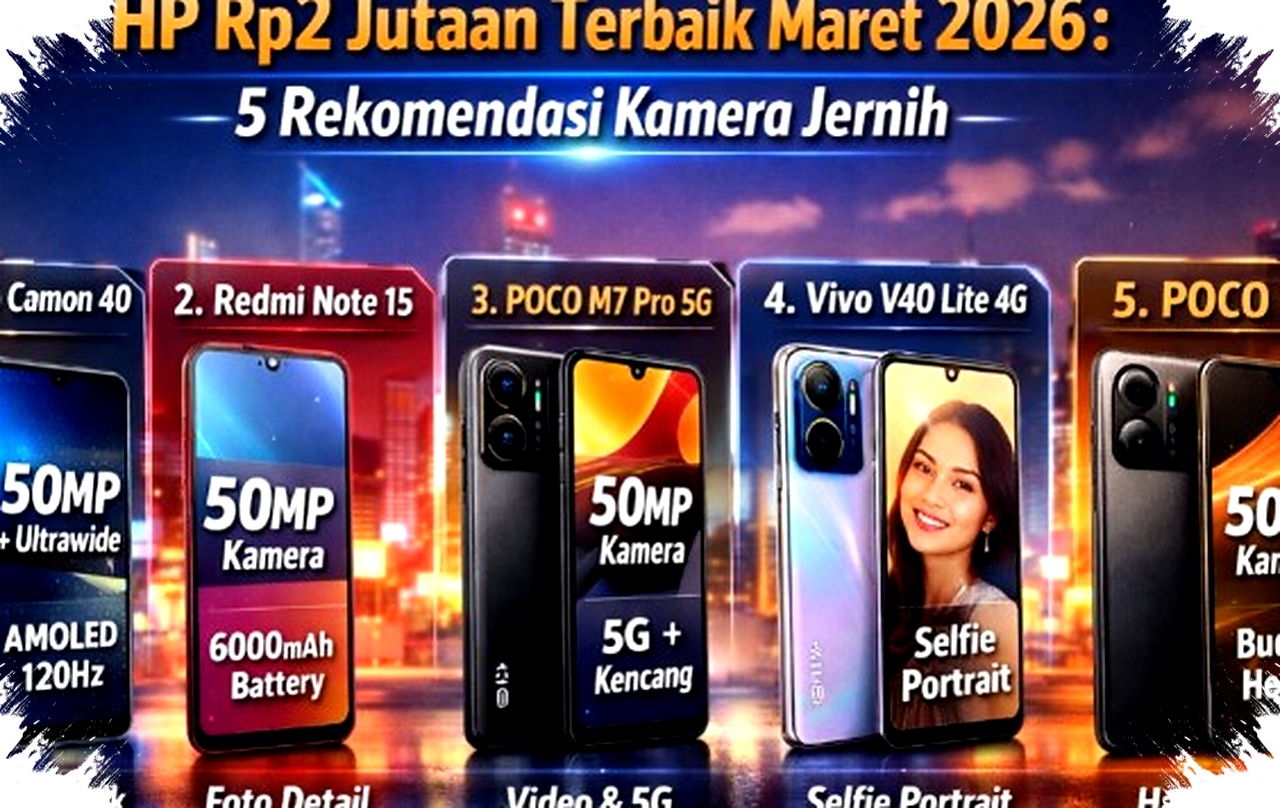
The smartphone market in the $120 to $150 range has become much more competitive in March 2026, especially for users who care about camera quality. Several brands now offer 50MP main cameras, AI photo processing, night mode, and more stable video recording in phones that were once considered entry-level.
For anyone looking for a budget-friendly phone for photography and content creation, this segment now offers real value. Based on the latest market trends and reference data, here are five of the best camera-focused phones around the $2 million rupiah class that deserve attention in March 2026.
Why this price segment matters now


Budget phones no longer rely on basic camera hardware alone. Manufacturers have started adding features that were once limited to mid-range devices, including ultrawide lenses, portrait optimization, AI enhancement, and screen panels that help users review photos more accurately.
This shift matters for everyday users, not just hobby photographers. A phone in this category can now handle casual social media content, short-form video, and daily documentation with surprisingly good results.
1. Tecno Camon 40
Tecno Camon 40 stands out as the strongest camera-oriented option in this list. The phone features a 50MP main camera and an ultrawide lens, giving users more flexibility for landscapes, group shots, and everyday street photography.
Its image output is described as sharp with lively color reproduction in both bright and low-light conditions. The phone also uses an AMOLED 120Hz display, which helps users preview images and edit content with better clarity.
2. Redmi Note 15
Redmi Note 15 is a solid choice for users who prefer natural-looking photos. Its 50MP camera is tuned to produce detailed shots, especially in daylight, where the sensor can capture cleaner textures and more balanced tones.
The device also benefits from a large battery, which makes it practical for users who spend long hours taking photos or recording clips. That endurance is useful for travel, field work, and content sessions that run through the day.
3. POCO M7 Pro 5G
POCO M7 Pro 5G is aimed at users who want stronger performance alongside dependable camera output. The phone supports 5G and offers stable video recording, which makes it more appealing for beginner creators.
Its video capabilities are important for platforms like TikTok, Instagram Reels, and other short video formats. For users who want a device that can keep up with faster multitasking while still producing decent visuals, this model fits the brief well.
4. Vivo V40 Lite 4G
Vivo V40 Lite 4G is a stronger pick for portrait photography and selfies. Vivo’s AI-based processing helps create smoother skin tones and more natural facial colors, which is often important for users who prioritize human subjects in their content.
This makes the phone suitable for vloggers, selfie users, and creators who want visually pleasing results without heavy editing. It also fits users who often post aesthetic portraits and lifestyle content on social media.
5. POCO C71
POCO C71 is the most economical option in this group, but it still offers a 50MP camera that handles basic photography properly. It is a practical choice for students or users who only need a functional phone with a camera that can capture daily moments clearly.
While it does not aim to compete with the more advanced models above, its value lies in affordability. For buyers who want to stay within a strict budget while still getting a capable camera phone, POCO C71 remains relevant.
Quick comparison of the 5 phones
| Model | Main camera | Strength | Best for |
|---|---|---|---|
| Tecno Camon 40 | 50MP + ultrawide | Best overall camera balance | Photography and content |
| Redmi Note 15 | 50MP | Natural detail and battery life | Daily photos and long use |
| POCO M7 Pro 5G | 5G support, stable video | Performance and content creation | Short videos and multitasking |
| Vivo V40 Lite 4G | AI portrait optimization | Selfies and portrait shots | Human-focused content |
| POCO C71 | 50MP | Lowest-cost option | Basic photography and students |
What users should look for before buying
A 50MP camera does not always guarantee better photos in every condition. Sensor quality, image processing, electronic stabilization, and software tuning often matter just as much as megapixel count.
Users who often shoot outdoors should prioritize sharpness and color balance. Those who create video should pay attention to stabilization, front camera quality, and battery life, since long recording sessions can drain power quickly.
Camera features that now matter in budget phones
The March 2026 trend shows that affordable phones are now borrowing features from higher classes. Night mode helps improve low-light shots, while AI photography can adjust exposure and skin tone automatically.
Video stabilization is also becoming a key selling point. For content creators, this feature reduces shake and makes handheld footage more usable without needing extra accessories.
Who should choose which model
Tecno Camon 40 is the most complete pick if camera quality is the main priority. Redmi Note 15 suits users who want natural photos and strong endurance, while POCO M7 Pro 5G is better for those who value speed and video use.
Vivo V40 Lite 4G is the clearest match for selfie lovers and portrait content creators. POCO C71, meanwhile, serves buyers who want a low-cost phone with a camera that still handles everyday documentation well.
The wider takeaway is clear: phones in the $120 to $150 range are now much more capable for photography than they were a few years ago. With 50MP sensors, AI processing, and better video tools becoming common, users can now choose a budget phone that fits content creation needs without moving into a much more expensive segment.