


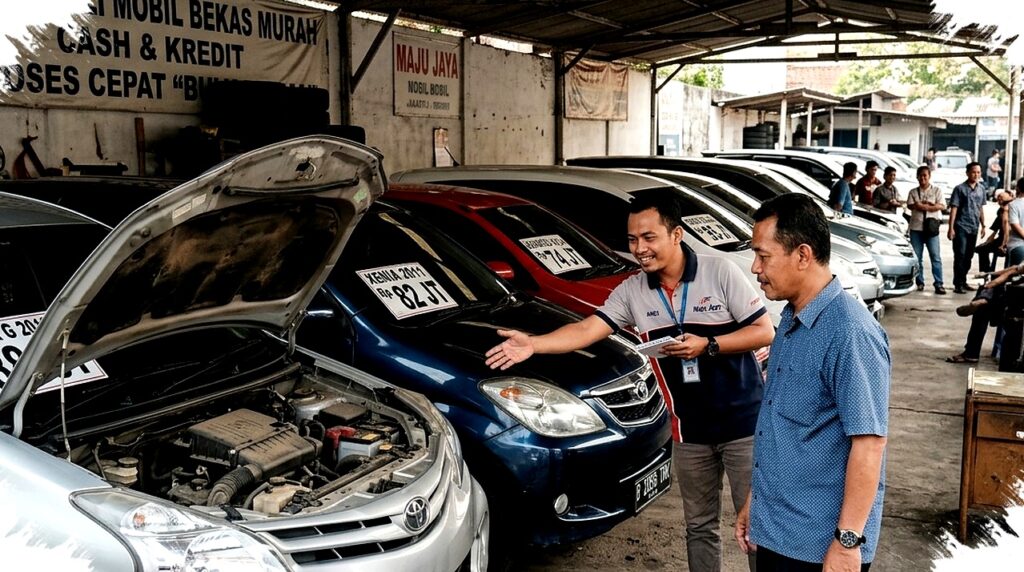
For buyers scanning the used-car market in 2026, post-Eid “BU” units have become one of the most attractive segments under $100,000,000. The term “BU,” short for butuh uang, refers to owners who need fast cash and are willing to price their cars below market value to close the deal quickly.
That pressure often appears right after the mudik season, when family trips, holiday spending, and rising maintenance costs push some owners to sell. For shoppers who want a car for daily work, small business use, or family transport, this creates a rare window to find a road-ready used car at a lower entry price.
Why the market gets cheaper after mudik
Post-trip selling usually rises because long-distance travel adds wear to the engine, brakes, suspension, and tires. Indonesia’s Ministry of Transportation has noted that vehicles used for long journeys face a significant increase in workload, especially in those core components.
That is why many sellers prefer to let go of a car instead of paying for a full round of repairs. In practice, this means the market receives more listings at aggressive prices, especially from owners who want quick liquidity after Eid-related spending.
Gaikindo data also points to a recurring pattern in which used-car demand strengthens after the mudik period. More vehicles return to the market, supply expands, and buyers gain more room to compare conditions, prices, and repair needs before making a move.
Used cars under $100,000,000 that still make sense in 2026
Below is a practical list of popular units that were widely seen in the market around the end of March 2026. The figures are converted directly into U.S. dollars using a simple approximate rate for readability, while the original market position still reflects the same value range.
| Model | Estimated Price Range | Best For | Main Strength |
|---|---|---|---|
| Toyota Avanza 2008–2012 | $4,650–$5,900 | Work, travel, family | Cheap parts, durable engine |
| Daihatsu Xenia 2009–2013 | $4,350–$5,600 | Daily operations | Fuel efficient, easy maintenance |
| Suzuki Splash 2011–2014 | $4,000–$5,300 | Urban mobility | Compact size, comfortable ride |
| Honda Jazz GD3 2005–2008 | $4,350–$5,900 | Young drivers, quick delivery use | Responsive engine, sharp handling |
| Nissan Grand Livina 2008–2012 | $4,000–$5,600 | Family and work | Comfortable suspension |
Toyota Avanza remains one of the safest bets in this range because the model has a strong aftermarket and broad service access. For buyers who need a multipurpose car, the Avanza’s reputation for durability still keeps resale risk relatively low.
Daihatsu Xenia is often selected by buyers who want similar practicality with a slightly more affordable entry point. It is also popular for daily operation because fuel consumption and routine maintenance tend to stay manageable.
Suzuki Splash stands out for urban use because it is compact and easy to park. That makes it useful for city driving, office commutes, and small businesses that need a nimble car rather than a large MPV.
Honda Jazz GD3 is usually favored by buyers who want a more engaging drive. The model often attracts young drivers and courier users because the throttle response and handling feel more lively than many cars in the same price class.
Nissan Grand Livina appeals to family buyers who still want comfort. Its suspension setup is one of the key reasons the model remains relevant for buyers looking for a softer ride without leaving the sub-$100,000,000 range.
Why these units are often labeled “BU”
The “BU” label usually means the seller wants speed more than margin. That does not always mean the car is problematic, but it often means the owner values cash flow and is willing to negotiate harder than a regular seller.
Many of these cars also come from owners who have just completed a long holiday trip. After repeated highway use and full passenger loads, some cars start showing the first signs of tired brakes, worn tires, or loosened suspension components.
Some owners also want to upgrade to a newer model after the holiday season. When that happens, a perfectly usable car can hit the market at a discount simply because the seller wants faster turnover.
What buyers should inspect before paying
A low price can hide a high repair bill, so inspection matters more than the sticker price. Buyers should focus on the parts that usually take the biggest hit after long-distance travel.
- Check the engine first.
- Listen for rough sounds, excessive vibration, or unusual smoke.
- Inspect the suspension and undercarriage for knocking noises.
- Confirm that the brake system feels firm.
- Verify that the documents are complete and valid.
- Test drive the car on regular roads, not just in a parking lot.
A smooth idle, clean acceleration, and stable steering are good signs that the car can be used immediately. If the car shakes, pulls to one side, or produces a heavy clunk over bumps, the savings may disappear quickly after repairs.
Expected refresh costs after buying a used BU unit
Even when the purchase price looks attractive, buyers should leave room in the budget for first-round maintenance. Post-mudik cars often need basic servicing before they can be used comfortably every day.
Typical early costs may include:
- Oil and filter change: around $30–$60
- Brake service: around $18–$48
- Light suspension or undercarriage work: around $30–$120
- Tire replacement, if needed: around $60–$180
In many cases, the initial budget can land near $60–$300, depending on the condition and age of the car. That number can rise if the vehicle needs tires, brake components, or a deeper inspection on the cooling system and drivetrain.
How to tell if a cheap used car is still worth buying
The best units are not always the cheapest, but the ones with the most balanced condition-to-price ratio. Buyers should look for cars priced below market, but still with clean interiors, smooth engines, and no evidence of major collision repairs.
A car that can be driven home and used for work immediately is usually the strongest value. That is especially true for buyers who need the vehicle to generate income, such as ride services, delivery work, or small logistics jobs.
A complete STNK and BPKB also matter because missing paperwork can turn a cheap purchase into a long administrative problem. A valid tax status and clear ownership trail reduce the risk of future resale or legal issues.
What makes this moment useful for budget buyers in 2026
The current wave of post-Eid listings gives buyers more bargaining power than usual. Because more owners want fast cash, they often accept lower offers, especially if the car has already been serviced enough to run properly.
This is why buyers who act carefully can still find reliable units under $100,000,000 with usable condition and moderate maintenance needs. For many households, that price band remains the sweet spot between affordability and day-to-day practicality, especially when the car needs to be ready for work as soon as the keys change hands.