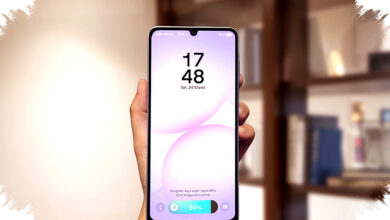
Samsung Galaxy A56 5G is drawing attention for one main reason: it challenges old doubts about Samsung’s mid-range processor strategy. The phone uses the Exynos 1580, a 4nm chipset that is now being viewed as a more convincing answer to users who want strong performance without moving to an expensive flagship.
That matters because many buyers still judge Samsung’s Exynos line through older complaints about efficiency, heat, and consistency. In the Galaxy A56 5G, Samsung is trying to show that its in-house chip can finally deliver the kind of balanced experience people expect in a modern daily driver.
A mid-range phone that aims higher than its price


Galaxy A56 5G sits in the roughly $370 to $430 range, which places it firmly in the upper mid-range segment. At that level, buyers expect more than basic speed, because they now want a device that can handle work, entertainment, photography, and long-term software support.
Samsung appears to have built the A56 5G with that exact expectation in mind. The phone is not being positioned as a cheap fallback, but as a practical option for users who want premium-like stability at a more controlled cost.
Exynos 1580 is central to the story
The strongest talking point is the Exynos 1580, built on a 4nm process. A smaller fabrication node usually helps with better power efficiency, lower thermal output, and more stable sustained performance, and those are exactly the areas where Samsung needed to convince skeptics.
In everyday use, that means smoother app switching, better responsiveness, and less worry about battery drain during long sessions. Samsung pairs the chipset with 8GB or 12GB of RAM, which helps the phone keep multiple apps active without frequent reloads.
The storage options of 128GB and 256GB also support the device’s practical positioning. Users get enough room for photos, videos, offline media, and large apps, and the storage can be expanded further for those who need more flexibility.
Why this chipset matters for Samsung’s reputation
Exynos chips have often been evaluated more critically than rival Snapdragon models, especially in markets where users compare performance closely. That history created a trust gap, and the Galaxy A56 5G is partly Samsung’s attempt to narrow it with real-world experience rather than marketing claims.
The key question is no longer only benchmark numbers, but whether the chipset feels dependable over time. If a phone stays cool, lasts through a full day, and keeps animations smooth, it changes the conversation around Samsung’s processor development.
Display quality supports the performance message
The Galaxy A56 5G also strengthens its case with a 6.7-inch Super AMOLED display. It uses FHD+ resolution with 1080 x 2340 pixels and a 120Hz refresh rate, which makes scrolling more fluid and gaming more responsive.
Samsung adds Vision Booster, a feature designed to improve screen visibility in bright conditions. That is a useful detail for mobile readers, commuters, and outdoor users who need the display to remain readable under harsh light.
The phone also uses very thin bezels, which gives it a more premium look than many devices in the same bracket. The large panel makes the most sense when paired with the Exynos 1580, because a smooth display experience needs a processor that can keep up.
Camera hardware targets content creators and everyday users
The rear camera setup includes a 50MP main sensor with optical image stabilization, a 12MP ultra-wide lens, and a 5MP macro camera. This combination covers common shooting scenarios, from landscapes and group shots to close-up details.
Samsung also includes a 32MP front camera with AI-based image processing. That should help faces look sharper and more natural, especially in social media content, video calls, and selfie-focused posts.
Video support reaches 4K, which matters for users who want a phone that can do more than just casual snapshots. For creators at the mid-range level, that kind of flexibility has become increasingly important.
Battery life remains a major selling point
The Galaxy A56 5G uses a 5,000mAh battery, which is still one of the most reliable capacities for all-day use. Combined with the 4nm Exynos 1580, the battery setup is intended to support long browsing sessions, video playback, messaging, and light gaming without frequent charging stops.
It also supports 45W fast charging, which reduces downtime compared with slower charging systems. That speed is especially useful for users who rely on their phone throughout the day and do not want long breaks near a power outlet.
Durability and software support add long-term value
Samsung protects the display with Gorilla Glass Victus+ and gives the device an IP67 rating. That means the phone is better prepared for dust exposure and accidental water splashes, which adds practical value beyond its performance specs.
The software promise is just as important. Samsung says the device will receive Android updates for five years, and that long support window has become one of the company’s strongest competitive advantages in the mid-range class.
Key highlights of the Galaxy A56 5G
- Exynos 1580 chipset on a 4nm process
- 6.7-inch Super AMOLED display with 120Hz refresh rate
- 50MP main camera with OIS
- 5,000mAh battery with 45W fast charging
- Up to 5 years of Android updates
- IP67 rating and Gorilla Glass Victus+ protection
These features place the Galaxy A56 5G in a category where value is no longer defined by price alone. It tries to combine speed, display quality, camera flexibility, endurance, and long-term support in one package.
A stronger case for Exynos, but the real test is daily use
The Exynos 1580 may not end every debate around Samsung processors, but it clearly improves the company’s standing in a segment where consistency matters more than hype. If the chip delivers stable performance in gaming, multitasking, and battery efficiency, then Samsung’s effort to rebuild confidence in Exynos will look increasingly successful.
For now, the Galaxy A56 5G stands out because it connects hardware choices with a clear user need. It offers a large AMOLED screen, a capable camera system, a long-lasting battery, and a software policy that gives buyers more reason to keep the phone for years, while the Exynos 1580 becomes the piece that ties the entire device together.