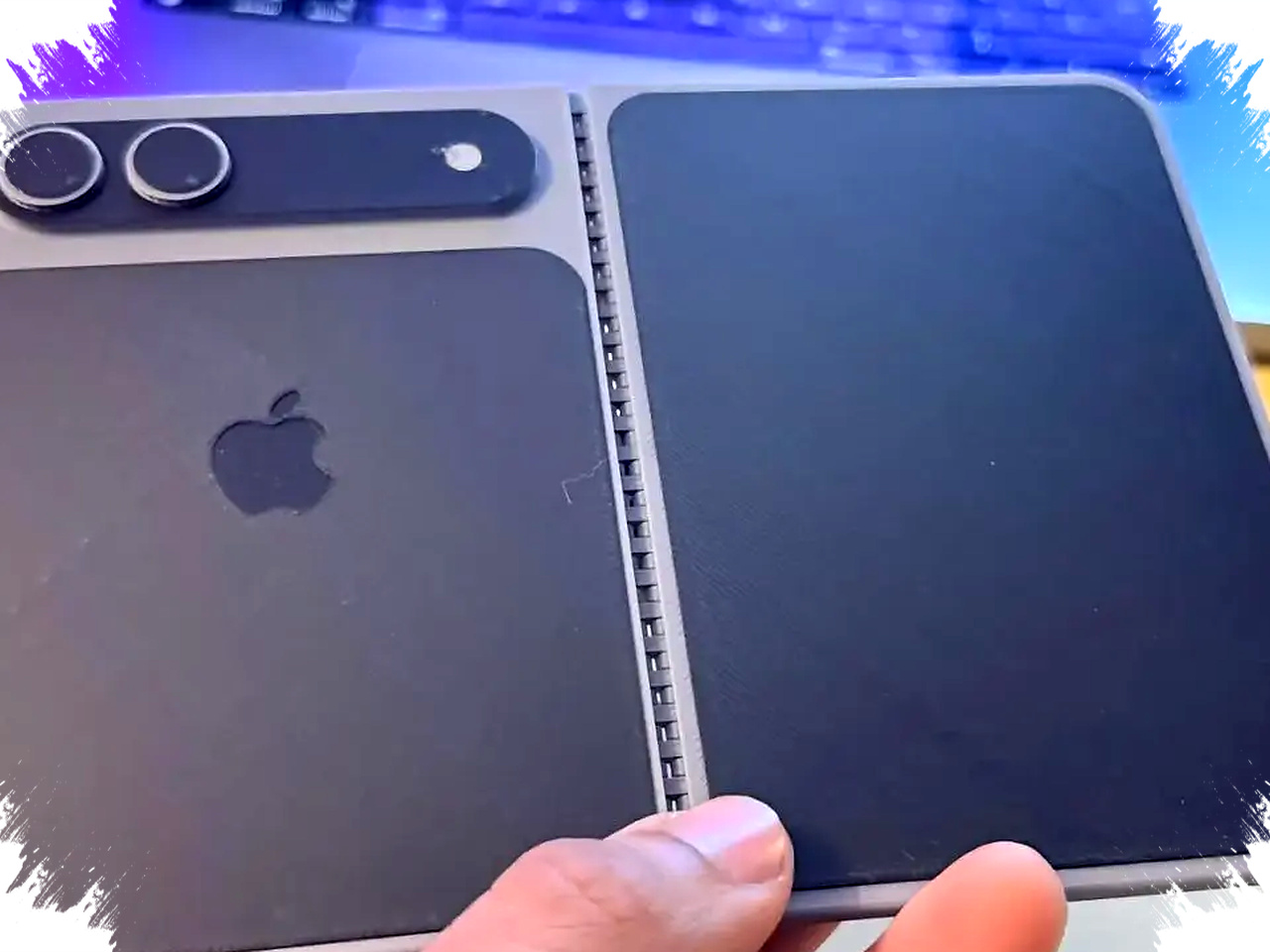
Apple is reportedly preparing its most dramatic iPhone redesign yet, and the main change may be visible before the phone is even opened. Early leaks about the first iPhone Fold suggest Apple will abandon its familiar square camera bump and replace it with a horizontal camera bar that stretches across the back.
The shift is not just about looks. According to the reference report, the horizontal layout would help Apple fit advanced camera hardware into a thinner foldable body while keeping the device balanced in both folded and unfolded modes.
A new look for Apple’s first foldable iPhone


Apple has kept the rear camera cluster in the upper-left corner across recent iPhone generations, including the iPhone 16 lineup. The iPhone Fold appears to break that pattern with a broader camera strip, closer in spirit to the design language seen on some ultra-thin concept devices.
That choice could serve several purposes at once. It gives Apple a distinct visual identity for the foldable line, and it also creates more internal room for components that are harder to fit into a slimmer chassis.
Industry observers have long expected Apple to take a conservative approach to foldables, focusing on refinement rather than novelty for its own sake. A horizontal camera bar would fit that philosophy because it looks fresh while also solving a mechanical problem inside the device.
Why the camera moves horizontally
A horizontal camera layout can free up vertical space inside a foldable phone, which matters when the device has to house a hinge, a large battery, and a flexible display. It also gives engineers more flexibility in placing sensors and optical modules without making the phone thicker when closed.
That matters because foldables often struggle with bulk. Apple seems to be aiming for a design that feels premium and slim, while still delivering the kind of camera performance consumers expect from a high-end iPhone.
There is also a possible imaging benefit. The wider internal arrangement could support a longer periscope-style zoom system, which may improve optical zoom capabilities compared with current iPhone models.
From phone to iPad mini-like experience
One of the most interesting details from the leak is how the device may feel when unfolded. With an internal display said to approach 8 inches, the iPhone Fold could resemble an iPad mini in both size and usage style.
That would make the device more than a folding smartphone. It could become a hybrid product aimed at users who want a phone for daily carry and a tablet-like screen for reading, multitasking, editing, and media consumption.
The larger display could be especially useful for professionals who work on the go. It would offer more space for split-screen workflows, document review, creative apps, and video calls, all while keeping the device compact enough to fit into a pocket when folded.
Balance, weight, and the role of the camera bar
A foldable device with a large internal screen must manage weight carefully. If too much hardware sits in one corner, the phone can feel uneven when held open like a small tablet.
That is where the horizontal camera placement becomes strategically important. By spreading the camera components across the back, Apple may be trying to improve balance and make the unfolded device feel more stable in the hand.
This approach also aligns with the idea of a foldable that behaves like an “iPad mini” in use. A more even weight distribution would make the device easier to hold for reading, note-taking, and browsing for longer periods.
Battery and hinge engineering remain critical
A thinner foldable body usually creates pressure on battery capacity, but reports from the supply chain suggest Apple is trying to avoid that compromise. The company is said to be testing high-density battery technology that would allow a large battery to fit inside a narrow foldable frame.
That would be important for a device expected to serve as both phone and tablet. A larger display typically consumes more energy, so Apple would need to preserve strong battery life if it wants the iPhone Fold to feel practical rather than experimental.
The hinge design is also drawing attention. According to industry sources mentioned in the reference material, Apple is using reinforced liquid polymer-based materials to reduce the appearance of a visible crease in the center of the display.
That is a major challenge in today’s foldable market. Many competing devices still show a noticeable fold line, and Apple appears to be treating that problem as a priority rather than a compromise.
What the design could mean for Apple’s foldable strategy
Apple rarely enters a hardware category first, but it often tries to define the best version of that category once it arrives. The iPhone Fold may follow that pattern by focusing on polish, durability, and everyday usability instead of novelty alone.
A horizontal camera bar would help support that strategy because it makes the product look intentional, not like a standard iPhone that was simply bent in half. It signals a new design chapter rather than a variation of the existing lineup.
The move could also help Apple position the foldable model above the Pro Max tier. If the company wants the device to feel like a true ultra-premium product, then the design must communicate that message immediately.
- Folded mode: compact smartphone for calls, messaging, and everyday use.
- Unfolded mode: tablet-like workspace for productivity and media.
- Camera mode: wider rear layout for advanced optics and possible periscope zoom.
- Premium positioning: distinct identity above current iPhone models.
What remains unconfirmed
Apple has not officially announced the iPhone Fold, and the current picture still comes from a mix of supply-chain reports and industry leaks. Even so, the consistency of the rumors suggests that development is moving beyond early concept work.
That does not guarantee a launch window, final dimensions, or final specifications. It does, however, point to a serious product effort that is likely being shaped around one central goal: making a foldable iPhone that feels as polished as the rest of Apple’s hardware lineup.
If the leaks prove accurate, the first iPhone Fold will not just add a flexible display to the iPhone family. It will also introduce a new design language with a horizontal camera system, a thinner profile, and an unfolding experience that pushes the device closer to an iPad mini-style form factor inside a phone-sized body.