


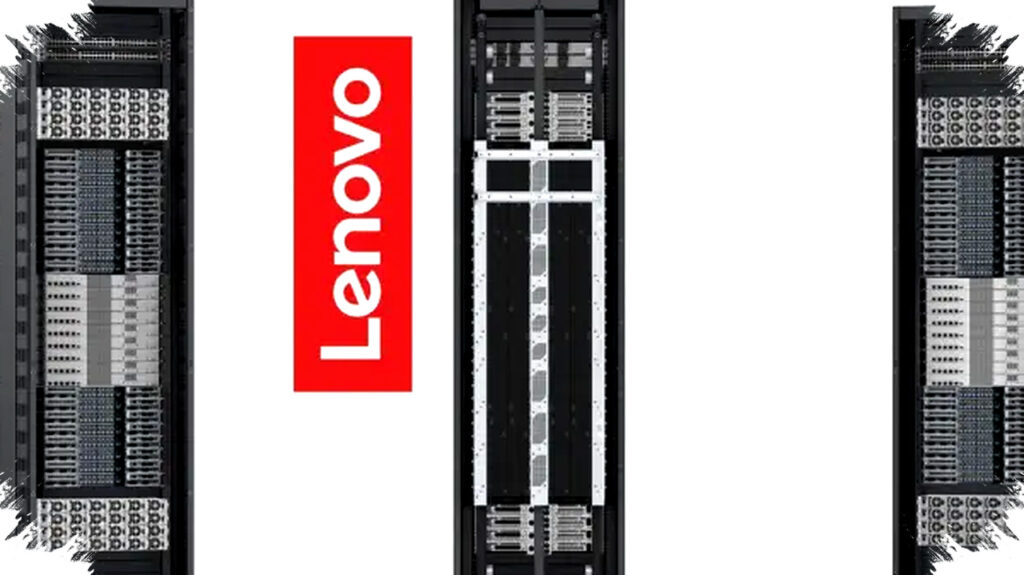
Lenovo has pushed enterprise AI into a more practical phase with the launch of Lenovo Hybrid AI Advantage, a solution unveiled with NVIDIA at GTC on March 26, 2026. The platform is designed to help businesses move faster from AI trials to real deployment, while keeping control over data, performance, and cost.
This matters because many companies still struggle to run AI efficiently at scale. Lenovo says the new approach connects everything from workstations to large data centers, giving organizations a single framework to build, deploy, and manage AI across edge, on-premises, and cloud environments.
Why hybrid AI is becoming the default choice
The shift toward hybrid AI is not just a product strategy. It reflects a broader enterprise need for flexibility, security, and predictable operating costs.
According to the CIO Playbook 2026 cited in Lenovo’s announcement, 84% of organizations are expected to run AI in on-premises or edge environments. That trend is driven by data protection needs, latency requirements, and the desire to keep critical workloads closer to the business.
In practical terms, hybrid AI lets companies decide which tasks should remain inside their own infrastructure and which can move to the cloud. This balance is increasingly important for industries that handle sensitive customer data or rely on fast decision-making.
Lenovo positions Hybrid AI Advantage as a validated infrastructure stack that can support that model. The company says the platform is built to reduce complexity for IT teams while improving the speed at which AI applications can move into production.
Cost control becomes a core AI metric
One of the strongest messages from Lenovo is that AI success should no longer be measured only by model accuracy. It should also be measured by cost per token, inference speed, and business return.
Yuanqing Yang, Chairman and CEO of Lenovo, said the collaboration helps organizations move “from experimentation to real enterprise implementation.” He added that “cost control and performance per token are becoming critical.”
That focus is important because many enterprises are now facing the rising cost of running large models. Lenovo claims its validated infrastructure can reduce token cost by up to 8 times compared with conventional cloud services.
For companies planning AI deployments, that gap can decide whether a project scales or stays stuck in pilot mode. Lower operating cost also makes it easier for businesses to embed AI into daily workflows instead of limiting it to single use cases.
Key elements of Lenovo Hybrid AI Advantage
Lenovo’s announcement covers several layers of enterprise AI infrastructure. The strategy is not built around one server or one device, but around a connected ecosystem.
-
Validated infrastructure for on-premises AI
Lenovo says the platform supports secure, local AI processing for organizations that want more control over their data. -
AI-ready workstations
The company is bringing AI power closer to users through its latest ThinkPad P Series devices, including the ThinkPad P1 Gen 9 and ThinkPad P14s Gen 7. -
Advanced developer systems
ThinkStation PGX is designed for AI development and can reportedly support models with up to 200 billion parameters at up to 1 petaflop of performance. - Future-scale data center architecture
Lenovo is also preparing for next-generation AI infrastructure with NVIDIA Vera Rubin-based systems and liquid cooling for higher processing capacity.
This layered approach is important because enterprise AI does not run on one machine alone. It needs devices for creators, systems for developers, and data center infrastructure for large-scale inference and training.
ThinkPad and Blackwell GPUs bring AI to the desk
Lenovo is also extending the Hybrid AI Advantage concept into professional workstations. The new ThinkPad P Series models now use NVIDIA RTX PRO Blackwell Laptop GPUs, which are aimed at creators, engineers, and developers who need local AI acceleration.
That matters because many corporate AI tasks do not require a massive cloud cluster. Teams often need fast local processing for prototyping, visualization, content generation, simulation, or model testing.
By putting more AI capability inside portable workstations, Lenovo can help reduce dependence on remote resources. It also gives companies more flexibility when handling projects that require both mobility and private data processing.
ThinkStation PGX expands that idea further. It is positioned as a development tool for large models, with support for AI systems up to 200 billion parameters. For enterprises building custom tools, that kind of local horsepower can shorten development cycles.
Battery innovation and device endurance
Lenovo also highlighted a concept battery based on silicon-anode technology. The company says the design is the first of its kind and reaches a density of 1,000Wh/L.
If commercialized broadly, that kind of battery advance could matter beyond convenience. Longer battery life supports AI-heavy mobile workflows, especially for employees who move between offices, client sites, and remote environments.
For enterprise buyers, battery endurance is not only a hardware issue. It affects productivity, device replacement cycles, and the usability of AI features on the go.
ROI is becoming part of the buying decision
Lenovo says Hybrid AI Advantage can deliver return on investment in under six months. That is a notable claim, especially in sectors where AI spending has often been delayed by unclear payback periods.
The company points to retail, manufacturing, and healthcare as sectors that could benefit quickly from the platform. These industries usually manage high volumes of data and can gain value from automation, forecasting, and intelligent decision support.
For example, retail teams may use AI for demand planning and customer personalization. Manufacturing firms may apply it for predictive maintenance and quality control. Healthcare institutions may use it to improve workflow efficiency and support clinical data analysis.
Budi Janto, President Director of Lenovo Indonesia, said local companies are moving toward more practical AI use. He noted that the hybrid approach allows businesses to keep full control over their data while still benefiting from cloud flexibility.
How the Lenovo and NVIDIA partnership changes the picture
The Lenovo-NVIDIA collaboration is central to this launch. NVIDIA brings the accelerated computing stack, while Lenovo supplies the infrastructure, device layer, and enterprise integration.
That combination matters because many organizations want AI systems that are already validated and easier to deploy. They do not want to assemble every part from scratch.
The partnership also signals a broader shift in AI infrastructure design. Enterprises are no longer thinking only about model size. They are also thinking about where workloads run, how data is secured, and how quickly AI can create measurable business value.
What comes next for enterprise AI infrastructure
Lenovo is already looking beyond current systems and into gigawatt-scale AI infrastructure. The company says its NVIDIA Vera Rubin-based platform will use liquid cooling and deliver up to 10 times more processing capacity than the previous generation.
That scale points to the rise of what many vendors now describe as AI factories. In this model, AI becomes a continuous production system rather than a one-off technology project.
For businesses, the message is clear. The next phase of AI will not be decided only by model quality, but by infrastructure choices, token economics, and the ability to run intelligence across devices, edge sites, and data centers with control and efficiency.