


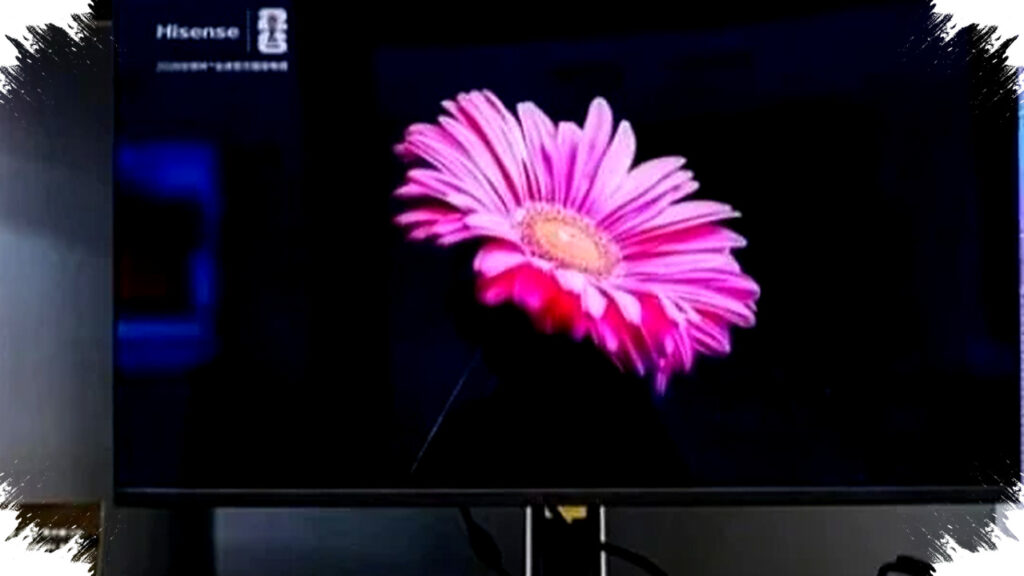
Hisense has officially entered the gaming monitor market with two new mini-LED models that aim directly at premium buyers: the flagship UX and the more flexible GX Ultra. The company revealed both displays at the 2026 Appliance and Electronics World Expo, or AWE 2026, in China, signaling a more serious push beyond its better-known TV business.
The move matters because Hisense is not simply adding another monitor to a crowded category. It is bringing display technologies it has already developed for premium televisions, including true RGB mini-LED backlighting, to a segment where image precision, contrast control, and high refresh rates now define the top tier.
Hisense Brings TV-Grade Mini-LED Into Gaming Monitors
The most eye-catching model is the Hisense UX, which uses a true RGB mini-LED backlight system. Unlike conventional mini-LED panels that rely on white or blue backlighting, this design uses separate red, green, and blue light sources at the LED level.
That approach can improve color purity because the display creates color from the light source itself instead of leaning heavily on filters. It also helps reduce blooming, the halo effect that often appears around bright objects on dark scenes, a common weakness in many LED-based displays.
For gamers, that should translate into cleaner dark scenes, sharper highlights, and more natural color separation in fast-moving visuals. For creators, it may also offer the kind of color accuracy that makes a monitor suitable for both gaming and content work.
What the UX Is Promising
Hisense says the UX includes 2,304 local dimming zones and as many as 6,912 dedicated color-control zones. That is a strong number for a gaming monitor and suggests the company is targeting users who want high contrast without giving up detail in shadows or bright areas.
The company also claims full coverage of the BT.2020 color gamut, a very wide color standard that remains rare even among premium monitors. If that claim holds in real-world testing, the UX could stand out not just for gaming but also for HDR video and professional visual work.
To support the panel, Hisense has added its H7 AI image-processing chip. The chip works in real time to optimize contrast, sharpness, and overall image quality, according to the company. Hisense also uses an Obsidian Screen layer to cut reflections and improve image clarity in bright rooms.
GX Ultra Takes a Different Route
Hisense also showed the GX Ultra, a second mini-LED monitor built around a different preference: flexibility. It uses a 5K mini-LED panel and also carries 2,304 dimming zones, matching the UX in backlight control.
The key feature is its dual-mode display behavior. In 5K mode, the monitor runs at 165Hz, which should appeal to users who want high detail and strong image fidelity. In QHD mode, it can reach 330Hz, giving competitive gamers a much faster refresh rate for smoother motion.
That makes the GX Ultra more versatile than a standard high-refresh monitor. It is designed for users who want one display for both immersive single-player titles and fast esports gaming, without needing two separate screens.
Hisense also lists peak brightness of up to 2,000 nits for the GX Ultra, which suggests strong HDR potential. The monitor includes full-bandwidth DisplayPort 2.1 support, a detail that matters for future-proofing and for pushing high-resolution, high-refresh output from modern gaming hardware.
Why This Launch Stands Out in the Monitor Market
The gaming monitor market has become increasingly competitive, with brands pushing higher refresh rates, better HDR, and wider color gamuts. But most products still force buyers to choose between speed and image quality.
Hisense is trying to narrow that trade-off by using advanced mini-LED backlighting and by pairing it with modes that serve different types of gamers. The UX focuses more on color fidelity and premium image quality, while the GX Ultra tries to bridge visual detail and speed in a single product.
That strategy also reflects a broader industry trend. Monitor makers are now borrowing more display technology from high-end TVs, especially as mini-LED becomes a practical alternative to OLED for users who want very high brightness and stronger burn-in resistance.
Known Specifications at a Glance
| Model | Panel Type | Key Resolution/Mode | Refresh Rate | Dimming Zones | Notable Features |
|---|---|---|---|---|---|
| Hisense UX | True RGB mini-LED | Premium gaming focus | Not disclosed | 2,304 local dimming, up to 6,912 color-control zones | BT.2020 coverage, H7 AI chip, Obsidian Screen |
| Hisense GX Ultra | Mini-LED | 5K / QHD dual-mode | 165Hz in 5K, 330Hz in QHD | 2,304 local dimming | 2,000 nits peak brightness, DisplayPort 2.1 |
What Hisense Has Not Confirmed Yet
Despite the strong debut, Hisense has not announced pricing, full technical sheets, or a release schedule for either monitor. That leaves open key questions about panel size, local market availability, and whether these models will reach global buyers outside China.
Those missing details matter because the premium monitor segment is price sensitive. Even a well-equipped display can struggle if it lands too far above competing OLED or mini-LED options from established gaming brands.
Still, the combination of RGB mini-LED, wide color claims, high brightness, and DisplayPort 2.1 support gives Hisense a credible entry point. The company appears to be positioning the UX as its showcase for visual accuracy and the GX Ultra as its more adaptable gaming option.
A New Signal From a TV Giant
Hisense’s arrival in gaming monitors suggests the company wants a larger role in the premium display market, not just in televisions. By showing the UX and GX Ultra at AWE 2026, it is framing mini-LED as more than a television feature and treating it as a core gaming platform.
If the final products deliver on the promises shown at the expo, Hisense could become a new competitor to watch in the high-end monitor space, especially for users who want deep contrast, high brightness, and fast refresh performance in one device.