


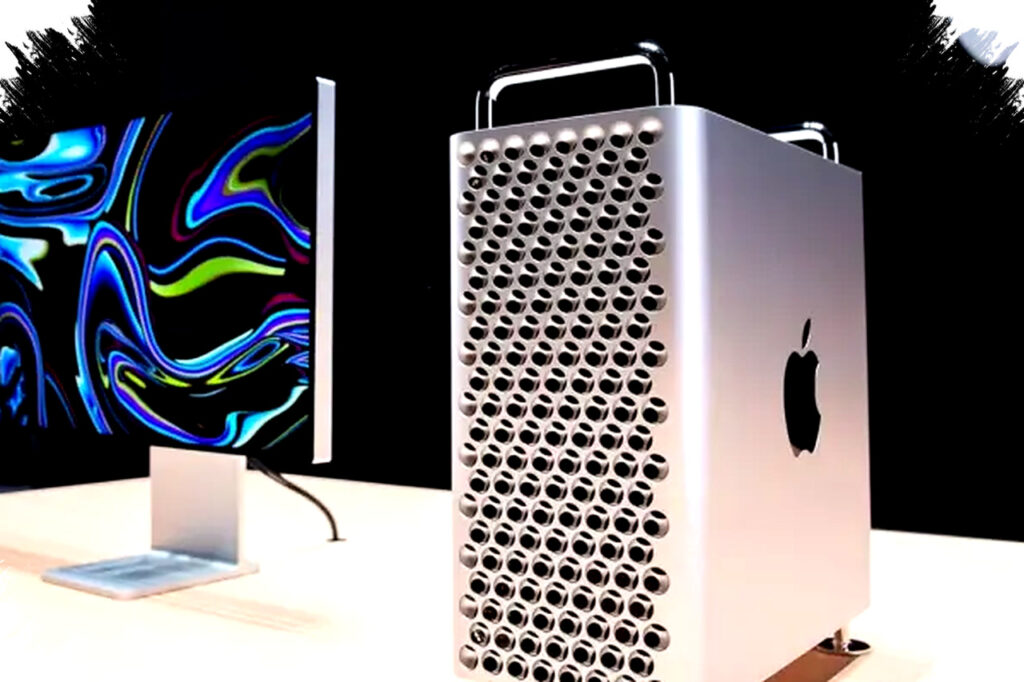
Apple has officially ended Mac Pro production after two decades, closing one of the most recognizable chapters in its professional desktop lineup. The move reflects a major shift in Apple’s hardware strategy, as the company now leans more heavily on Apple Silicon and the Mac Studio to serve creative and technical users.
For many long-time professionals, this is not just the end of a product. It is the moment Apple fully steps away from the old idea of a modular, highly upgradeable desktop tower and toward a more integrated system built around efficiency, performance per watt, and tighter software-hardware control.
A 20-Year Run That Defined Apple’s Pro Desktop Era
Mac Pro first arrived in 2006 as the successor to the Power Mac G5. From the start, Apple positioned it as a workstation for demanding users who needed raw power, expansion options, and flexibility.
That mattered in an era when editors, 3D artists, music producers, and developers often built workflows around hardware they could change and upgrade over time. The tower design made that possible, with easy access to RAM, storage, graphics cards, and other components.
Mac Pro quickly became a symbol of professional computing inside the Apple ecosystem. It was not only a machine for speed, but also for control, which helped it stand out from more consumer-focused Macs.
Why Mac Pro Became So Important
Mac Pro earned its reputation because it served a very specific audience. Professionals often needed a machine they could adapt to changing projects, larger files, and heavier workloads.
Here are the main reasons it became so influential:
- It offered modular upgrades for core components.
- It supported demanding creative and technical workflows.
- It fit studio environments that needed long-term hardware use.
- It represented Apple’s top desktop performance for many years.
That combination made Mac Pro one of the most respected products in Apple’s lineup. It was also one of the clearest signs that Apple still valued the needs of power users who wanted more than an all-in-one or laptop.
The 2013 Design Shift Changed the Story
Apple later took a dramatic turn in 2013 when it released a cylindrical Mac Pro design. The compact shape drew immediate attention, but the concept came with trade-offs.
The smaller design reduced expandability and made upgrades much harder. It also created thermal concerns, since performance could be limited by cooling constraints under heavy workloads.
That model became controversial because it moved away from the very strengths that made Mac Pro famous. Many professionals felt Apple had prioritized industrial design over real-world workstation needs.
Apple Returned to the Tower in 2019
In 2019, Apple brought back a tower-style Mac Pro. The change was widely welcomed because it restored much of the modularity that pro users had wanted for years.
The 2019 model again gave users more freedom to expand and configure the machine. It also arrived at a time when Apple was already preparing a much bigger transition in its silicon strategy.
That timing matters, because the return of the tower did not fully restore Mac Pro’s long-term future. It only bought the line a little more time before Apple Silicon changed the rules.
Apple Silicon Shifted the Entire Desktop Strategy
Apple’s move to its own chip architecture marked the biggest turning point for Mac Pro. Apple Silicon brought strong performance, better power efficiency, and a tighter integration between macOS and hardware.
By 2023, Mac Pro had been updated with the M2 Ultra chip. On paper, that kept it inside Apple’s most powerful tier, but the architecture came with new limits for the traditional workstation model.
The biggest issue was flexibility. Apple Silicon delivered impressive speed, but it also reduced the freedom to mix and match components the way pro users once could.
What Apple Silicon Changed for Pro Users
The transition brought several benefits, but it also weakened Mac Pro’s old identity.
| Area | Before Apple Silicon | After Apple Silicon |
|---|---|---|
| Upgradability | High | Limited |
| Component choice | Broad | More restricted |
| Performance efficiency | Lower | Higher |
| Hardware flexibility | Strong | Reduced |
| Workflow simplicity | Moderate | Improved |
This shift explains much of the pressure on Mac Pro. The machine still had PCI expansion slots, but compatibility was no longer as open as before.
For many users, that meant they could no longer treat Mac Pro as a fully customizable desktop platform. Instead, it became a high-end system with more fixed hardware choices.
Why Apple May Have Ended Mac Pro Production
Apple has not framed the move as a failure, but the reasons are clear. The company appears to have concluded that the pro desktop market now values compact performance and efficiency more than old-school expandability.
Several factors likely contributed to the decision:
- Apple Silicon reduces the need for traditional tower upgrades.
- Mac Studio can deliver strong performance in a smaller body.
- Professional workflows are now more software-driven and cloud-connected.
- Demand for highly modular Macs is smaller than in the past.
Mac Pro also faced a strategic problem inside Apple’s own lineup. The Mac Studio increasingly covers the performance space that once justified Mac Pro’s existence.
Mac Studio Became the New Flagship for Many Users
Mac Studio now serves as Apple’s premium desktop for many professionals. It offers high-end performance in a much smaller and simpler form factor.
That fits Apple’s current philosophy well. The company now tends to favor compact systems that are easy to deploy, efficient to cool, and tightly optimized for its own chips.
For users who care more about speed and convenience than component swapping, Mac Studio can be a better fit. It reduces clutter, simplifies setup, and still handles demanding creative workloads.
How Professionals May Feel About the End of Mac Pro
The shutdown of Mac Pro production will likely divide Apple users. Some will see it as a logical modernization, while others will treat it as the end of an era.
For long-time professionals, the loss is emotional as well as practical. Mac Pro represented a rare promise from Apple: buy once, then shape the machine around your exact needs.
That promise has now faded. The new model is less about building a workstation piece by piece and more about choosing a tightly designed system that already does most things well.
What This Means for the Future of Apple’s Desktop Line
Apple’s decision suggests that future desktop Macs will likely become even more integrated. The company seems committed to a model where chip design, software optimization, and hardware enclosure work as one unit.
That direction can bring clear benefits in performance, thermals, and energy use. But it also leaves less room for the kind of user control that once defined the Mac Pro brand.
For now, the message is simple. Apple has chosen efficiency and system-level design over the classic modular workstation formula, and the end of Mac Pro production confirms that the professional desktop market has changed sharply since 2006.