


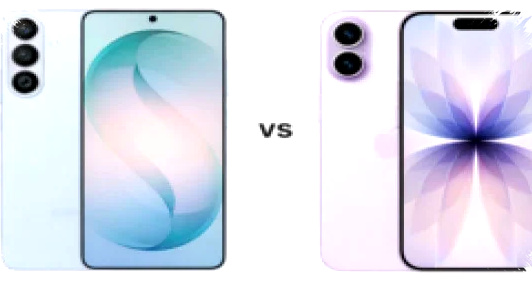
The Samsung Galaxy S26 Plus and iPhone 17 are shaping up to be two of the most important premium phones of 2026. Both target users who want a flagship device, but they appeal to different priorities: Samsung leans toward stronger hardware on paper, while Apple focuses on efficiency, software support, and ecosystem value.
For buyers, the real question is not only which phone is faster or has the better display. It is whether raw specifications or long-term practical value matters more in daily use, especially when both brands already deliver a high-end experience.
Two flagship strategies, two buying philosophies
Samsung continues to build the Galaxy S26 Plus around big-screen productivity, multi-tasking strength, and flexible hardware. Apple, by contrast, keeps the iPhone 17 centered on efficiency, reliability, and a tightly integrated software experience.
That difference matters because many flagship comparisons now come down to use-case, not just numbers. A phone with more RAM or a larger battery may look stronger on a spec sheet, but a phone with better optimization can still feel smoother in daily life.
Display and design: larger canvas or easier handling
The Galaxy S26 Plus is expected to keep a 6.7-inch display, which gives it an immediate advantage for watching videos, editing photos, and gaming. Samsung also uses a 1440p Dynamic LTPO AMOLED panel, a format known for sharp detail, strong contrast, and smooth adaptive refresh performance.
The iPhone 17 takes a different route with a 6.3-inch Super Retina XDR OLED display. It is smaller, but that size improves one-handed use and makes the phone easier to carry, which remains important for many users who want a flagship without the bulk.
In materials, Samsung uses Armor Aluminum and Gorilla Glass Victus 2, while Apple relies on Ceramic Shield 2. Both brands aim for durability, but their design priorities differ clearly, with Samsung aiming for a more immersive viewing experience and Apple aiming for compact comfort.
Performance: specs versus optimization
Samsung is expected to use either the Snapdragon 8 Elite Gen 5 or the Exynos 2600, depending on the market. The phone also comes with 12GB of RAM, which should help when switching between demanding apps, editing content, or running several tasks at once.
Apple’s iPhone 17 uses the A19 chip and 8GB of RAM, yet Apple’s advantage usually comes from software tuning rather than memory size alone. The iOS ecosystem is built for close hardware-software integration, and that often translates into very consistent performance in everyday use.
That means Samsung may look stronger for power users who value large memory and aggressive multitasking. Apple may still feel faster in common tasks because its platform is designed to reduce inefficiencies and keep performance stable over time.
Camera strengths: zoom depth or video quality
The Galaxy S26 Plus stands out in still photography with a dedicated telephoto lens for optical zoom. This gives Samsung a practical edge when users need to capture distant subjects without losing too much detail.
The iPhone 17, however, appears to keep Apple’s long-running lead in video capture. The device supports Dolby Vision 4K video, and Apple has consistently delivered excellent stabilization, color accuracy, and dynamic range in video recording.
For creators, this makes the choice clearer. If the priority is flexible zoom for travel, events, or everyday photos, Samsung has the more attractive setup. If the priority is video creation for social media or professional workflows, the iPhone 17 remains the safer bet.
Battery and charging: faster top-ups or smarter endurance
Samsung gives the Galaxy S26 Plus a 4,900mAh battery paired with 45W wired charging. That combination should appeal to users who depend heavily on screen time and want faster recovery during a busy day.
The phone also supports reverse wireless charging, which adds convenience for charging accessories or sharing power in a pinch. That kind of flexibility has become one of Samsung’s more practical flagship advantages.
The iPhone 17 uses a smaller battery, but Apple usually offsets that with efficient power management. It also improves wireless charging through the latest MagSafe system, which reinforces Apple’s focus on seamless day-to-day usability rather than only battery size.
Which phone gives better value?
Value in premium phones does not always mean the lowest price. It often means the more balanced mix of features, durability, software support, resale value, and long-term satisfaction.
Here is a simple buyer guide based on the available data:
- Choose the Samsung Galaxy S26 Plus if you want a larger display, stronger zoom capabilities, faster wired charging, and more multitasking headroom.
- Choose the iPhone 17 if you want better software efficiency, stronger video recording, compact handling, and a phone that fits neatly into Apple’s ecosystem.
- Choose Samsung if you care most about hardware flexibility and entertainment use.
- Choose Apple if you care most about long software support, stable performance, and resale value.
The pricing question that shapes the decision
The reference data suggests that the iPhone 17 is positioned as the more economical option, while Samsung pushes a more specification-heavy package. That framing is important because premium buyers are often not just comparing features, but also how much long-term value each phone can deliver for the money.
In markets where price differences are meaningful, Apple’s stronger resale value and long update cycle can make the iPhone 17 more attractive. Samsung counters with more visible hardware advantages, especially for users who want a larger screen and more charging speed right away.
What matters most for different types of users
For content consumers, the Galaxy S26 Plus may feel more rewarding because the bigger display and sharper panel improve streaming and gaming. For mobile workers, the extra RAM and larger battery can also help the Samsung phone feel more adaptable throughout a demanding day.
For creators and social media users, the iPhone 17 has a strong case because its video quality is likely to remain among the best in the segment. For buyers who prioritize convenience, long-term updates, and a more compact form factor, Apple’s approach is easier to justify.
The broader market picture in 2026 shows that flagship buyers now judge phones less by brand prestige alone and more by daily usefulness. In that setting, the Galaxy S26 Plus looks like the spec-first choice, while the iPhone 17 looks like the value-first choice for users who trust optimization, ecosystem strength, and long-term consistency.