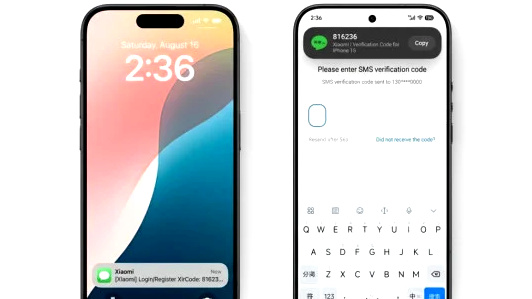
Xiaomi has pushed a new HyperConnect update for iOS and iPadOS that makes cross-device use between a Xiaomi phone and an iPhone noticeably more practical. The standout change in version v2.9.0 (165) is Remote Message Management, which lets users view and handle SMS and MMS from a Xiaomi handset on an iPhone screen through mirroring.
The update matters because it removes one of the most common pain points for people who live between two ecosystems. Instead of switching devices to check messages, users can now access Xiaomi SMS directly on Apple hardware, while Xiaomi also says the latest build improves stability and reduces connection issues on multi-band Wi‑Fi networks.
What Xiaomi HyperConnect iOS now does

Xiaomi’s interconnectivity platform, often grouped under Xiaomi HyperConnect, is designed to make its phones work more smoothly with other devices. With this new release, the company is extending that approach to iPhone and iPad users in a more visible way.
The key feature is message management from a mirrored Xiaomi display. In practice, the iPhone acts as a window into the Xiaomi phone, so users can read and reply to messages without reaching for the second device.
This kind of integration is still relatively rare in the mobile world. Apple keeps most of its ecosystem tightly controlled, while Xiaomi is trying to build a more open bridge for people who regularly combine products from both brands.
How the new SMS and MMS control works
Remote Message Management is not a standalone messaging app on iPhone. It depends on screen mirroring, which projects the Xiaomi interface onto the Apple device with low latency so the experience feels responsive.
That means the user is still operating the Xiaomi phone system, only through the iPhone screen. The setup allows SMS and MMS access in a way that feels immediate, and it reduces the need to jump back and forth between devices for basic communication.
For many users, this is more useful than a simple notification sync. It creates a stronger continuity layer, especially for people who carry an iPhone for work but keep a Xiaomi phone as their main or secondary Android device.
Why the update is important for mixed-device users
A growing number of consumers no longer choose one brand for everything. They may use an iPhone because of work requirements, while still preferring Xiaomi for battery life, charging speed, hardware value, or software flexibility.
This update targets that exact behavior. By letting an iPhone display Xiaomi messages, Xiaomi lowers the friction that often comes with mixed ecosystems and makes its phones more appealing as companion devices.
It also signals a broader strategy. Instead of forcing users to stay inside one ecosystem, Xiaomi appears to be betting that convenience across platforms can help it win loyalty.
Technical improvements beyond messaging
The message feature is the headline, but the update includes important under-the-hood changes as well. Xiaomi says HyperConnect v2.9.0 improves mirroring stability and reduces lag when interacting with projected apps.
The company also fixed connection bugs related to multi-band Wi‑Fi environments. That matters because many homes and offices now use routers that handle several frequency bands, and inconsistent device detection can break cross-device workflows.
The interface has also been refined to feel more native on iOS 14.0 and later, as well as iPadOS 14.0 and above. Those changes may seem small, but in cross-platform software, smoother transitions often decide whether people keep using the feature or abandon it.
Requirements users need to check first
Before trying the new feature, users should confirm that their devices meet Xiaomi’s compatibility requirements. The iPhone or iPad must run iOS 14.0 or later, while the Xiaomi phone must already be on HyperOS 2 or HyperOS 3.
Xiaomi also requires supporting system services to be updated. According to the release notes, “Interconnectivity Services” should be at version 16.00.50, and “Xiaomi Share” should be at least version 3.3.0.
Here is a simple compatibility checklist:
| Requirement | Minimum version |
|---|---|
| Apple device OS | iOS 14.0 / iPadOS 14.0 |
| Xiaomi phone OS | HyperOS 2 or HyperOS 3 |
| Interconnectivity Services | 16.00.50 |
| Xiaomi Share | 3.3.0 |
Users who miss one of these requirements may not see the new mirroring and SMS controls work correctly. In cross-device systems, software version alignment is often just as important as hardware support.
What this means for Xiaomi’s ecosystem strategy
The rollout of HyperConnect v2.9.0 shows that Xiaomi is still investing in ecosystem software, not just phone specs. That is increasingly important in a market where hardware differences are harder to sustain and software experiences often shape brand loyalty.
By improving how Xiaomi phones interact with iPhones, the company is making its devices more useful in environments dominated by Apple products. That could matter in markets where people often mix iPhones with Android phones depending on price, business needs, or personal preference.
The update is currently rolling out gradually, with China appearing to be the first major market. That is consistent with Xiaomi’s usual approach, where new software features often arrive in stages before broader availability.
The bigger story is not just that Xiaomi added SMS control on iPhone. It is that the company is trying to make its ecosystem feel less isolated, and that could influence how premium users decide which phone they buy next.