


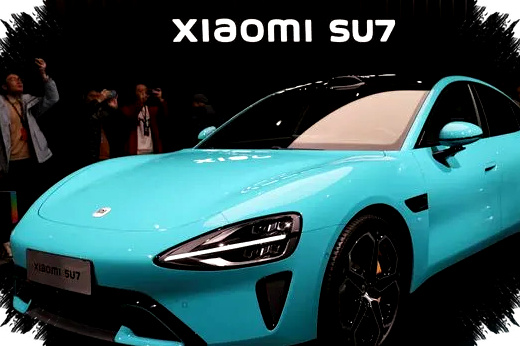
Xiaomi has brought in a former Tesla China executive to sharpen the sales push for its SU7 electric sedan, signaling that the company wants more than attention-grabbing headlines in the EV market. Kong Yanshuang, who previously held senior sales roles at Tesla in China, has joined Xiaomi to help lead its automotive sales operations as the SU7 enters a crucial phase of market expansion.
The move comes as Xiaomi tries to turn early excitement around the SU7 into sustained deliveries, stronger retail execution, and a more durable auto business. In a field crowded with aggressive domestic rivals and established global brands, sales leadership now matters as much as product design, pricing, and software.
Why Xiaomi is making this move now
Xiaomi launched the SU7 as its first electric car, and the model quickly became one of the most closely watched EV debuts in China. That attention has created pressure for Xiaomi to prove it can do more than build consumer interest, because the real test comes in scaling sales, service, and customer support.
According to the report cited by Jiemian News and CarNewsChina, Kong joined Xiaomi in early March. He is expected to take on a key role in the company’s auto sales division, replacing Li Xiaorui, who currently serves as Director of Xiaomi Auto.
Xiaomi is also still in the middle of internal transition work. The company is adjusting its structure to make sure the new leadership fits smoothly with the existing team, which suggests the sales operation is still evolving alongside the SU7 rollout.
Who Kong Yanshuang is and why he matters
Kong is not an outsider to China’s EV battle. At Tesla, he helped drive the company’s growth in China, one of the most important electric vehicle markets in the world.
His earlier role as General Manager for South China gave him direct responsibility for strengthening Tesla’s footprint in major commercial centers. He later became General Manager for China, where he worked on broader sales strategy, local distribution, after-sales service, and marketing tailored to Chinese consumers.
That background is important because Xiaomi now needs a leader who understands how to sell vehicles in a highly competitive market, not just how to manage a product launch. The SU7 must compete on showroom presence, customer trust, delivery efficiency, and brand image, all of which depend on experienced sales leadership.
What Kong did at Tesla
Kong’s record at Tesla shows why Xiaomi may have targeted him. He helped expand the company’s presence in cities such as Guangzhou and Shenzhen, two major hubs for business and technology in southern China.
He also played a role in pushing Tesla deeper into lower-tier cities, where automakers often fight for new customers and long-term growth. That matters for Xiaomi because the EV market in China is no longer limited to top-tier urban centers, and successful brands need a network that reaches beyond the biggest metropolitan areas.
From 2022 to 2023, Kong also became one of Tesla China’s public faces. He frequently spoke to the media about sales performance, business strategy, and developments around Gigafactory Shanghai.
He was later moved in May 2024 to oversee sales in Shanghai after Tesla’s internal restructuring. Even then, he remained connected to the company’s wider sales system, which shows he was still trusted in a central and highly sensitive market.
What Xiaomi likely wants from this hire
Xiaomi is not just hiring a manager. It is bringing in someone with hands-on experience in building sales systems for a fast-growing EV brand in China.
The company appears to want support in several critical areas, including dealer expansion, customer experience, after-sales service, and local market adaptation. Those areas often determine whether a newly launched EV can scale from buzz to volume.
Here is a simple look at the strategic value of the hire:
- Stronger sales execution across key Chinese cities
- Better dealer and service network development
- More local market knowledge for customer targeting
- Faster adaptation to competitive EV market conditions
- Improved public communication around Xiaomi Auto
That combination could help Xiaomi reduce friction as it grows SU7 sales and prepares for broader auto ambitions.
Why the SU7 needs this kind of support
The SU7 marks Xiaomi’s entry into a market where expectations are very high. The company is known for consumer electronics, but building a car requires a different sales and service model, especially when customers expect reliability, software support, and long-term maintenance.
In China’s EV market, success depends on trust as much as innovation. Buyers want to know that a new automaker can deliver cars on time, support ownership after purchase, and build enough infrastructure to make the experience convenient.
That is why a sales veteran like Kong may be more important than it appears at first glance. His role is not only about selling more cars, but also about helping Xiaomi look and operate like a serious long-term automaker.
What this says about Xiaomi’s EV strategy
The recruitment also reflects a broader pattern in the tech and automotive industries. Companies often hire experienced talent from major rivals when they want to speed up growth in a new business line.
For Xiaomi, that means the company is betting on both product innovation and executive know-how. The SU7 may have introduced Xiaomi to the EV market, but leadership experience will help determine whether the company can turn that launch into a lasting business.
This strategy also suggests Xiaomi understands the limits of hardware hype. Even a well-received car needs a sales machine, and in China’s EV sector that machine has to work quickly, locally, and at scale.
What to watch next
The key question now is how Kong Yanshuang will shape Xiaomi Auto’s sales model. He may bring methods similar to those used at Tesla, or he may adapt his approach to better fit Xiaomi’s brand and customer base.
Either way, his arrival signals that Xiaomi is serious about building more than a headline-making electric car. With the SU7 already in the market, the company now needs execution, reach, and consistency, and that is where the new sales leadership could make the biggest difference.