


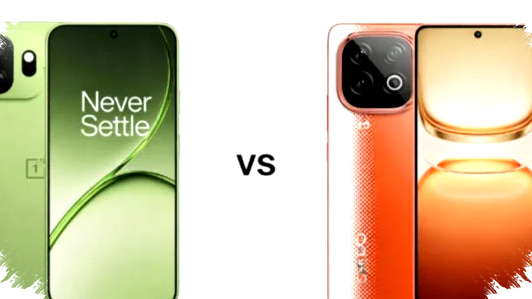
The premium smartphone race is no longer defined only by the highest price tag, and the OnePlus 15T versus iQOO Neo 10 matchup makes that very clear. Both phones chase performance-first buyers, but they do it with very different strategies: OnePlus leans into a polished flagship experience, while iQOO pushes aggressive specs at a much lower cost.
For many readers, the real question is simple: should you pay extra for the more complete device, or save money and still get almost all the speed you need? That is where this comparison gets interesting, because the OnePlus 15T and iQOO Neo 10 target the same crowd from opposite ends of the value spectrum.
Design and build: premium feel versus practical strength
OnePlus gives the 15T a more upscale identity right away. It uses an aluminum frame and carries IP68/IP69K water and dust resistance, which gives it a stronger sense of durability than most phones in this class.
iQOO Neo 10 still looks modern and sturdy, but it uses a plastic frame and IP65 protection. That is still respectable for everyday use, yet it does not deliver the same premium in-hand feel or confidence in harsh conditions.
The difference matters more than many buyers expect. A phone is something you hold all day, and OnePlus clearly aims to make that experience feel closer to a true flagship.
Display: brightness versus refinement
iQOO Neo 10 takes an early lead in raw screen size and outdoor visibility. Its larger panel and high brightness make it appealing for users who often watch videos outside or spend a lot of time on social media in bright environments.
OnePlus 15T counters with a faster 165Hz refresh rate, which should make scrolling and gaming feel smoother. It also adds richer HDR support, including Dolby Vision, and that gives movies and supported streaming content a more cinematic presentation.
On paper, both displays sound competitive, but they serve slightly different priorities. iQOO focuses on size and brightness, while OnePlus aims for a more refined visual experience with sharper detail and better motion fluidity.
Performance: both fast, but one is clearly ahead
This is where the gap becomes harder to ignore. OnePlus 15T uses the Snapdragon 8 Elite Gen 5, a newer and more powerful chip than the Snapdragon 8s Gen 4 inside the iQOO Neo 10.
For everyday use, both should feel fast. The difference appears when users push the phones harder with heavy multitasking, large games, and longer sessions that demand sustained performance.
OnePlus has the edge in long-term stability and efficiency under pressure. iQOO remains quick and capable, but it is positioned more as a performance bargain than a top-tier flagship benchmark.
Key performance and power differences
- OnePlus 15T runs on Snapdragon 8 Elite Gen 5.
- iQOO Neo 10 uses Snapdragon 8s Gen 4.
- OnePlus offers a larger 7,500mAh battery.
- iQOO supports 120W wired charging.
- OnePlus includes wireless charging, which iQOO misses.
- iQOO adds bypass charging, a useful feature for gamers.
That list explains the core trade-off very well. OnePlus wins on battery capacity and charging flexibility, while iQOO wins on pure charging speed.
Battery and charging: endurance versus speed
OnePlus 15T carries a huge 7,500mAh battery, and that should translate into longer screen time for most users. It also supports wireless charging, which remains an important premium feature for many buyers who want convenience.
iQOO Neo 10 answers with 120W fast charging, and that is a major advantage for people who hate waiting. The inclusion of bypass charging also makes it particularly attractive for gamers, because the phone can reduce heat and stress during play while plugged in.
This creates a clean split in real-world behavior. OnePlus is the better phone for all-day endurance and feature completeness, while iQOO is better for quick top-ups and intensive gaming sessions.
Cameras: OnePlus is more versatile, iQOO is better for selfies
On the back, OnePlus 15T is the more complete package. Its 50MP main camera is paired with a 50MP telephoto lens that supports up to 3.5x optical zoom, which gives it a practical edge for portraits and distant subjects.
It also supports 8K video recording and Dolby Vision HDR, which strengthens its appeal for users who care about premium imaging and video creation. That gives the OnePlus a more serious camera identity overall.
iQOO Neo 10 is less ambitious on the rear camera side, especially with its 8MP ultrawide lens. Still, it surprises on the front with a 32MP selfie camera and 4K video support, making it more appealing for vloggers, livestreamers, and social media creators.
Camera comparison at a glance
| Category | OnePlus 15T | iQOO Neo 10 |
|---|---|---|
| Main camera | 50MP | 50MP |
| Telephoto | 50MP, 3.5x optical zoom | Not highlighted |
| Ultrawide | Stronger overall package | 8MP |
| Front camera | 16MP | 32MP |
| Front video | 1080p | 4K |
| Rear video | Up to 8K, Dolby Vision HDR | More basic |
That table shows the split clearly. OnePlus is the stronger all-round imaging phone, while iQOO is the more creator-friendly option on the front camera.
Price: where iQOO changes the game
The biggest reason this comparison matters is the pricing gap. OnePlus 15T is expected to start around $694, while iQOO Neo 10 is priced around $395.
That is a very wide difference in a market where many buyers now want flagship speed without paying flagship money. With that gap, iQOO can safely position itself as the value winner, because it delivers a lot of performance for far less cash.
Still, OnePlus is not asking for extra money without reason. The brand is selling a more premium build, a stronger chipset, wireless charging, better camera versatility, and a more mature overall experience.
For buyers trying to decide quickly, the choice can be simplified like this:
- Choose OnePlus 15T if you want the best all-around package.
- Choose iQOO Neo 10 if you want maximum performance per dollar.
- Choose OnePlus if camera flexibility and premium build matter more.
- Choose iQOO if fast charging and lower pricing matter more.
Who should buy which phone?
OnePlus 15T fits users who want a flagship feel from top to bottom. It offers the kind of finish, feature set, and camera flexibility that makes the higher price easier to justify.
iQOO Neo 10 is the smarter buy for people who care most about speed, practical battery life, and aggressive charging at a much lower cost. It will likely be the more attractive option for gamers and budget-conscious power users who want near-flagship performance without moving into premium pricing.
In the end, this duel is less about which phone is better in absolute terms and more about what kind of flagship experience the buyer wants. OnePlus 15T is the premium all-rounder, while iQOO Neo 10 remains the sharper value play for users who want strong performance without paying close to $700.