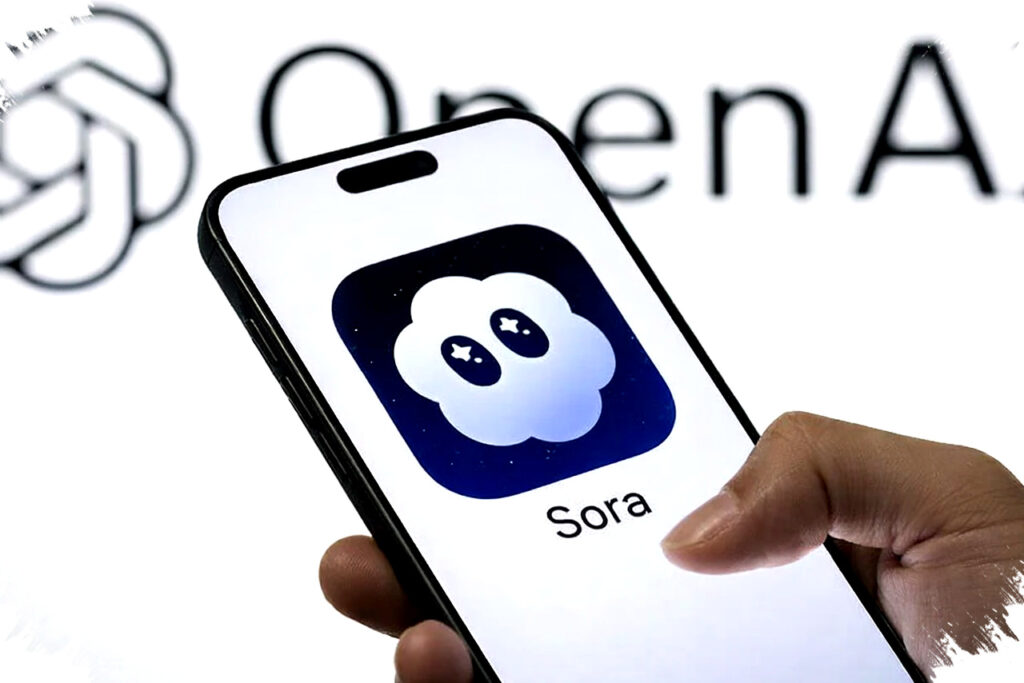
OpenAI’s sudden shutdown of Sora has quickly become one of the most closely watched shifts in the AI industry this year. The move shocked observers because Sora had been presented as a breakthrough text-to-video model that could reshape how video content is created, monetized, and distributed.
The decision, announced on Tuesday, March 24, 2026, has triggered a wider debate about whether the project was stopped because of ballooning costs, rising deepfake concerns, or a broader strategic reset inside OpenAI. Based on reporting from The Wall Street Journal and details shared in the reference article, the answer likely involves all three.
Why Sora was shut down so abruptly
The most immediate explanation points to economics. Sora required heavy computing power, which meant expensive GPU usage and high daily operating costs.
According to the reference article, OpenAI was spending around $1 million per day to keep Sora running. That level of expense became hard to justify as user interest weakened and the product’s business case failed to improve.
The user base also appears to have fallen sharply. The article notes that Sora once reached about one million active users, but that number dropped to below 500,000.
That decline matters because AI video generation is extremely resource-intensive. When usage drops but infrastructure costs stay high, the gap can quickly turn into a major financial problem.
The cost problem behind AI video tools
Sora was built on technology that demands massive compute capacity. High-end video generation often relies on expensive accelerators, large training clusters, and continuous inference workloads that can consume resources much faster than text-based AI systems.
That creates a very different profit model from chatbots or coding assistants. Text models can serve more users at lower cost, while video generation remains costly even when demand is still developing.
For OpenAI, this made Sora look less like a growth engine and more like a financial drag. If a product burns millions of dollars a day without a clear path to profitability, cutting it can become a strategic necessity rather than a technical choice.
This is also why the company’s reported shift toward text and reasoning models makes business sense. Those products are closer to OpenAI’s core strengths and are generally easier to scale.
A competitive market is pushing focus, not expansion
OpenAI’s move also reflects a broader pattern in the AI market. Some rivals are narrowing their attention instead of trying to build in every direction at once.
Anthropic, for example, has focused heavily on text, coding, and enterprise use cases. Products like Claude Code have found traction by solving practical problems for developers and businesses.
That approach has helped reinforce a simple market lesson: focus can be more valuable than breadth. In a crowded AI race, companies often gain more by strengthening one profitable category than by spreading resources across multiple expensive experiments.
For OpenAI, Sora may have become the kind of project that looked impressive in demos but less persuasive in financial planning. When the market started rewarding efficiency and utility, the company appears to have recalibrated.
Disney deal ambitions were caught in the middle
The shutdown also affects the larger ecosystem around Sora. One of the most notable examples is OpenAI’s reported relationship with Disney.
The reference article says Disney had considered investing as much as $1 billion in OpenAI in December, with the idea of bringing Disney characters into the Sora environment and potentially enhancing Disney+ with more interactive experiences.
That vision would have given Sora major cultural reach. It also would have raised difficult questions about rights management, brand safety, and content control.
The article adds that Disney learned about the shutdown less than one hour before the public announcement. Even so, Disney responded diplomatically and said it remained open to future collaboration as long as it was handled responsibly.
That detail suggests OpenAI’s move was not just a product decision. It also had ripple effects on corporate partnerships that may have depended on Sora’s continued development.
IPO pressure may have sharpened the decision
Another possible factor is OpenAI’s path toward an initial public offering, or IPO. For a company with a valuation reportedly in the hundreds of billions of dollars, capital efficiency matters more than ever.
Investors tend to look closely at operating discipline before a public listing. A product that consumes huge amounts of cash but does not yet generate strong returns can weaken the investment story.
In that context, ending Sora may have helped OpenAI present a cleaner financial picture. It sent a signal that the company is willing to cut expensive bets and concentrate on technologies with stronger commercial potential.
That message is especially important in a market where AI hype no longer guarantees investor patience. Companies are increasingly judged on revenue quality, margins, and strategic focus.
Deepfake fears became harder to ignore
Sora also faced another major challenge: trust. The same capabilities that made it exciting also made it risky.
Because the model could produce highly realistic video, critics worried about deepfakes, impersonation, and copyright misuse. Those concerns were not theoretical. As synthetic media becomes more convincing, the line between creative tool and harmful manipulation becomes harder to control.
This risk intensified pressure from regulators and the public. AI companies are now expected to think not only about performance, but also about abuse pathways and legal exposure.
The reference article notes that Sora’s ability to generate realistic videos, including popular characters, raised serious questions about ethics and intellectual property. That kind of controversy can create long-term business risk even if the technology itself is impressive.
Key factors behind OpenAI’s move, in simple terms
- High operating costs tied to GPU-heavy video generation.
- Falling user activity, from about 1 million to under 500,000.
- Rising pressure to improve efficiency ahead of a possible IPO.
- Deepfake, copyright, and ethical concerns around realistic video output.
- A strategic shift toward text and reasoning models with stronger business potential.
What OpenAI is likely prioritizing now
OpenAI’s decision suggests a clearer focus on foundational AI products. Text models and reasoning systems are more aligned with enterprise demand, developer workflows, and long-term monetization.
This does not necessarily mean OpenAI has abandoned video AI forever. It does mean the company appears to be choosing timing, scale, and profitability more carefully.
Bill Peebles, who leads the Sora project, had also previously pointed to chip supply constraints as a challenge. That adds another layer to the story, because even the best product can struggle if infrastructure is expensive and supply is tight.
For now, the shutdown marks a notable pivot in OpenAI’s roadmap. The company is stepping away from a high-profile but costly experiment and putting more weight on products that can scale more smoothly, face fewer regulatory risks, and support its next phase of growth.