Huawei MatePad 12 X (2026) enters the premium tablet segment with a clear target: users who want a device that feels thin and light like a slate, but can still handle serious work. Huawei positions it as a multifunction device for productivity, creativity, and entertainment, with hardware and software tuned to reduce the gap between tablet convenience and laptop-style usability.
The appeal starts with its design. Huawei uses a metal unibody that gives the tablet a polished, premium look, while the 5.9 mm thickness and about 555 grams of weight make it easy to carry in a bag or hold for long sessions.
A Thin Tablet Built for Mobility


Huawei’s focus on portability matters because many users no longer want a large, bulky device just to answer emails, edit documents, or sketch ideas. The MatePad 12 X aims to cover those daily tasks without adding much weight to a traveler’s load or a student’s backpack.
Its slim profile also makes it competitive in a market where premium tablets are often judged not only by speed, but also by how comfortable they are to use on the go. The tablet’s glossy rear finish adds to the flagship feel, though the bigger story is how Huawei combines form and function in one device.
Display Designed for Work and Long Viewing Sessions
The MatePad 12 X uses a 12-inch display with a 2.8K resolution of 2800 x 1840 pixels and a refresh rate of up to 144 Hz. That combination gives it sharp text, smooth scrolling, and responsive visuals that suit reading, drawing, and multitasking.
It also comes with PaperMatte Display technology. Huawei says this helps reduce glare and creates a paper-like viewing experience, which can be useful for users who spend hours reading, annotating documents, or taking notes.
This matters especially for bright environments, since the panel is also described as having high brightness for better visibility outdoors. For students, professionals, and digital artists, that can make the tablet easier to use across different lighting conditions.
Performance Aimed at Laptop-Like Productivity
Under the hood, Huawei equips the MatePad 12 X with the Kirin T92B chipset, 12 GB of RAM, and 256 GB of internal storage. That hardware setup is aimed at smooth multitasking, whether the user is switching between office apps, browser tabs, or creative tools.
The company also leans on HarmonyOS 4.3 to deliver a more integrated experience, especially for people already using Huawei devices. In practice, that ecosystem approach can make file sharing, app continuity, and accessory support feel more seamless than on a generic tablet setup.
- Kirin T92B chipset for daily productivity and multitasking
- 12 GB RAM for running multiple apps at once
- 256 GB storage for documents, media, and creative files
- HarmonyOS 4.3 for tighter ecosystem integration
- PC-style office app support for work-oriented use
Those specifications do not turn the MatePad 12 X into a full notebook replacement for every user, but they do push it closer to that role than many standard tablets. For a large share of consumers, that makes it more practical as a hybrid device for light work, study, and content creation.
Accessories Extend the Experience
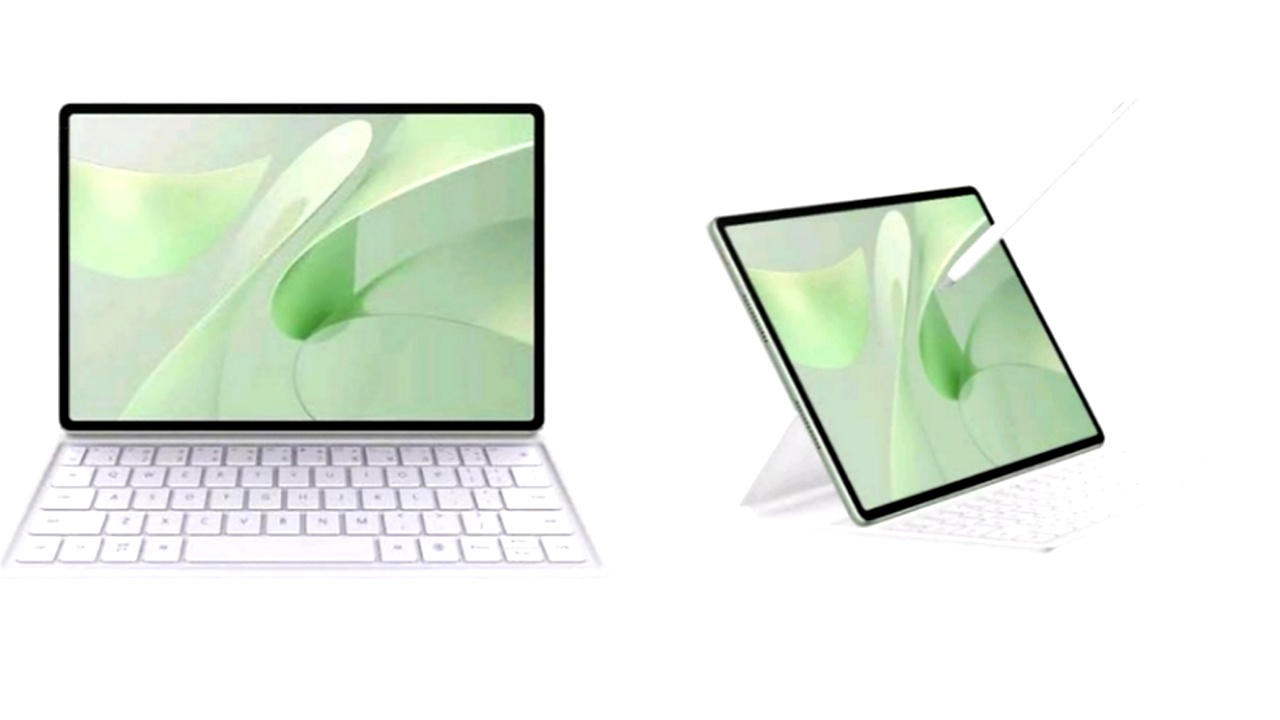
Huawei also offers accessories that strengthen the tablet’s productivity story. The magnetic keyboard helps the device behave more like a compact laptop, while the M-Pencil Pro is designed for precise writing and drawing.
This matters for people who need to type reports, mark up PDFs, or sketch ideas without carrying separate devices. The stylus support also broadens the tablet’s appeal for students, designers, and professionals who rely on digital handwriting or illustration.
The keyboard and stylus combination is central to Huawei’s pitch, because hardware alone does not define a productivity tablet. The accessories can turn the device into a better note-taking tool, a portable work station, or a lightweight creative platform.
Battery and Audio Support Daily Use
Battery life is another important part of the package. Huawei gives the MatePad 12 X a 10,100 mAh battery, which is sized to support a full day of normal use, including streaming and office work.
The tablet also supports 66W fast charging, so users can top up the battery more quickly when time is limited. That can be useful for people who move between meetings, classes, and travel without a fixed desk setup.
Huawei adds a multi-speaker audio system as well, which improves the tablet’s value as an entertainment device. The richer sound output should help during video calls, movie playback, and music listening, especially for users who do not always want to rely on headphones.
Price and Availability in Indonesia
In Indonesia, the Huawei MatePad 12 X (2026) is positioned as a premium option with a price of about $577 for the 12 GB/256 GB variant. Based on the reference information, it has been available through official online and offline channels since January 2026.
That pricing places it in a segment where buyers often compare not just tablets, but also entry-level laptops and 2-in-1 devices. For that reason, the MatePad 12 X needs to justify its cost through portability, display quality, battery life, and accessory-driven productivity.
What Makes It Stand Out in the Premium Tablet Market
The tablet’s main strength is its balanced approach. It does not rely on one headline feature alone, but instead combines a thin build, a high-refresh display, strong battery capacity, and accessories that support work and creativity.
For users who want a device that stays light in the hand but still feels capable enough for everyday productivity, that combination is compelling. Huawei is clearly aiming at people who value flexibility, especially those who want one device for reading, typing, drawing, video calls, and media consumption.
At the same time, the MatePad 12 X remains tied to Huawei’s own ecosystem, which can be a benefit for existing users but may be a consideration for buyers who depend heavily on non-Huawei software workflows. Even so, the tablet’s mix of premium design, PaperMatte display, 144 Hz refresh rate, Kirin T92B performance, and 66W charging gives it a strong identity in the 2026 tablet lineup.