The 2026 mid-range smartphone race has produced two very different contenders: Motorola Edge 70 Fusion and Nothing Phone (4a). Both target buyers who want strong daily performance without paying flagship prices, but they approach the category from opposite directions.
Motorola leans on durability, battery life, and raw practicality, while Nothing focuses on design, camera flexibility, and a cleaner software experience. If you are deciding which one is better for 2026, the answer depends less on benchmark numbers and more on how you actually use your phone.
Design and display: rugged utility versus visual identity

Motorola Edge 70 Fusion is built for people who want a phone that can handle demanding conditions. It carries IP68 and IP69 protection, which means it offers strong resistance to dust and water, including high-pressure water jets, a rare feature in this segment.
The phone also uses a 6.78-inch AMOLED panel with a 144Hz refresh rate and a claimed peak brightness of 5,200 nits. That makes it especially attractive for outdoor users, frequent travelers, and anyone who spends a lot of time under direct sunlight.
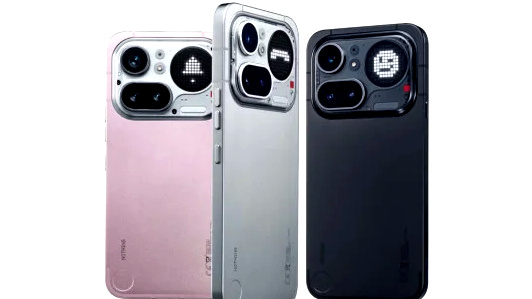
Nothing Phone (4a), by contrast, is designed to stand out. Its transparent back and Glyph lighting system give it a more distinctive look, and the phone positions itself as a device that feels more personal and more expressive.
Its display is also a 6.78-inch AMOLED panel, but it runs at 120Hz and reaches a lower peak brightness of 4,500 nits. Nothing balances that with better PWM dimming, which can make the screen more comfortable for longer viewing sessions.
Performance in daily use: close on paper, different in consistency
Both phones are built around Qualcomm’s Snapdragon 7s Gen 4 platform, but the real-world experience may vary by region. The reference data notes that Nothing Phone (4a) uses a consistent global version, while some Motorola variants may ship with Snapdragon 7s Gen 3 in certain markets.
That difference matters because buyers usually expect region-to-region consistency, especially in a phone that markets itself as a 2026 mid-range option. In everyday use, though, both devices should handle social media, video streaming, office tasks, and moderate gaming without major slowdown.
For buyers who value software predictability, Nothing has the cleaner story. For buyers who value long-term everyday reliability over small chipset differences, Motorola still has enough performance to stay competitive.
Battery life and charging: Motorola pulls ahead sharply
This is where the comparison becomes very clear. Motorola Edge 70 Fusion offers a battery between 5,200mAh and 7,000mAh depending on the variant, while Nothing Phone (4a) sits at around 5,080mAh to 5,400mAh.
In practical terms, Motorola has the stronger endurance advantage. The reference article says the 7,000mAh version can last two full days even for heavy users, which is a major advantage for commuters, field workers, and frequent travelers.
Charging speed also favors Motorola, thanks to 68W TurboPower support. The article states that a full charge can take about 45 minutes, which keeps downtime short even with the larger battery.
Nothing counters with 50W charging and reverse charging, which lets users power accessories like earbuds or a smartwatch directly from the phone. That feature is useful, but it does not offset Motorola’s much larger endurance advantage.
A simple battery comparison
| Feature | Motorola Edge 70 Fusion | Nothing Phone (4a) |
|---|---|---|
| Battery capacity | 5,200–7,000mAh | 5,080–5,400mAh |
| Fast charging | 68W | 50W |
| Reverse charging | No | Yes |
For users who hate carrying a charger, Motorola is the stronger option. For users who value convenience features in a balanced package, Nothing remains appealing.
Camera hardware: flexibility versus straightforward reliability
On paper, Nothing Phone (4a) has the more versatile rear camera setup. It uses a triple-camera system with a 50MP main sensor, a 50MP ultrawide camera, and an 8MP telephoto lens with 3.5x optical zoom.
That telephoto lens is important because it gives the phone a more premium imaging profile. It allows sharper portraits, better detail when shooting distant subjects, and more usable zoom compared with digital cropping.
Motorola Edge 70 Fusion uses a dual-camera system with a 50MP main sensor and a 13MP ultrawide lens. The setup is simpler, but that does not make it weak. The article notes that Motorola delivers sharp images with accurate colors, though it lacks optical zoom and relies more on digital zoom.
For casual photography, Motorola should be enough. For users who like more creative control and more framing options, Nothing offers a more complete package.
Selfie and video: Motorola has one edge here
Both phones use a 32MP front camera, but Motorola has a notable advantage in video. The reference data says Edge 70 Fusion supports 4K selfie video, which is especially useful for content creators, vloggers, and users who record front-facing clips regularly.
Nothing Phone (4a) is limited to 1080p on the front camera, although its HDR tuning helps deliver good results. That makes it perfectly fine for video calls and social uploads, but less flexible for advanced creators.
This is one of the few areas where Motorola looks more creator-friendly despite having the simpler rear camera system.
Price and value: the biggest decision factor for most buyers
Price often decides this comparison before specifications do. According to the reference article, Motorola Edge 70 Fusion is priced at around ₹27,000, which is roughly $250. Nothing Phone (4a) comes in at about ₹32,000, or around $450.
That gap is significant. Motorola costs far less while offering a huge battery, strong durability, and a very bright display. For buyers focused on value, it is the more logical purchase.
Nothing asks for a premium, but it gives buyers a more distinctive design, a cleaner Android-based experience through Nothing OS 4.1, and a camera system that feels more versatile. In other words, the extra money goes toward experience as much as hardware.
Which phone fits which user?
- Choose Motorola Edge 70 Fusion if you want maximum battery life.
- Choose Motorola if you need stronger water and dust resistance.
- Choose Nothing Phone (4a) if you value design and originality.
- Choose Nothing if you want a more flexible camera system.
- Choose Motorola if price-to-spec ratio matters most.
- Choose Nothing if you want a more premium daily user experience.
Who wins in 2026?
If the goal is endurance, toughness, and lower cost, Motorola Edge 70 Fusion is the safer buy. It is the kind of phone that suits people who travel often, work outdoors, or simply want a device that lasts longer between charges.
If the goal is style, camera versatility, and a more polished software feel, Nothing Phone (4a) is the more interesting choice. It is built for buyers who want their phone to feel different, not just functional.
That is why the battle in 2026 is not about one universal winner. It is about whether you prefer the practical strength of Motorola or the carefully curated experience of Nothing, because both phones deliver a credible mid-range option for very different kinds of users.