


RAM prices are surging again in 2026, and the effect is starting to show in the tablet market. For buyers in Indonesia who are looking at the roughly $190 to $240 segment, the good news is that several models still offer strong value despite the higher component costs.
That matters because tablets in this range no longer compete only on screen size or battery life. They now have to balance productivity, streaming, gaming, 4G or 5G connectivity, and long-term software support, all while staying affordable as memory prices rise globally.
Why $200-class tablets still make sense in April 2026
The global RAM price spike has pushed many brands to adjust retail pricing, according to market observations cited by VIVA Techno. Even so, the sub-$250 category remains crowded with devices that still deliver capable hardware for work, school, and entertainment.
For many users, the best choice is no longer the cheapest tablet. It is the one that gives the most practical mix of display quality, battery endurance, connectivity, and software support without forcing a big jump in budget.
1. Infinix XPAD 20 Pro
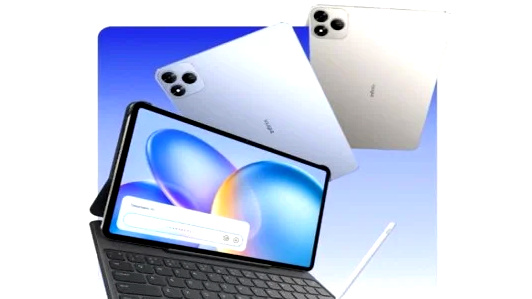
Infinix positions the XPAD 20 Pro as a productivity-first tablet for mobile workers and students. It uses a 12-inch 2K display with a 90Hz refresh rate, metal unibody construction, 8GB RAM, and Helio G100 Ultimate chipset.
The tablet also supports 4G LTE, which makes it more flexible than Wi-Fi-only rivals. Its 8,000 mAh battery and stylus support with 4,096 pressure levels add practical value for note-taking, sketching, and light office work.
2. Itel Vista Tab 30 Pro
If screen size is the top priority, the Itel Vista Tab 30 Pro is one of the most aggressive options in this price class. It offers a large 13-inch 2K display and runs on the Helio G99 Ultimate, paired with a 10,000 mAh battery.
It also comes with Dual SIM 4G LTE, which is useful for users who want one device for browsing, video calls, and hotspot use. One trade-off stands out, however, because the bundled charger is only rated at 10W even though the tablet supports up to 18W charging.
3. Honor Pad X9A
Honor takes a more premium approach with the Pad X9A. The tablet uses a thin 6.7 mm metal body, weighs under 500 grams, and focuses on media quality with an 11.5-inch 2.5K panel, 100% sRGB coverage, and a 120Hz refresh rate.
Audio is another major strength. Honor includes six speakers, with volume boost capability up to 200%, while the Snapdragon 685 chipset keeps daily use stable for video calls, streaming, and light multitasking.
4. Headwolf FPad 7
The Headwolf FPad 7 is one of the more compact choices in this list, but its specifications are surprisingly strong for the size. It uses an 8.4-inch display, Dimensity 7050 chipset built on 6nm process, and UFS 3.1 storage for faster app loading and file access.
Gamers may also appreciate the 6-axis gyroscope, which improves aim control in FPS titles. Widevine L1 certification is another useful detail, since it allows Full HD streaming on platforms such as Netflix.
5. Samsung Galaxy Tab A11 Plus 5G
For buyers who want the safest long-term purchase, Samsung’s Galaxy Tab A11 Plus 5G stands out. It includes 5G support, a Dimensity 7300 chip built on 4nm, and Samsung DeX, which lets the tablet work more like a laptop interface.
The biggest selling point is software support. Samsung promises up to 7 years of OS updates on this model, which is the longest support window in this price band and gives the tablet unusually strong longevity for a mid-range device.
What each tablet is best for
- Infinix XPAD 20 Pro: best for productivity, note-taking, and mobile work.
- Itel Vista Tab 30 Pro: best for users who want the largest screen.
- Honor Pad X9A: best for entertainment, design, and premium audio.
- Headwolf FPad 7: best for compact gaming and portable streaming.
- Samsung Galaxy Tab A11 Plus 5G: best for long-term ownership and software support.
This category is also shaped by buyer behavior. Many consumers now want a tablet that can serve as a secondary work device, a child’s learning device, or a lightweight entertainment screen, which means practical features often matter more than raw benchmark numbers.
That is why the current $200-ish tablet market still looks healthy even as RAM prices climb. The right model depends on whether the buyer values screen size, connectivity, gaming stability, battery capacity, or years of software updates more, and each of the five tablets above addresses one of those needs in a different way.