


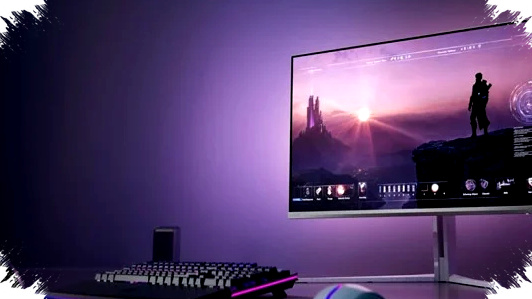
Philips has expanded its premium gaming display lineup with the official launch of the Evnia 32M2N8900X in China. The new model targets gamers and content creators who want 4K clarity, ultra-fast motion handling, and strong color performance in a single high-end monitor.
The 31.5-inch display uses a QD-OLED panel and supports a 3840 x 2160 resolution with a refresh rate of up to 240Hz through both HDMI and DisplayPort. Philips pairs that with a 0.03 ms response time, which puts the monitor squarely in the flagship category for competitive play and visual work.
A 4K QD-OLED Panel Built for Speed and Detail
The Evnia 32M2N8900X is designed to serve two demanding groups at once. Gamers get the benefit of very high frame rates and near-instant pixel response, while creators gain the kind of sharp detail and color precision that a 4K OLED panel can deliver.
QD-OLED combines quantum dot technology with OLED’s self-emissive pixels. In practice, that means the monitor can produce deep blacks, strong contrast, and more saturated colors while keeping the image clean during fast motion.
Philips claims the panel can reach a contrast ratio of up to 1,500,000:1. That kind of figure is one reason OLED remains attractive for users who want more believable shadows and better separation between bright and dark areas.
Key Display Specifications
The monitor arrives with a set of specifications that place it firmly among the most advanced gaming displays currently announced by Philips.
- Screen size: 31.5 inches
- Panel type: QD-OLED
- Resolution: 3840 x 2160, or 4K
- Refresh rate: up to 240Hz
- Response time: 0.03 ms
- HDR certification: VESA DisplayHDR True Black 500, with True Black 400 support depending on usage mode
- Motion clarity: ClearMR 13000
The combination of 4K resolution and 240Hz refresh rate is still relatively rare. It gives users the chance to keep fine image detail without giving up the smoothness that fast-paced games demand.
Brightness and Color Accuracy Target Professional Use
Philips says the Evnia 32M2N8900X can deliver 300 nits in full SDR mode. For HDR content, it reaches 515 nits on a 10 percent window and peaks at 1000 nits on a 3 percent window, which helps highlight smaller bright scenes and specular details.
The panel also supports true 10-bit color and offers up to 99.5% DCI-P3 coverage, alongside 100% sRGB coverage. Philips lists Delta E below 2 in sRGB mode, a figure that points to strong color accuracy for editing, design, and other color-sensitive workloads.
That matters for buyers who use one display for both play and production. A monitor that can handle color-critical work while still delivering high refresh gaming performance is often more practical than owning separate screens for each task.
Quantum Dot, OLED, and Thermal Management
Philips says it has integrated Quantum Dot technology into the QD-OLED panel to improve brightness and enrich color without losing OLED’s signature black levels. That is one of the main strengths of this display category, because it seeks to close the brightness gap while preserving contrast.
The monitor also uses an internal graphene layer to help with heat dissipation. Thermal stability is important in OLED displays, especially during longer sessions, because consistent temperature control can help maintain performance and color behavior over time.
Gaming and Productivity Features
Philips added several features aimed at both competitive gaming and daily multitasking. Ambiglow lighting appears on three sides and uses AI-based effects to match the visual atmosphere on screen.
For users working across multiple devices, the monitor includes a built-in KVM switch and MultiView support. Those features allow Picture-in-Picture and Picture-by-Picture modes, which can be useful when managing a PC, laptop, or console at the same time.
For gameplay, Philips includes Smart Crosshair, ShadowBoost for better visibility in dark scenes, and a low input lag mode. It also provides LowBlue mode and flicker-free technology for more comfortable long sessions.
Connectivity and Audio
The arrival of USB-C with 65W Power Delivery makes the Evnia 32M2N8900X more flexible than many gaming monitors. That single port can handle compatible laptops while also reducing cable clutter on a desk.
The full connectivity package includes the following ports:
- Two HDMI 2.1 ports
- One DisplayPort
- One USB-C port with up to 65W Power Delivery
- One USB-B upstream port
- Two USB-A ports
- One additional USB-C port with 15W output
Philips also includes two 5W speakers with DTS Sound support. Built-in audio will not replace a dedicated headset or speaker setup for most gamers, but it adds convenience for casual use or secondary setups.
Why This Monitor Matters in the Premium Segment
The 32M2N8900X reflects a broader trend in the monitor market toward displays that no longer force users to choose between speed and image quality. In the past, 4K often meant lower refresh rates, while fast gaming monitors usually required resolution compromises.
This model tries to remove that trade-off. It combines 4K sharpness, 240Hz speed, OLED contrast, and creator-focused color accuracy in one product. That makes it especially relevant for users who want a premium all-in-one screen for console gaming, PC gaming, streaming, editing, and daily work.
The monitor also fits into Philips’ Evnia branding, which has been positioned around gaming displays with a more design-forward and feature-rich approach. In the premium tier, that identity matters because buyers often compare not only specs, but also ergonomics, connectivity, and the overall experience.
What Philips Has Not Announced Yet
Philips has not公布 official pricing or global availability details for the Evnia 32M2N8900X as of now. The company has only confirmed the launch in China, so broader regional rollout remains unclear at this stage.
That leaves the monitor’s final market impact dependent on how Philips positions it commercially. If the company prices it competitively against other 4K 240Hz OLED monitors, the Evnia 32M2N8900X could become a serious option for enthusiasts who want top-tier image quality and advanced gaming features in one display.
Even without a price tag, the specification sheet already shows Philips is aiming directly at the upper end of the market, where display accuracy, motion performance, and practical connectivity now carry as much weight as raw resolution and refresh rate.