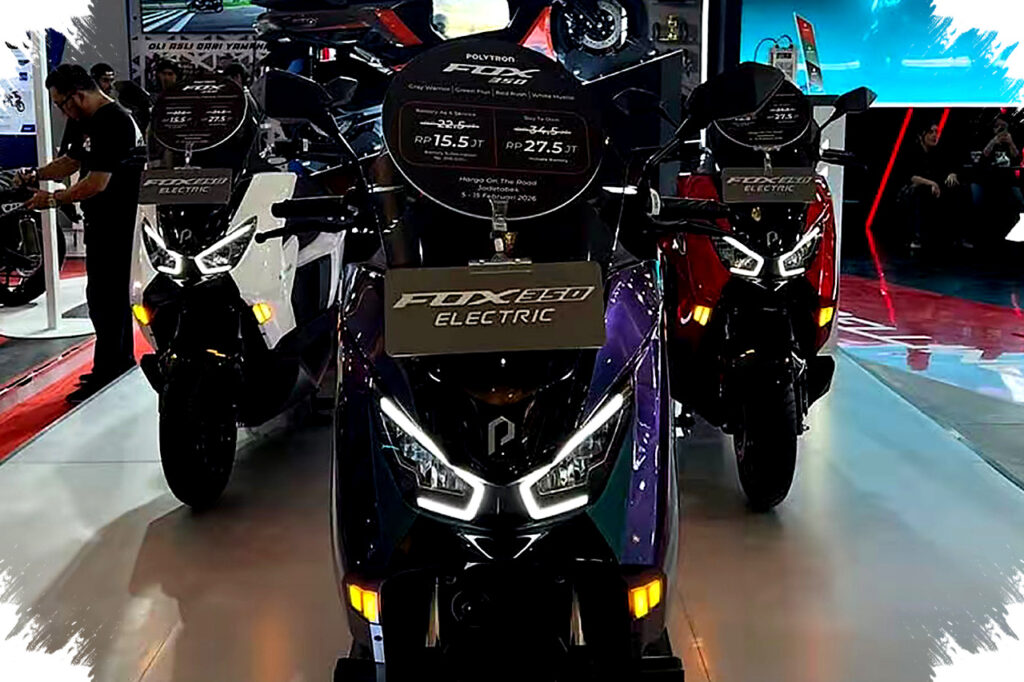
Polytron’s Fox 350 is drawing attention for a very practical reason: rider comfort. The newest version changes the foot position in a way that makes daily riding feel more relaxed, especially when compared with the earlier Fox R, which some riders described as feeling cramped.
That difference matters because ergonomics often decide whether an electric scooter feels premium in real use or only looks good on paper. In the Fox 350, Polytron appears to have focused on giving riders more freedom to choose how their feet are placed, and that can change the whole experience in city traffic.
A more relaxed foot position becomes the main talking point
One of the most discussed details about the Fox 350 is the lower right-and-left foot area. This new layout gives riders a more natural placement for their legs and reduces the “high perch” feeling that some users noticed on the Fox R.
Content creator Dimas Popo highlighted that contrast in his review, saying the earlier Fox R made the rider’s feet feel too elevated, almost like “squatting in a closet.” The Fox 350, by comparison, gives a more open posture and lets the rider stretch out more comfortably.
That change may sound simple, but on a scooter, it can make a big difference. A lower and better-shaped floorboard helps the rider shift positions during longer rides, which can reduce fatigue in stop-and-go traffic.
More than one riding posture, which matters in daily use
The Fox 350’s layout offers several ways to place the feet, and that flexibility stands out. Riders can sit more upright and sporty, move their feet forward for a relaxed stance, or stretch them out when they want a more laid-back ride.
That versatility is useful for different body types too. Shorter riders may prefer to keep their feet in a raised or central position, while taller riders can place their feet lower for a more relaxed leg angle.
Here is a simple look at the riding positions described:
- Sporty posture with feet pulled back.
- Relaxed posture with feet slightly forward.
- Full stretch for a more casual ride.
- Elevated middle position for riders who want their feet higher.
This kind of flexibility is one reason many urban riders give extra attention to scooter ergonomics. In dense traffic, comfort is not just about plush seats or soft suspension, but also about whether your knees and feet can stay relaxed after repeated short trips.
How the Fox 350 differs from the Fox R
The key difference between the two models sits in the riding triangle, especially the position of the feet. The Fox R has a more compact feel, while the Fox 350 lowers the foot area and creates more room for movement.
That shift gives the newer model a less cramped posture. It also makes the scooter feel more suitable for riders who want a balance between sporty styling and practical everyday comfort.
The comparison is important because many electric scooters focus heavily on looks or power figures. Polytron seems to have tried to improve a real-world pain point instead, which is ergonomics at low and moderate speeds where most people actually use the scooter.
Design looks sportier and more compact
Beyond comfort, the Fox 350 also brings a stronger visual character. The reviewer noted that the design looks more attractive, more sporty, and more compact than the previous version.
That compact visual theme often appeals to riders who want an electric scooter that feels modern without looking oversized. In city riding, this kind of design can also make the bike feel easier to handle in traffic and visually more refined.
The general impression is that Polytron did not just revise the foot area. It also aimed to tidy up the overall package so the scooter feels more cohesive from the outside and more usable from the inside.
Performance figures that support the new positioning
Under the body, the Fox 350 uses an electric hub motor on the rear wheel. The reported output ranges from 3 kW up to 6.4 kW, with peak torque stated at 187 Nm.
Those numbers are significant for a scooter in this category because torque is what helps electric motorcycles feel responsive from a standstill. In urban traffic, that can translate into quicker launches and a more confident ride when merging or overtaking at moderate speeds.
The battery sits in the center section of the scooter, and the model is described as using a 1.75 kW setup in the article reference. The top speed is said to reach 95 km/h, while the riding range can go up to 130 km, depending on conditions and usage.
Key figures mentioned for Polytron Fox 350
| Item | Reported data |
|---|---|
| Motor output | 3 kW to 6.4 kW |
| Peak torque | 187 Nm |
| Top speed | 95 km/h |
| Range | Up to 130 km |
| Price | About $954 |
| Battery rental | About $12 per month |
The price is one of the strongest talking points. At around 15.5 million rupiah, or roughly $954, the Fox 350 enters a segment where value becomes a major selling point for buyers considering an electric scooter for commuting.
Battery subscription adds another layer of affordability
Polytron also offers a battery rental scheme, reportedly priced at about 200,000 rupiah per month, or around $12. This approach lowers the upfront cost and may make ownership easier for riders who want to avoid paying the full battery cost at purchase.
That model has become more common in parts of the electric vehicle market because it reduces initial spending. For some buyers, that can be the deciding factor, especially if they want a practical scooter for work, errands, and daily city movement.
Still, battery subscription plans usually need clear service terms. Buyers often want to know how replacement, maintenance, and warranty handling work before they commit.
Why comfort now matters as much as specs
Electric scooters often compete on acceleration, speed, and range, but comfort can shape ownership satisfaction just as much. A rider who feels cramped every day will notice that faster than a higher torque figure.
That is why the Fox 350’s revised foot position is worth attention. It addresses a real usage issue and makes the scooter easier to imagine in daily commuting, where traffic lights, short stops, and low-speed maneuvering dominate the ride.
The Fox 350’s broader riding posture, larger positioning options, and more relaxed leg angle may also help riders stay comfortable on longer trips. For many users, that is the difference between a scooter that simply works and one that feels enjoyable to ride.
As Polytron expands its electric lineup, the Fox 350’s ergonomic update shows that small design changes can have a big effect. The model now looks positioned as a more comfortable and adaptable alternative for riders who want practical urban mobility without giving up a sporty feel.