


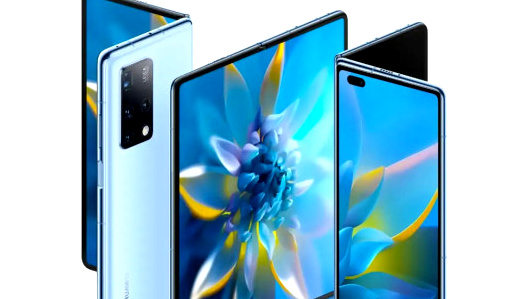
Huawei is reportedly preparing a foldable device that could change the way people think about pocketable screens. The rumored Huawei Pura Wide Fold aims to deliver a tablet-like viewing area in a body that still folds into a smartphone-sized device.
The leak suggests Huawei is not simply chasing the current foldable trend. Instead, the company appears to be testing a wider format that focuses on media use, multitasking, and productivity, while also positioning itself against future foldables from Apple and Samsung.
A new direction for foldables
Most foldable phones today fall into two familiar camps. One is the compact clamshell style, while the other uses a book-like vertical fold that opens into a taller internal display.
The Pura Wide Fold, based on the leaked concept, takes a different route. It is said to open into a broader screen that feels closer to a small tablet than a traditional phone.
This approach changes the entire use case. Instead of stretching the display vertically, Huawei seems to want a wider panel that works better for landscape video, split-screen apps, reading, and creative work.
What “wide fold” could mean in practice
The most notable detail in the leak is the screen shape. A wider aspect ratio could make the unfolded panel look more like a mini tablet, with an estimated internal size in the 8- to 9-inch range.
That format could improve several daily tasks:
- Watching movies with fewer black bars.
- Using two apps side by side more comfortably.
- Editing photos or documents on a larger surface.
- Playing games with more room for on-screen controls.
A wider display also changes how the device feels in the hand. It may be less natural as a one-handed phone, but it could be far more useful once opened.
Design clues point to a familiar Huawei identity
The leaked visuals suggest Huawei may borrow some design elements from the Pura X line. The rear camera module appears to follow Huawei’s current premium styling, while the body itself looks more horizontal than conventional foldables.
Sources cited in the leak indicate that the external display may stay compact for quick use. The internal folding screen, however, could use a ratio around 4:3 or even 3:2, which would strongly favor tablet-like productivity.
The hinge is also expected to be a critical part of the design. A thinner hinge would help reduce the overall bulk of the phone, which matters a lot for a device that must balance a large display with foldable hardware.
Why Huawei may be taking this risk
Huawei has already shown that it is willing to experiment aggressively in foldables. The company seems ready to push beyond safe, proven formats and try a shape that could define a new category.
That makes business sense in a market where differentiation matters. Samsung remains the most established foldable name globally, while Apple is widely expected to enter the segment with an iPhone Fold in the near future.
Huawei’s advantage may not be service access, since it still operates without full Google Mobile Services support. Its strength lies in hardware design and the HarmonyOS ecosystem, which continues to evolve around Huawei devices and services.
How the competition is shaping up
The rumored wide fold arrives at a time when major brands are considering their own next-step foldables. If the reports prove accurate, the market could soon feature multiple interpretations of the same idea.
| Brand | Reported Product | Main Focus |
|---|---|---|
| Huawei | Pura Wide Fold | Tablet-like hybrid experience with HarmonyOS |
| Samsung | Galaxy Z Wide Fold | Foldable expansion and multitasking ecosystem |
| Apple | Apple Fold | Premium integration with iOS |
This table shows how each company may approach the segment differently. Huawei appears to be betting on form factor innovation, while Samsung and Apple are likely to rely on ecosystem strength and platform continuity.
The user question Huawei must answer
A product like this raises a simple but important question. Do people actually want a phone that opens into something this wide?
That answer will likely depend on who the device is for. General smartphone users may care more about comfort, pocketability, and price than about screen width.
Still, some groups could find the format especially attractive.
Potential target users
- Creative professionals who need room for editing and previewing content.
- Business travelers who want one device for communication and productivity.
- Mobile gamers and media-heavy users who value a larger display canvas.
- Power users who often split screens and switch between apps.
These users may accept a larger and heavier device if the trade-off is better functionality. For them, the device could feel less like a phone and more like a compact work machine.
Challenges that could determine success
The wider form factor also introduces obvious drawbacks. A larger unfolded device may be harder to hold, harder to fit in a pocket, and more expensive to manufacture.
The reference leak also suggests a premium price, possibly in the range of $1,500 to $1,850. That price bracket would place the device firmly in the luxury segment, where buyers expect both innovation and polish.
Here are the major risks Huawei must solve:
- Weight could be too high for daily portability.
- The open device may feel awkward in one hand.
- Pocket fit could become a real issue.
- Battery demands may rise because of the larger screen.
- Pricing may limit adoption outside enthusiast circles.
These concerns are not minor. Foldables already face skepticism from mainstream buyers, and a wider version adds another layer of complexity.
Why this leak matters beyond one device
The bigger story is not only about Huawei. It is about how foldables may evolve after years of similar-looking designs.
Years ago, many people considered camera bumps, notch displays, or early foldables to be too unusual to succeed. Over time, some of those ideas became normal parts of consumer tech.
The same could happen here if the wide fold proves practical. If Huawei, Samsung, and possibly Apple all move toward similar layouts, the “wide fold” could become a recognized category rather than a one-off experiment.
What to watch next
The next few months will matter because leaked concepts often change before launch. Huawei may refine the hinge, adjust the screen ratio, or even tune the software experience to better support the wider layout.
There are also unanswered questions around app optimization, durability, and regional availability. Those factors will be crucial, especially if Huawei wants the device to appeal beyond a narrow premium audience.
For now, the Huawei Pura Wide Fold stands out because it challenges a basic assumption in smartphone design. It suggests that the future of foldables may not be about making phones simply bigger or thinner, but about giving users a shape that feels more like a tablet when they need it and still folds back into a device they can carry every day.