


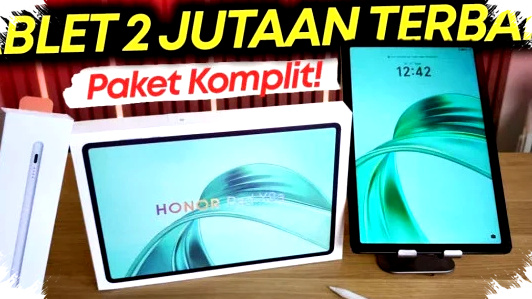
Two budget tablets are drawing attention in 2026 because they offer more than basic entertainment features. Both models come with 4G LTE support, big RAM, and extra accessories that make them more practical for students and young professionals.
This shift matters because buyers in the $120–$170 range now expect tablets that can handle online classes, document editing, and light productivity without depending on Wi-Fi all the time. In this segment, the added value is not only in the hardware, but also in the free keyboard, stylus, and other bundled items that reduce the total cost of ownership.
Why budget tablets are getting more competitive
The entry-level tablet market has changed a lot in the past few years. Brands no longer focus only on screen size and battery life, because users now ask for cellular data, more memory, and better multitasking support.
That is especially true for people who move often between home, campus, and office. A tablet with LTE can stay connected on the road, while RAM above 6GB helps apps run more smoothly when several tasks are open at the same time.
Industry trends also show that bundled accessories are becoming a selling point. Many buyers now compare complete packages, not just the tablet itself, because a free keyboard or stylus can make a device far more useful from day one.
1. Infinix XPad 20: a large-memory tablet with LTE
Infinix XPad 20 targets users who want generous storage and solid everyday performance at an affordable price. The device comes with 8GB LPDDR4X RAM and 256GB storage, which is a strong combination in this price class.
Its 11-inch Full HD+ display with a 90Hz refresh rate is designed for smooth scrolling and comfortable viewing. The higher refresh rate helps when reading long documents, browsing social media, or watching videos for long periods.
The tablet runs Android 15 out of the box, which gives buyers a recent software base from the start. That matters for app compatibility, interface improvements, and expected security support in the near term.
Connectivity is another major strength. Infinix includes 4G LTE, a SIM slot, and microSD expansion support up to 1TB, so users can stay online and add more storage without relying only on cloud services.
The battery capacity reaches 7,000mAh, enough for a full day of mixed usage in many scenarios. Charging is limited to 10W, so refill times will not be the fastest, but the battery size still supports long mobile sessions.
For audio and practical use, the company also keeps a 3.5mm headphone jack and bundles a flip case in the box. These additions may look small, but they improve usability for students, commuters, and casual users who want a ready-to-use package.
Key specifications of Infinix XPad 20
| Feature | Specification |
|---|---|
| RAM | 8GB LPDDR4X |
| Storage | 256GB |
| Display | 11-inch Full HD+ |
| Refresh rate | 90Hz |
| Network | 4G LTE |
| Battery | 7,000mAh |
| Charging | 10W |
| OS | Android 15 |
| Extra | Flip case in the box |
The chip inside, MediaTek Helio G88, is suitable for light multitasking and entertainment. It is not built for heavy gaming, but it should handle video streaming, note-taking, browsing, and office apps well enough for daily use.
2. Itel Vista Tab 30 GT: the more complete package
Itel Vista Tab 30 GT is aimed at buyers who want a full productivity set straight out of the box. The company includes a keyboard and a magnetic stylus with palm rejection, which makes the tablet immediately more useful for typing and note-taking.
The tablet uses an 11-inch IPS panel with a 90Hz refresh rate, so visual motion stays smooth and the screen remains comfortable for reading and video playback. That size is also practical for split-screen multitasking and document editing.
Performance should feel responsive thanks to the Helio G99 Ultimate chipset, paired with 6GB RAM and virtual RAM support. The storage uses UFS 2.2, which is faster than the eMMC storage still found in many competing models in this category.
The presence of four speakers adds value for users who watch movies, join online classes, or listen to media without headphones. Combined with the 7,000mAh battery and 18W charging, the tablet is positioned as a more complete all-rounder than many low-cost rivals.
At around $165, the package stands out because the included accessories are not sold as optional extras. For many buyers, that can lower the effective total spend because a separate keyboard and stylus often cost much more when purchased later.
What benefits users actually get
A tablet in this budget bracket is no longer just a screen for entertainment. It can now support real daily productivity if the user chooses the right model and understands the trade-offs.
Here are the main practical benefits these two tablets offer:
- Always-connected access through 4G LTE, which is useful when Wi-Fi is unreliable.
- Better multitasking thanks to 6GB to 8GB of RAM, plus virtual RAM support on the Itel model.
- More storage headroom for files, videos, and apps, especially with microSD support on the Infinix.
- Productivity accessories like a keyboard and stylus on the Itel, or a flip case on the Infinix.
- Long battery endurance with 7,000mAh cells on both devices.
These strengths matter most for students, remote workers, and content consumers who want a tablet that can fill several roles. A device that can handle reading, typing, streaming, and basic work can be more valuable than a cheaper tablet with weaker specs.
Which tablet fits which user
Infinix XPad 20 is a better fit for buyers who want more RAM and more internal storage first. Its 8GB memory and 256GB capacity make it appealing for people who keep many apps, files, and offline media on one device.
Itel Vista Tab 30 GT fits users who care more about a ready-made productivity bundle. The keyboard and stylus included in the box make it easier to use for writing, note-taking, and casual office work without extra purchases.
If display fluidity, LTE access, and battery size are your main priorities, both options are competitive for the class. The right choice depends on whether you value raw memory and storage more, or a richer accessory package from the start.
Price positioning in the $120-$170 segment
The most interesting part of this comparison is how much value each brand packs into a low price tag. In a market where many tablets still cut features to stay affordable, these two models try to solve real user problems instead of just offering a basic slate.
That is why the category is becoming more attractive for first-time tablet buyers. A $120-tablet with LTE and large RAM can already cover many daily tasks, while a slightly higher-priced model with a keyboard and stylus can replace a lightweight laptop setup for simple work.
For buyers who want a practical device for school, travel, or home use, these two tablets show where the budget market is heading. The combination of 4G LTE, large memory, and included accessories gives users more flexibility, especially when they need one device that can keep up with everyday tasks without always staying plugged into Wi-Fi.