


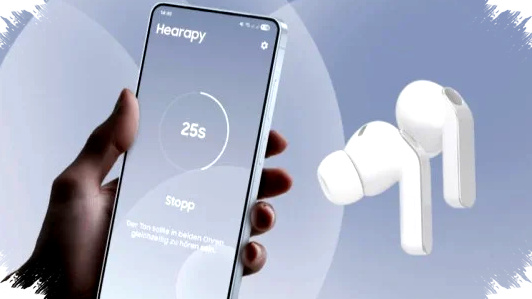
Samsung is reportedly taking a new route to ease motion sickness, and it does not involve pills. The company is leaning on the Galaxy Buds 4 Pro and a companion app called Hearapy to deliver controlled audio signals that may help calm the body’s balance system during travel.
The idea is simple but unusual for consumer wearables. Instead of masking symptoms after they appear, Samsung aims to stimulate the vestibular system in the inner ear with a precise tone, potentially reducing nausea, dizziness, and discomfort before they get worse.
A different answer to a familiar problem
Motion sickness affects a large share of travelers, with symptoms often triggered by a mismatch between what the eyes see and what the inner ear senses. That conflict can become worse when a passenger reads on a phone, watches a screen, or focuses on a still object while the vehicle is moving.
In its reported approach, Samsung is using audio as a way to influence the balance system directly. The company’s concept targets the vestibular pathway in the inner ear, which helps the brain understand movement and orientation.
The method is based on research from Nagoya University in Japan. The study found that a 100 Hz sine wave could effectively stimulate the vestibular system, opening the door for a non-drug intervention that is easy to trigger on a phone or wearable device.
What the research suggests
According to the reference study, participants listened to a 100 Hz tone at around 80–85 dB for 60 seconds. They later reported reduced motion sickness symptoms while riding in a car, and the effect was said to last for up to two hours after exposure.
That detail matters because it suggests the solution may work as a preventive measure rather than an emergency fix. For commuters, ride-hailing passengers, and families on long trips, a short audio session before departure could be more practical than taking medication in advance.
The reported findings also place Samsung’s effort inside a broader trend in wellness technology. Wearables and smartphones are increasingly being used not just for communication and entertainment, but also for light health support that can fit into daily routines.
How Hearapy is designed to work
Hearapy is the software layer behind the idea. The app is built to deliver the 100 Hz tone through a Galaxy device, with an automatic 60-second timer and calibrated volume around 85 dB for the intended effect.
Samsung recommends that the audio be played without competing sounds. That includes no background music and as little external noise as possible, so the tone can reach the ears clearly and consistently.
The experience also depends on proper listening conditions. Users are advised to keep both ears unobstructed before starting the session, which helps the signal reach the vestibular system as intended.
- Open Hearapy on a compatible Galaxy device.
- Start the 60-second 100 Hz tone before the trip or when symptoms begin.
- Keep the volume at the calibrated setting near 85 dB.
- Avoid music, podcasts, or loud external noise during playback.
- Use the feature with both ears uncovered for best results.
Why Galaxy Buds 4 Pro matters
The Galaxy Buds 4 Pro sits at the center of Samsung’s hardware plan. The earbuds are designed to reproduce low frequencies with greater precision, including the 100 Hz tone used in the motion-sickness concept.
Samsung reportedly increased the mid-bass driver size by about 20% compared with the previous generation. That helps the earbuds generate stronger and more controlled low-end output, which is important when a system depends on a specific frequency rather than general music playback.
The earbuds also feature an updated two-way speaker system. Combined with 24-bit/96 kHz audio support through Samsung Seamless Codec Ultra High Quality, the hardware is built to keep the tone accurate and stable.
Noise control is another key part of the setup. Adaptive Active Noise Cancellation with six microphones works to suppress surrounding noise by creating opposing sound signals, while Adaptive EQ adjusts audio in real time based on the environment and fit.
Why this approach is notable
Samsung’s move stands out because it shifts motion-sickness relief into the consumer audio category. Most existing solutions rely on medication, wrist pressure bands, breathing exercises, or simply looking at the horizon during travel.
A sound-based approach could appeal to users who avoid medication or want a faster, lighter option. It may also fit well into the daily use of earbuds, since many people already carry them for media and calls.
This does not mean the technology replaces medical advice or guarantees results for everyone. Motion sickness can vary widely by person, vehicle type, travel duration, and sensitivity, so any wearable-based method still needs broad testing before it can be considered a mainstream solution.
What makes the timing relevant
The idea lands at a time when premium earbuds are being pushed beyond music and calls. Brands now compete on health-adjacent features, including hearing assistance, environmental awareness, and AI-assisted personalization.
Samsung appears to be extending that logic into balance support. If the company can prove that short audio sessions are effective and safe in real-world travel conditions, the feature could become a useful add-on for frequent passengers and families with children.
The reference study’s reported two-hour benefit window also makes the concept more interesting for road trips and daily commutes. A short pre-ride audio session could give users a wider buffer against symptoms without requiring repeated dosing during travel.
What users may expect in practice
If Samsung brings the feature to market in a consumer-ready form, the experience would likely remain simple. A user could open Hearapy, play the tone for one minute, and then start a trip with the earbuds in place or with the audio session completed just before departure.
That simplicity is part of the appeal. The less effort required, the more likely users are to adopt it during routine commutes, which is often when motion sickness becomes most disruptive and least convenient to manage.
The concept also suggests a future where earbuds do more than stream entertainment. They may support listeners in specific physical situations, using carefully tuned sound as a functional tool rather than just a media format.
For now, Samsung’s Galaxy Buds 4 Pro and Hearapy point to a notable experiment in travel wellness, where a 100 Hz tone, precise hardware control, and a short guided session could offer a drug-free way to make movement easier to تحمل — or, more accurately, easier for some users to tolerate.