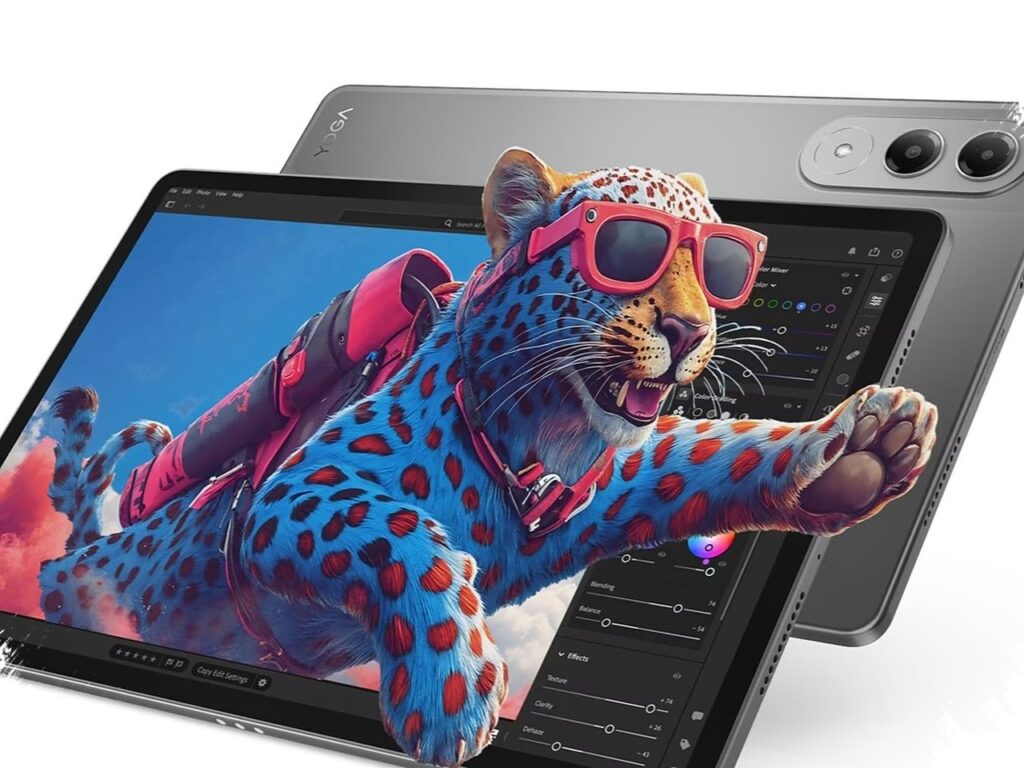
Lenovo is preparing to bring the Yoga Tab to Indonesia on April 16, 2026, and the early details point to a premium Android tablet aimed at creators, remote workers, and students who want one device for both productivity and entertainment. The biggest questions around the tablet are already clear: what does Lenovo offer in the spec sheet, and how much might it cost when it lands locally?
The answer starts with hardware that looks unusually serious for a tablet. Lenovo pairs a 3.2K display, Snapdragon 8 Gen 3 chipset, large battery, and optional smart accessories in a compact body, placing the Yoga Tab in direct competition with premium models from Apple and Samsung.
What Lenovo Yoga Tab is trying to be
Lenovo is not pitching this model as a gaming tablet or a budget media device. The company appears to be targeting users who need fast performance, accurate visuals, and enough flexibility to replace a lightweight laptop for part of the day.
That positioning matters because the tablet market has become more segmented. Premium Android tablets now have to do more than stream video well, since buyers in this class expect stylus support, keyboard compatibility, and strong multitasking performance.
Display is one of the main selling points
The Yoga Tab uses an 11.1-inch IPS PureSight Pro panel with a 3,200 x 2,000 pixel resolution, or 3.2K. That resolution gives the display a sharper look than many standard QHD+ tablets and should help with reading, editing, and detailed content work.
Lenovo also adds a 144Hz refresh rate and a 16:10 aspect ratio. The high refresh rate should make scrolling, app switching, and pen input feel smoother, while the wider aspect ratio gives more room for documents, split-screen apps, and video timelines.
The panel is rated at 800 nits of peak brightness, which should make it easier to use outdoors or in bright rooms. Lenovo also says the screen is factory-calibrated, a detail that matters for users who care about color accuracy when editing photos, drawing, or watching HDR content.
Snapdragon 8 Gen 3 keeps performance in flagship territory
Under the hood, Lenovo uses Qualcomm’s Snapdragon 8 Gen 3, a 4nm flagship chipset that launched in 2024 and still sits near the top of the Android performance ladder. It is paired with the Adreno 750 GPU, up to 12GB LPDDR5X RAM, and 256GB UFS 4.0 storage.
That combination should give the tablet enough headroom for demanding apps such as Adobe Lightroom, Photoshop Express, and CapCut. It also makes multitasking more realistic, with Lenovo positioning the device for handling four to six apps at once without major slowdowns.
For many buyers, the appeal is not just raw speed. Snapdragon 8 Gen 3 also brings stronger AI processing and better efficiency than older flagship chips, which should help the tablet stay responsive during long work sessions and media-heavy use.
Key specification highlights
- Chipset: Qualcomm Snapdragon 8 Gen 3
- GPU: Adreno 750
- RAM: up to 12GB LPDDR5X
- Storage: 256GB UFS 4.0
- Display: 11.1-inch IPS PureSight Pro
- Resolution: 3,200 x 2,000 pixels
- Refresh rate: 144Hz
- Battery: 8,860mAh
- Charging: 68W fast charging
This configuration puts the Yoga Tab in a high-end category where buyers often compare it not just with Android rivals, but also with slim laptops and detachable hybrids.
Design stays thin and travel-friendly
Lenovo gives the Yoga Tab an aluminum frame and a compact build that should feel more premium than mainstream midrange tablets. The device measures 256 x 166 x 6.2 mm and weighs 458 grams, which keeps it light enough to carry daily without becoming a burden.
That weight is close to some competing 11-inch premium tablets, so portability appears to be a clear part of the design brief. The thin chassis also suggests Lenovo wants the Yoga Tab to work as both a media slate and a work device that can move easily between home, office, and campus.
The design approach seems practical rather than flashy. Lenovo has focused on making the tablet comfortable to hold, easy to place on a desk, and simple to pair with peripherals.
Accessories turn it into a productivity device
One of the more important parts of the Yoga Tab package is its accessory support. Lenovo offers the Tab Pen Pro and a magnetic 2-in-1 keyboard pack, both of which help the tablet move closer to laptop territory.
The Tab Pen Pro includes low latency of under 2ms, tilt support, pressure sensitivity, and AI-based writing recognition. Lenovo says the stylus can help convert doodles into text or basic geometric shapes, a feature that may appeal to students, designers, and note-takers.
The magnetic keyboard pack uses a full-size layout with a touchpad. It connects instantly without Bluetooth pairing, and Lenovo claims the battery can last up to three months, which reduces the need for frequent charging.
Accessories at a glance
| Accessory | Main benefit |
|---|---|
| Tab Pen Pro | Note-taking, sketching, AI-assisted input |
| Magnetic 2-in-1 Keyboard Pack | Typing comfort, touchpad control, laptop-style workflow |
For buyers who deal with documents, reports, and creative tasks, this accessory set could matter as much as the tablet itself.
Battery and charging should support a full day of use
Lenovo equips the Yoga Tab with an 8,860mAh battery, and the company says it can last up to 12 hours under active use. That should be enough for meetings, browsing, document editing, entertainment, and light creative work through most of a day.
Charging is another practical advantage. The tablet supports 68W fast charging, which Lenovo says can take it from 0 to 80% in around 30 minutes and fully charge it in under an hour. For users who move between meetings or classes, that kind of charging speed can make a real difference.
How much will Lenovo Yoga Tab cost?
Lenovo has not confirmed the official Indonesian price yet. Based on the global price range of around $699 to $799, the Yoga Tab is likely to launch in Indonesia at roughly $10.5 million to $12 million, depending on taxes, bundles, and local distribution costs.
Below is the current expected pricing picture:
| Market reference | Estimated price |
|---|---|
| Global price range | $699–$799 |
| Estimated Indonesia price | $10,500–$12,000 |
The tablet is scheduled to launch in Indonesia on April 16, 2026, through Lenovo’s online channels, major marketplaces, and Lenovo Exclusive Store locations. If Lenovo follows its usual launch pattern, early buyers may also receive bundle offers such as the stylus or keyboard pack.
Where Yoga Tab fits in the premium tablet race
The Yoga Tab enters a crowded segment that already includes the iPad line, Samsung Galaxy Tab S-series, and devices like the Xiaomi Pad 7 Pro. Lenovo’s main advantage is not a single headline feature, but the mix of performance, display quality, and accessory support in one portable package.
That mix makes the tablet attractive for users who want a premium screen, Snapdragon 8 Gen 3 speed, and a more flexible setup than a standard entertainment tablet. It also gives Lenovo a stronger answer to the growing demand for tablets that can handle both work and creative projects without feeling like a compromise.
For Indonesian buyers watching the premium tablet market in 2026, the real storyline may not be whether Yoga Tab can compete on specs alone. The more important question is whether Lenovo can price it aggressively enough to give buyers a serious alternative in a category that is usually dominated by Apple and Samsung.