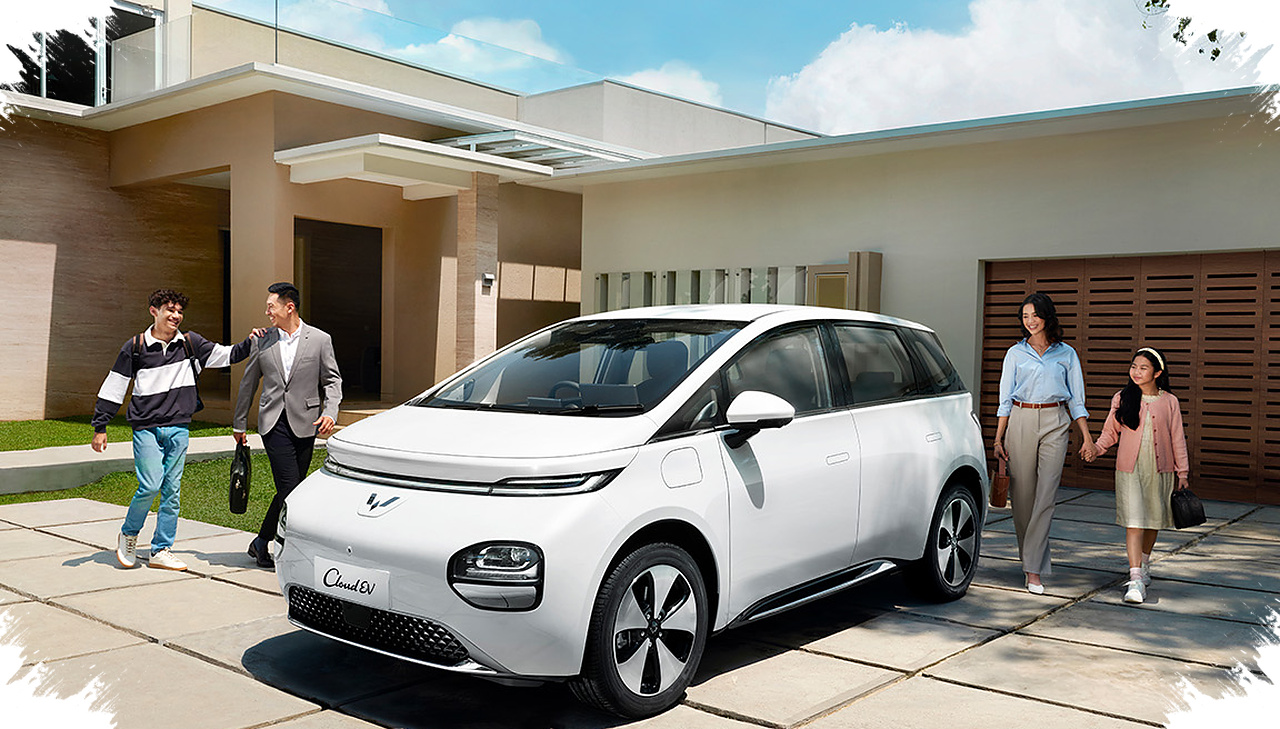
Wuling’s Cloud EV is entering the market as a compact electric car that tries to solve two problems at once: making daily driving more efficient and making the cabin feel genuinely premium. The model stands out because it does not rely on a single headline feature, but on a combination of space, design, battery range, and technology that aims to appeal to urban buyers who want comfort without giving up practicality.
The car was officially introduced by Wuling as an EV that blends advanced technology with premium comfort. Based on the specifications reported by SUMEKS.CO, the Cloud EV is positioned as a medium hatchback electric car with a battery pack and interior layout that support long-distance travel as well as everyday use.
A Cabin Built Around Space and Comfort
One of the strongest selling points of the Wuling Cloud EV is its cabin design. Wuling uses a space optimization approach to create a roomier interior, especially for rear passengers who usually feel limited in compact hatchbacks.
The result is a cabin with generous legroom and headroom that makes the second row feel less cramped. The materials also add to the premium impression, with soft-touch surfaces, neat finishing, and seating that is designed to reduce fatigue on longer trips.
The interior environment is meant to feel more like a moving lounge than a standard small car. That positioning matters because many EV buyers today are not only looking for lower running costs, but also for a more pleasant daily commute.
Technology That Dominates the Dashboard
The technology package is another major attraction. At the center of the dashboard sits a 15.6-inch touchscreen, which acts as the main control hub for many vehicle functions.
A large display like this gives the cabin a more modern look and makes it easier for drivers to manage settings, entertainment, and connected features without clutter. In an EV segment that increasingly values digital interfaces, this screen helps Cloud EV compete with models that focus heavily on smart features.
The large display also supports the broader appeal of the car among younger buyers and tech-oriented families. For many consumers, a responsive infotainment system has become as important as the battery size or motor output.
Design Inspired by Soft, Aerodynamic Shapes
Wuling gives the Cloud EV a design language inspired by cloud-like forms, which the company describes as a “Cloud Shaped Design.” The body uses flowing curves and avoids sharp edges, creating a softer and more approachable look.
This style is not only about appearance. Curved surfaces and an aerodynamic silhouette can also help support efficiency by reducing drag, which is important in an electric car where every kilometer of range matters.
The front fascia uses horizontal daytime running lights, LED turn signals on both sides, and LED projector headlamps placed lower in the bumper. Together, these elements create a clean, futuristic appearance that fits the EV market trend.
The side profile continues that theme with aerodynamic lines, multifunction rearview mirrors, and hidden inductive door handles. The 18-inch alloy wheels add a more substantial stance, while the wheel design draws inspiration from a ferris wheel motif.
At the rear, the vehicle keeps the modern look with horizontal LED position lights, LED tail lamps, a high stop mounted lamp, and an integrated antenna. The design approach gives the Cloud EV a polished identity that aims to feel refined rather than aggressively sporty.
Battery, Range, and Daily Efficiency
For electric car buyers, range remains one of the key decision points. The Wuling Cloud EV comes in a version equipped with a 50.6 kWh Lithium Iron Phosphate battery, and it is reported to deliver a driving range of 460 km.
That range puts it in a practical position for city users and intercity commuters who want fewer charging stops. In daily use, a range like this can reduce anxiety for drivers who need their vehicles for work, errands, and family travel.
The choice of Lithium Iron Phosphate technology also reflects a broader EV industry trend. LFP batteries are generally valued for durability, safety, and stable performance, which makes them attractive for buyers who prioritize long-term usability.
Efficiency is not only about the battery itself. The vehicle’s aerodynamic design, optimized cabin layout, and EV powertrain all work together to support lower energy consumption.
Why the Cloud EV Matters in the Current Market
The Cloud EV arrives at a time when electric vehicles are no longer judged only by their environmental image. Buyers now expect a clear mix of range, comfort, design, and digital convenience, and Wuling appears to have built this model around those expectations.
The car’s positioning suggests it is aimed at consumers who want more than an entry-level EV. It offers a larger cabin than many compact rivals, a more premium interior feel, and a stronger focus on daily comfort.
This matters because the EV market is becoming more competitive. Brands are under pressure to distinguish their products not only with price, but with usability and lifestyle value as well.
For Wuling, Cloud EV also extends the company’s image as a maker of accessible, practical electric vehicles. Its product strategy has often focused on making EV ownership feel realistic for mainstream buyers, and Cloud EV continues that direction with a more refined package.
Key Specifications Reported for Wuling Cloud EV
- Body style: Medium hatchback electric car
- Battery: 50.6 kWh Lithium Iron Phosphate
- Claimed range: 460 km
- Screen size: 15.6-inch touchscreen
- Wheel size: 18-inch alloy wheels
- Estimated price: around $25,100 based on the reported Rp 410 million estimate
The estimated price matters because it places the model in a segment where buyers compare it with other electric vehicles that promise both comfort and range. Since the original report states the car is expected to be introduced in May, the market will likely watch closely to see whether the final pricing and local specifications stay close to the estimate.
A Practical EV With Premium Intent
The Wuling Cloud EV is not trying to look like a stripped-down commuter car. It uses interior space, soft design lines, and smart cabin technology to present itself as a more comfortable and polished electric alternative.
That strategy could help it attract buyers who want an EV that feels advanced without becoming too complicated. With its 460 km range, large display, and roomy cabin, the Cloud EV offers a package that fits the needs of modern urban mobility while still carrying a premium tone.
As the EV market continues to grow, vehicles like the Cloud EV show how manufacturers are pairing efficiency with everyday comfort in a way that speaks directly to practical buyers.
-

-
-

-