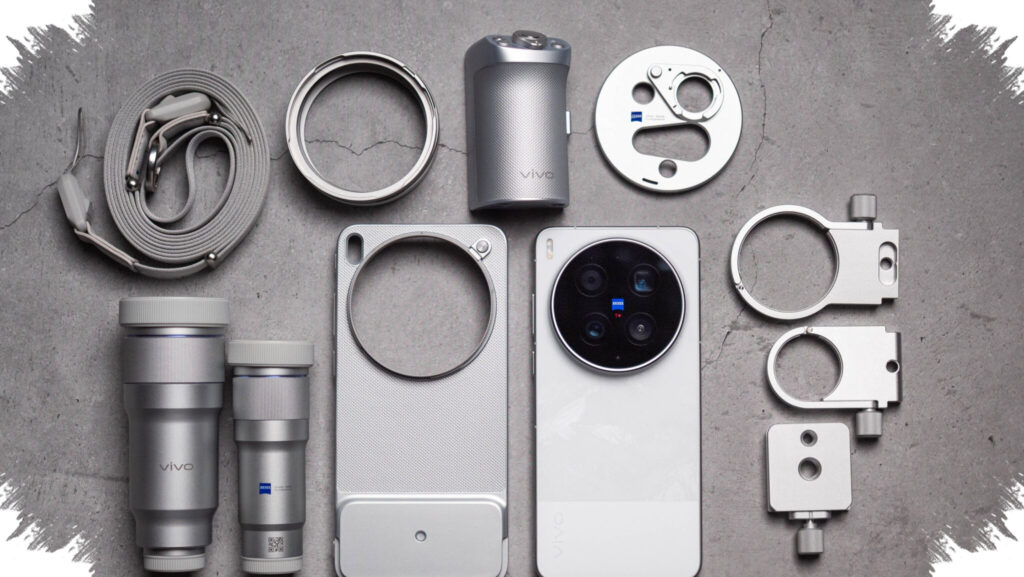
Vivo has officially positioned the X300 Ultra as a camera-first flagship, and that move is already shaping the conversation around the smartphone’s value. The device launched in China on March 30, 2026, and it is being projected for global markets later this year, with imaging as its main selling point.
What makes the phone stand out is not only the headline specs, but also the way Vivo and ZEISS have tuned it for real-world photography and video work. For creators, travelers, and mobile journalists, the X300 Ultra looks less like a conventional phone and more like a compact production tool.
A flagship built around imaging, not just speed
Vivo’s strategy with the X300 Ultra reflects a broader shift in the premium phone market. Many brands still compete on raw performance, but Vivo is leaning hard into camera quality, sensor size, and professional video features.
The company has paired the phone with ZEISS imaging technology, and that partnership remains central to its appeal. Vivo wants the X300 Ultra to be viewed as a serious alternative for users who care more about output quality than benchmark scores.
Key specifications that define the X300 Ultra
The X300 Ultra comes with a Snapdragon 8 Elite Gen 5 chipset, which places it at the top tier of 2026 Android hardware. The display also matches flagship expectations, with a 6.82-inch AMOLED panel, 2K resolution, and a 144Hz refresh rate.
Its camera system is the main attraction, and the numbers are aggressive even by flagship standards. The rear setup includes a 200MP Sony LYT-901 main sensor with a 1/1.12-inch size, a 200MP Samsung HP0 telephoto lens with an 85mm focal length, and a 50MP ultra-wide camera.
The front camera also uses a 50MP sensor, which should help with high-quality selfies and video calls. For content creators, the video package is equally important, since Vivo supports 4K at 120fps, 10-bit Log recording, and Dolby Vision.
Vivo X300 Ultra core specs at a glance
| Feature | Specification |
|---|---|
| Chipset | Snapdragon 8 Elite Gen 5 |
| Display | 6.82-inch AMOLED, 2K, 144Hz |
| Rear cameras | 200MP main, 200MP telephoto, 50MP ultra-wide |
| Front camera | 50MP |
| Video | 4K 120fps, 10-bit Log, Dolby Vision |
| Battery | Around 6,600 mAh |
| Charging | 100W wired, 40W wireless |
| RAM / Storage | Up to 16GB / 1TB |
| Extras | ZEISS lens system, 4-mic audio, external lens accessory support |
The battery is another strong point, with a capacity of around 6,600 mAh. Vivo also includes 100W wired charging and 40W wireless charging, which should make the phone easier to use during long shooting sessions.
Why the camera system matters so much
The most talked-about feature is the 200MP telephoto camera, because Vivo is pushing zoom performance as one of the device’s biggest differentiators. That matters in a market where many phones still struggle to keep detail and color accuracy at longer focal lengths.
Vivo is also highlighting its ZEISS color science, which aims for a more natural look instead of the heavily processed appearance common in some AI-driven camera systems. That approach may appeal to photographers who want images that need less correction after capture.
The X300 Ultra is aimed at serious creators
The phone’s imaging package is not just for social media snapshots. It is designed to fit into a more demanding workflow that includes shooting, editing, and publishing content directly from a mobile device.
That is why the support for 10-bit Log and Dolby Vision is important. It gives video creators more flexibility in post-production and brings the phone closer to the workflow of dedicated cameras.
Reasons creators may care about the X300 Ultra
- It can reduce the need to carry a second camera.
- It supports faster shoot-edit-upload workflows.
- It offers strong consistency in low light, zoom, and video.
- It can lower the total cost compared with buying a camera body and lenses.
A phone with these features is naturally more attractive to advanced users than casual buyers. The X300 Ultra seems designed for people who already know what they want from a camera and are willing to pay for it.
The price is where the problem starts
Vivo’s biggest challenge may not be the hardware, but the cost. The starting price in China is listed at 6,999 yuan, which is roughly $965 USD, while higher-end configurations could reach around $1,400 USD.
That range puts the X300 Ultra squarely in premium territory, and for many buyers, that is a difficult ask. It may be easier to justify for professionals and enthusiasts, but the average user may see the phone as too expensive for something they do not fully utilize.
Pricing matters even more because the X300 Ultra competes in a segment where other flagships also promise fast chips, premium displays, and strong cameras. Vivo therefore has to convince buyers that its ZEISS-tuned imaging system delivers enough real-world value to justify the premium.
What this means for the market
If Vivo can maintain this level of camera performance in global units, the X300 Ultra could become one of the most credible mobile photography tools of 2026. The challenge is that the market rewards excellence, but it also punishes overpricing when the benefits feel too specialized.
For users who want the best zoom, advanced video tools, and a phone that can handle serious content creation, the X300 Ultra looks compelling. For everyone else, the price may be the one factor that keeps this “god-tier” flagship out of reach.