The market for memory cards and flash drives is under heavy pressure as demand for NAND chips continues to rise. Research cited by Tom’s Hardware, based on an investigation by PCWorld, found that the average price of these storage products has climbed 123 percent compared with last year.
The increase is not limited to a few isolated items. The same report showed price gains across many samples, with no memory product in the group holding steady or moving lower.
NAND supply is tight
The core issue sits at the NAND level, which is the key component inside memory cards and USB drives. The same chip family is also used in SSDs, so changes in one part of the storage market can quickly affect the others.
Demand from AI data centers has become a major force in the supply chain. Manufacturers are said to prioritize large orders because AI customers are willing to pay more, leaving less availability for lower-tier NAND used in consumer storage products.
That shift has made it harder to secure the chips commonly used in memory cards and flash drives. As supply tightens, retail prices move higher and cheaper inventory becomes harder to find.
Price increases spread across the sample
The data reviewed by Tom’s Hardware showed a broad and consistent rise rather than a narrow spike. Not a single memory product in the sample was recorded as stable or cheaper than before.
One of the sharpest examples was the Lexar Blue microSDXC UHS-I 256GB, which reportedly rose as much as 261 percent year over year. That level of increase highlights how strongly the market has moved in a short time.
Premium products are gaining attention
Some major brands are also adjusting their product focus as component costs rise. SanDisk was highlighted as one example after launching a 2TB SD card priced at USD 2,000, or around Rp 32 million, even after a USD 500 discount.
Moves like that suggest manufacturers are responding to tighter chip availability by leaning more toward premium products. For consumer buyers, that means the lower-cost segment faces even more pressure as supply stays constrained.
What shoppers may face next
The current situation indicates that buyers may need to be more selective when purchasing memory cards and flash drives. As long as AI demand continues to absorb NAND capacity, prices in this category are unlikely to ease quickly.
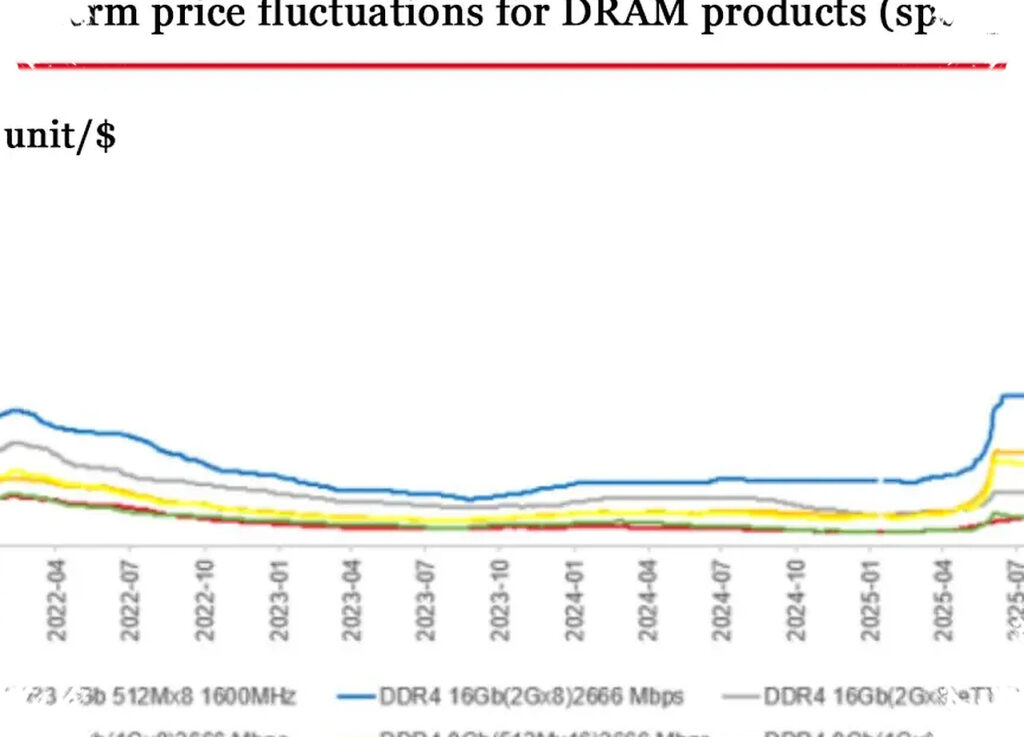
Some observers believe the high-price period could last until 2027. Others point to the recent drop in DDR5 RAM prices as a possible sign that the broader memory market may begin to correct.
For now, the retail picture remains clear: NAND supply is tight, AI demand is strong, and consumer storage products such as memory cards and flash drives are still moving along a more expensive path.